
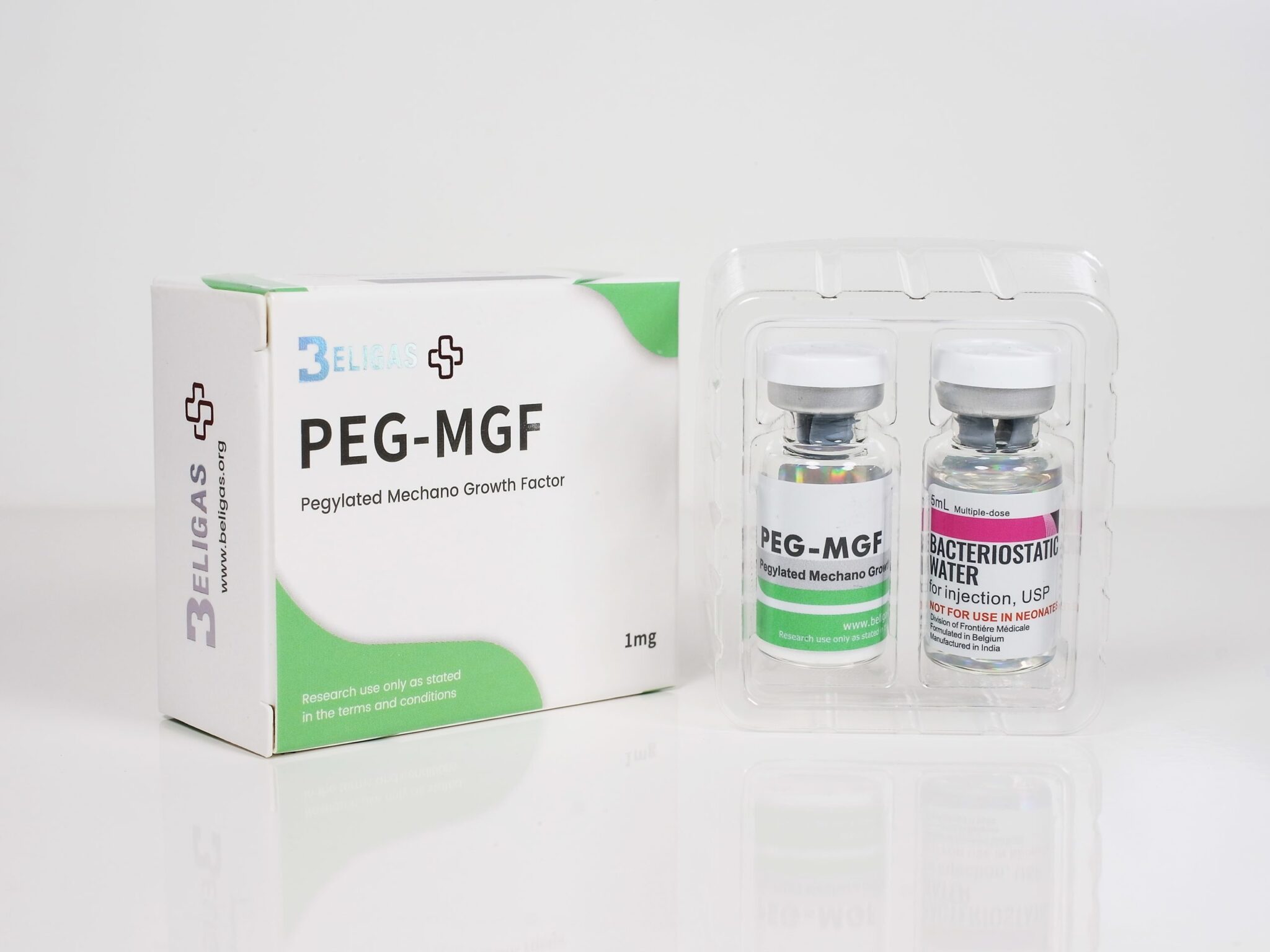
PEG-MGF
$94.00
PEG-MGF (Pegylated Mechano Growth Factor) is a powerful peptide designed to support muscle repair, growth, and recovery at the cellular level. By enhancing the stability and half-life of standard MGF, PEG-MGF delivers prolonged activity, helping to stimulate muscle tissue regeneration after intense physical activity.
Ideal for athletes, bodybuilders, and performance-focused individuals, PEG-MGF promotes lean muscle development, improves recovery time, and may aid in reducing muscle fatigue. Its targeted action helps activate satellite cells, which play a key role in muscle repair and growth.
Key Benefits:
- Supports accelerated muscle recovery
- Promotes lean muscle growth
- Enhances cellular repair processes
- Prolonged effectiveness due to pegylation
Usage:
Intended for research and laboratory purposes only.
 ? A Research-Based Guide to Mechanism, Comparisons, and Sourcing what is PEG-MGF and you’ll find a mix of solid research summaries and marketing pages that blur the line between animal-study findings and human performance claims. This guide sticks to the research: what PEG-MGF actually is, how does PEG-MGF work at the cellular level, how it compares to related compounds, and what to check before buying a PEG-MGF peptide vial from any supplier. It’s written for informational purposes only — PEG-MGF is sold for laboratory research use, not for human use, and nothing here is medical advice or usage instruction.
What Is PEG-MGF?
PEG-MGF stands for Pegylated Mechano Growth Factor. To unpack that: Mechano Growth Factor (MGF) is a splice variant of IGF-1 (insulin-like growth factor 1) that the body produces locally in muscle tissue in response to mechanical stress or damage — the kind that happens during resistance exercise or injury. Unlike systemic IGF-1, which circulates through the bloodstream and affects tissue broadly, MGF is expressed locally at the site of muscle strain, which is part of why it drew research interest specifically for muscle repair mechanisms.
The “PEG” prefix refers to pegylation — attaching polyethylene glycol molecules to the peptide chain. This is a common modification technique in peptide research because unmodified MGF has an extremely short half-life in circulation, breaking down within minutes. Pegylation slows that degradation, extending the peptide’s active window in a research setting so its effects can be studied over a longer timeframe than the natural peptide would allow.
How Does PEG-MGF Work?
The research interest in PEG-MGF centers on satellite cell activation. Satellite cells are a type of stem cell that sit dormant along skeletal muscle fibers until triggered by damage or mechanical stress, at which point they proliferate and fuse with existing muscle fibers to support repair and growth. In animal and cell-culture studies, MGF and its pegylated analogs have been associated with activating this satellite cell pool, distinguishing their proposed mechanism from systemic IGF-1, which has broader anabolic and metabolic effects throughout the body.
Preclinical research has also looked at MGF’s local signaling role separately from the IGF-1 receptor pathway, suggesting it may have effects specific to muscle micro-injury response rather than simply mimicking IGF-1 systemically. This localized, damage-triggered mechanism is the main reason PEG-MGF shows up in muscle-recovery and sports-science research discussions specifically, rather than general growth-hormone-adjacent research.
It’s worth being clear about the evidence base here: most published data on MGF and PEG-MGF comes from animal models and in vitro (cell culture) studies. Human clinical trial data specific to pegylated MGF is limited, and much of what circulates in the fitness and research-peptide community extrapolates from that preclinical work rather than from established human outcomes.
PEG-MGF vs. MGF
Researchers comparing PEG-MGF vs MGF are usually weighing a tradeoff between stability and how closely the compound mirrors natural physiology:
| MGF (unmodified) | PEG-MGF | |
|---|---|---|
| Half-life | Very short (minutes) | Extended, due to pegylation |
| Closeness to natural splice variant | Identical to endogenous form | Structurally modified |
| Research utility | Better for studying acute, localized signaling | Better for studying sustained exposure effects |
| Stability for lab handling | Degrades quickly, harder to work with | More stable in solution |
Neither version is simply “better” — the choice in a research context depends on what’s being studied. Acute signaling research may favor unmodified MGF to preserve natural kinetics, while studies looking at sustained satellite cell activation over time may use the pegylated form specifically because of its longer active window.
How Does PEG-MGF Work Compared to IGF-1?
Because MGF is derived from an IGF-1 splice variant, it’s frequently compared to full IGF-1, but the two are studied for different purposes:
- IGF-1 acts systemically, influencing growth and metabolism across multiple tissue types via the bloodstream, and has a more established (though still specialized) body of human research behind it, including approved clinical uses for specific growth-deficiency conditions.
- PEG-MGF is studied for a narrower, localized role — muscle tissue response to mechanical damage — and does not have an approved human clinical application. Its research profile is earlier-stage and less extensive than IGF-1’s.
Grey Market Peptides and the GLP-1 Comparison
PEG-MGF is part of a broader research-peptide market that has expanded rapidly alongside consumer interest in metabolic and performance compounds — most visibly, GLP-1 receptor agonists like semaglutide and tirzepatide. It’s worth understanding how that adjacent market affects sourcing decisions, even though the compounds themselves are mechanistically unrelated.
The surge in demand for GLP-1 medications has fueled a grey market for compounded, unauthorized, or research-labeled versions of these drugs sold outside the prescription and pharmacy system. That grey market shares supply chains and marketing channels with peptide sellers more broadly, including PEG-MGF vendors — which means the same sourcing risks apply across the category: inconsistent purity, mislabeled concentrations, contamination, and no clinical oversight. A supplier’s willingness to sell unauthorized GLP-1 products alongside research peptides is often a useful signal about how seriously they take regulatory compliance in general. If your interest is in a GLP-1 medication specifically, that’s a conversation for a licensed prescriber, not something to source through the same channel as a research peptide vial.
What to Look for in a PEG-MGF Peptide Vial
If you’re evaluating suppliers for research purposes, a few things matter more than price:
- Third-party Certificate of Analysis (COA) confirming identity and purity — ideally from a lab independent of the seller.
- Clear “research use only” labeling, without health claims implying it’s safe or approved for human use.
- Storage and handling transparency — pegylated peptides typically require specific temperature-controlled storage and proper reconstitution technique to maintain stability, and legitimate suppliers document this clearly rather than leaving it to guesswork.
- Traceable sourcing — batch numbers, manufacturing origin, and consistent labeling across their catalog are basic markers of a supplier operating with quality control in mind.
Frequently Asked Questions
What is PEG-MGF used for in research? It’s primarily used to study muscle satellite cell activation and localized tissue repair signaling in animal models and cell cultures, distinct from systemic growth factor research.
Is PEG-MGF the same as HGH or IGF-1? No. It’s a modified splice variant derived from IGF-1’s genetic sequence, but it has a distinct, more localized proposed mechanism than either full IGF-1 or growth hormone.
How does PEG-MGF work differently from regular MGF? The core signaling mechanism is believed to be the same; the difference is pharmacokinetic. Pegylation extends how long the peptide remains active before breaking down, which is why researchers choose between the two forms based on whether they’re studying acute or sustained effects.
Is PEG-MGF approved for human use? No. It is not FDA-approved for any human application and is sold exclusively for laboratory research purposes.
What’s the difference between PEG-MGF and BPC-157? They’re studied for different tissue targets and mechanisms. BPC-157 is researched mainly for gut lining and general tissue repair, while PEG-MGF’s research focus is specifically muscle satellite cell activation following mechanical damage. Both are commonly grouped together in research-peptide marketplaces, which is more a reflection of distribution channels than shared biology.
Why does PEG-MGF need special storage? Peptides, including pegylated variants, are generally sensitive to temperature, light, and repeated freeze-thaw cycles, which can degrade the molecule. This is a laboratory handling consideration relevant to researchers maintaining sample integrity, not usage guidance.
How do I verify the quality of a PEG-MGF peptide vial before buying? Request the current batch’s COA directly from the supplier and confirm it comes from an independent testing lab rather than an in-house one. Reputable research suppliers make this available without hesitation.
The Bottom Line
PEG-MGF is a scientifically grounded research compound with a plausible, well-defined proposed mechanism — localized satellite cell activation following muscle micro-damage — that distinguishes it from broader IGF-1 or growth hormone research. Its evidence base remains largely preclinical, and there’s no established human clinical protocol or approved use. Anyone sourcing a PEG-MGF peptide vial should prioritize suppliers who are transparent about its research-only status, provide independent purity testing, and don’t blur the line between research compound and consumer health product — particularly given how closely this market overlaps with the unregulated grey market for GLP-1 medications, where the sourcing risks are considerably higher.
| Dose | 2mg*10vials |
|---|
Be the first to review “PEG-MGF”
Related products
ANTI-AGING
MUSCLE GROWTH/BODYBUILDING/RECOVERY

MUSCLE GROWTH/BODYBUILDING/RECOVERY
MUSCLE GROWTH/BODYBUILDING/RECOVERY
MUSCLE GROWTH/BODYBUILDING/RECOVERY
MUSCLE GROWTH/BODYBUILDING/RECOVERY
MUSCLE GROWTH/BODYBUILDING/RECOVERY
Reviews
There are no reviews yet.