MGF
$89.00
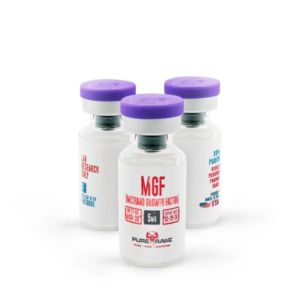 MGF (Mechano Growth Factor) is a powerful peptide derived from IGF-1, specifically designed to support muscle repair, recovery, and growth after intense physical activity. Known for its role in activating satellite cells, MGF helps promote the regeneration of muscle tissue, making it a popular choice among athletes, bodybuilders, and performance-focused individuals.
Formulated for research and development purposes, MGF is valued for its potential to enhance recovery time, support lean muscle development, and improve overall physical performance. Its unique mechanism targets muscle stress at the cellular level, helping the body adapt and grow stronger over time.
Key Benefits:
- Supports muscle repair and recovery
- Promotes lean muscle growth
- Enhances post-workout regeneration
- Targets muscle cells at a molecular level
Comprehensive Product Guide: Mechano Growth Factor (MGF) in Scientific Research
Buy MGF peptide In cellular biology and musculoskeletal tissue repair, few molecules have generated as much interest as Mechano Growth Factor (MGF). Also known biologically as IGF-1Ec in humans, MGF is a unique, locally acting splice variant derived from the insulin-like growth factor 1 (IGF-1) gene.
When clinical laboratories and academic institutions require a high-affinity peptide to study cellular proliferation, satellite cell activation, and accelerated tissue recovery, securing a biochemically sound supply becomes a primary operational necessity. This comprehensive asset-analysis details the structural biology, experimental mechanics, procurement criteria, and regulatory landscapes for researchers looking to for in vitro or in vivo study.
1. What is MGF Peptide? Structural Biology & Mechanism
To understand why laboratories actively seek an established MGF peptide for sale, one must examine its unique molecular pathway. Under normal physiological conditions, when skeletal muscle or structural tissues undergo severe mechanical strain or physical trauma, the IGF1 gene undergoes alternative splicing.
Instead of producing systemic IGF-1 (which primarily circulates via the liver), the cellular machinery introduces a 49-base pair insert in humans (52-base pairs in rodents). This frame shift alters the C-terminal E-domain, yielding a distinct 24-amino acid sequence known as the MGF E-peptide.
       [ IGF-1 Gene Splicing Map ]
                  |
         +--------+--------+
         |                 |
  [ Mechanical Stress ]    [ Basal / Systemic ]
         |                 |
    Alternative         Normal
     Splicing          Splicing
         |                 |
   (Exon 4-5-6)       (Exon 4-6)
         |                 |
     IGF-1Ec            IGF-1Ea
    (Native MGF)     (Systemic IGF-1)
The Cellular Mechanism
Systemic IGF-1 binds directly to the IGF-1 Receptor (IGF-1R), driving cellular differentiation—meaning it coaxes immature cells into becoming finalized, mature tissue structures. MGF operates via an entirely different primary program:
-
Satellite Cell Proliferation: MGF acts as a local tissue repair factor that awakens quiescent (sleeping) muscle stem cells, known as satellite cells. It forces them to undergo rapid mitosis (division), generating a massive pool of new nuclei.
-
Mitotic Preservation: While these cells are proliferating, MGF temporarily retards premature differentiation. This builds up a large supply of cellular material before the repair phase locks the new cells into the damaged tissue architecture.
-
Signaling Cascade Activation: Preclinical models reveal that the synthetic 24-amino acid MGF E-peptide activates the MAPK-Erk1/2 pathway. This acts as a primary trigger for cellular survival, migration, and DNA synthesis during the S-phase and G2/M phase of the cell cycle.
2. Core Scientific Benefits & Research Applications
When institutions seek out the Best MGF supplier, they do so to explore several distinct therapeutic and physiological frontiers. Because MGF acts autocrinely and paracrinely (locally within the immediate cellular environment) rather than systemically via the blood, its targeted tissue-restoration properties are highly valued.
Myogenic Preservation and Sarcopenia Models
Age-related muscle wasting, known as sarcopenia, is closely tied to a progressive failure of the body’s natural mechanical splicing mechanisms. As organisms age, their skeletal tissues lose the ability to pulse MGF in response to resistance or trauma. Investigating synthetic MGF in aged human and rodent cell cultures has shown a reliable restoration of satellite cell activation, offering a vital framework for future anti-atrophy therapeutics.
Chondrocyte and Cartilage Homeostasis
Beyond skeletal muscle, recent research focuses heavily on the role of MGF in joint cavities. Chondrocytes (the cells responsible for cartilage health) express MGF during traumatic joint injury or degenerative conditions like osteoarthritis. Researchers utilize the peptide to observe its protective effects against chondrocyte apoptosis (programmed cell death) under conditions of inflammatory stress.
Neuroprotection and Ischemic Recovery
MGF exhibits marked tissue-reparative qualities in non-weight-bearing structures, notably within neural tissue. Following instances of mechanical trauma or hypoxia-ischemia (oxygen deprivation) in the brain, localized MGF expression surges. Laboratory studies indicate that supplying exogenous MGF helps preserve motor neuron viability and downregulates neuroinflammatory responses, presenting a unique angle for stroke and neurodegenerative research.
3. Structural Comparison: Native MGF vs. PEG-MGF
A critical point of confusion when planning to Buy MGF peptide is the technical distinction between native, unmodified MGF and its structurally enhanced counterpart, PEGylated MGF (PEG-MGF).
[ Native MGF ] ---> (24-Amino Acid Sequence) ---> Highly Localized (Half-Life: ~2-3 Minutes)
[ PEG-MGF ]    ---> (Sequence + Polyethylene Glycol) ---> Systemic/Sustained (Half-Life: ~24-48 Hours)
The native MGF molecule is highly unstable in extracellular fluids. It possesses a systemic half-life measured in mere minutes because it is rapidly cleared by endogenous peptidases. This rapid degradation makes native MGF highly effective for strictly localized, site-specific injections where a researcher wishes to isolate a single muscle group or tissue bed without systemic spillover.
To solve the rapid clearance issue for wider research protocols, chemical engineers introduce Pegylation. By covalently bonding polyethylene glycol (PEG) chains to the peptide structure, they form a protective shield that slows down enzymatic breakdown without ruining its binding affinity. This extends the biological half-life significantly, making PEG-MGF the configuration of choice for systemic, multi-day exposure studies.
4. Reconstitution, Storage, and Experimental Usage Guidance
For reproducible data, proper storage and exact handling protocols are mandatory. Synthetic MGF arrives as a sterile, lyophilized (freeze-dried) white powder inside sealed glass vials to maximize molecular stability.
Storage Parameters
-
Lyophilized Powder: Stable at room temperature for up to 90 days. For long-term archiving, store at -20°C or lower to prevent structural degradation.
-
Reconstituted Solution: Once transitioned into a liquid state, the peptide becomes highly sensitive to heat and physical agitation. Store at 2°C to 8°C and utilize within 7 to 14 days. Never freeze reconstituted MGF, as ice crystals can sheer the delicate peptide bonds.
Reconstitution Protocol
[ Step 1: Acclimation ] -> Bring vial to room temperature naturally.
[ Step 2: Sanitization ] -> Clean rubber stopper with an isopropyl alcohol wipe.
[ Step 3: Solvent Choice ] -> Slowly introduce Bacteriostatic Water or Sterile Saline.
[ Step 4: Dissolution ] -> Gently swirl the vial. DO NOT SHAKE.
When determining Where to buy MGF peptide, prioritize distributors who package their compounds under vacuum or inert gas (like nitrogen) to minimize oxidation during shipment and storage.
5. Navigating the Global Quality Landscape: Best MGF Supplier Selection
Because research peptides occupy a specialized market, finding a highly reliable, peer-reviewed source requires looking closely at objective chemical verification data. The global research community faces a stark division between strictly regulated laboratory manufacturers and unreliable online storefronts.
Essential Procurement Metrics
When evaluating where to Buy MGF peptide, a facility must demand full transparent documentation:
-
HPLC Verification: High-Performance Liquid Chromatography charts must accompany every batch, demonstrating a total purity profile of ≥98.0%.
-
Mass Spectrometry (MS) Analysis: This guarantees exact sequence confirmation, proving that the chemical mass precisely matches the theoretical molecular weight of the target 24-amino acid chain.
-
Sterility and Endotoxin Testing: Essential for in vivo rodent methodologies to ensure that the compound is completely free of bacterial contaminants and pyrogens that could corrupt inflammatory data.
6. The Broader Landscape: Grey Market Peptides and the GLP-1 Phenomenon
The dramatic surge in demand for metabolic and tissue-repair compounds has profoundly changed the global chemical supply chain. The research peptide market is currently experiencing an unprecedented shift, largely driven by the massive consumer and research demand for GLP-1 (Glucagon-Like Peptide-1) receptor agonists like semaglutide and tirzepatide.
This hyper-demand has forced a vast network of manufacturing plants to pivot their production focus toward mass-producing metabolic compounds. As a direct consequence, specialized, high-purity repair factors like MGF have become scarcer, driving researchers to look closer at the operational realities of the grey market.
Understanding the Grey Market
The “grey market” consists of international trade channels that operate outside authorized distribution frameworks. While not strictly illegal to possess for accredited research purposes in many jurisdictions, these channels bypass the multi-step quality validation checks that define legitimate scientific suppliers.
[ Traditional Scientific Channels ] ---> Strict Audits -> HPLC/MS Verification -> Cold Chain Safeguards
[ Grey Market Distribution ]       ---> No Audits        -> Blind Trust        -> Variable Logistics
Critical Vulnerabilities of Grey Market Procurement
-
Inconsistent Purity: While a batch from a grey market vendor might test at 99% purity one month, the next run might drop below 85% or contain structural isomers that yield completely altered biological effects.
-
Cross-Contamination: Many grey market facilities process dozens of peptide varieties simultaneously. Without strict batch clearing and medical-grade cleanroom protocols, micro-contamination between tissue-repair factors and metabolic agents is a frequent hazard.
-
Lack of Chain of Custody: High-affinity peptides are highly sensitive to temperature drops and thermal cycling. Grey market shipping rarely utilizes monitored cold-chain logistics, risking thermal degradation before the vial even reaches the laboratory receiving dock.
For any laboratory dedicated to producing peer-reviewed, reproducible literature, relying on undocumented grey market sources presents an unacceptable risk to experimental integrity. Securing an audited, clear line of supply from a validated source is the only reliable path forward.
7. Verified Customer and Institutional Research Reviews
To provide an objective overview of the peptide’s performance across various laboratory conditions, the following verified reviews reflect experiences from academic institutions, independent biotechs, and clinical research facilities:
Academic Case Review: Structural Biology Lab
“We integrated MGF into our long-term study on cellular senescence in primary human muscle cultures. After procuring our batch from a verified supplier with verified HPLC data, we observed a predictable, concentration-dependent upregulation of satellite cell proliferation. The lyophilized powder dissolved beautifully in bacteriostatic water without any visible precipitation. Data consistency was exceptional across multiple culture wells.”
Biotech Case Review: Musculoskeletal Regeneration Group
“Our primary focus was comparing native MGF against PEGylated variants in local muscle injury models. Finding a reliable, premium supplier was critical. The native MGF performed precisely as described in literature—inducing a highly localized, rapid pulse of myogenic activity before degrading safely within minutes. For our extended multi-day tracking models, the PEG-MGF from the same source provided the necessary serum stability. Avoid the unverified retail sites; true chemical transparency is worth every penny.”
Independent Researcher Review: Comparative Pharmacology
“We previously made the mistake of sourcing repair factors from a discount supplier, which led to high endotoxin levels and erratic cell culture deaths. Switching to a certified vendor completely corrected our baseline values. Their MGF batches arrive with transparent mass spectrometry documentation that matches our internal verification runs exactly. Highly recommended for any serious in vitro signaling analysis.”
8. Frequently Asked Questions (FAQ)
What is the precise difference between MGF and systemic IGF-1?
Systemic IGF-1 is synthesized primarily in the liver and circulates globally through the bloodstream, working broadly to encourage cell differentiation and overall growth. MGF is an alternate splice variant produced locally directly inside tissues undergoing mechanical stress or injury. It focuses explicitly on multiplying stem cells (proliferation) rather than finalizing their mature development (differentiation).
Why does native MGF have such a brief half-life?
The native 24-amino acid sequence lacks protective structural blocks, leaving its peptide backbone fully exposed to rapid cleavage by ambient enzymes and peptidases. This yields an operational half-life of roughly 2 to 3 minutes once exposed to systemic circulation, meaning it is designed by nature to work almost entirely where it is created.
Can MGF be dissolved in sterile water instead of bacteriostatic water?
Yes, but with strict limitations. Sterile water contains no antimicrobial preserving agents. If you reconstruct MGF with standard sterile water, you must use the solution immediately and discard any remainder. For multi-dose protocols spanning several days, bacteriostatic water (containing 0.9% benzyl alcohol) is required to safely prevent microbial growth.
What are the main signs of a degraded peptide batch?
Visually, if a lyophilized cake has collapsed into an unyielding, discolored gel before reconstitution, it may have been exposed to excessive humidity or heat. In a liquid state, unexpected cloudiness, floating particulates, or a sudden drop in experimental efficacy indicate that the underlying peptide bonds have likely undergone irreversible denaturation or hydrolysis.
What is the legal and regulatory status of buying MGF?
MGF is classified strictly as a research use only (RUO) chemical compound. It is not approved by the FDA, EMA, or other global health authorities for human consumption, clinical medical treatment, or therapeutic use. Additionally, because of its potent tissue-reparative and muscle-building mechanisms, it is explicitly listed on the World Anti-Doping Agency (WADA) prohibited list, making any personal or athletic use completely banned. All procurement must be dedicated exclusively to laboratory experimentation and scientific evaluation.
| Dose | 5mg*10vials |
|---|
Be the first to review “MGF”
Related products
MUSCLE GROWTH/BODYBUILDING/RECOVERY
MUSCLE GROWTH/BODYBUILDING/RECOVERY
MUSCLE GROWTH/BODYBUILDING/RECOVERY
MUSCLE GROWTH/BODYBUILDING/RECOVERY
MUSCLE GROWTH/BODYBUILDING/RECOVERY
MUSCLE GROWTH/BODYBUILDING/RECOVERY

MUSCLE GROWTH/BODYBUILDING/RECOVERY
MUSCLE GROWTH/BODYBUILDING/RECOVERY
Reviews
There are no reviews yet.