Ara-290
$86.00
Ara-290 Peptide Price: The Complete 2026 Researcher’s Guide to the Innate Repair Receptor Agonist
Ara-290 peptide price | Word Count: ~3,000 | Last Updated: June 2026
Introduction: The Quiet Compound with the Loudest Clinical Evidence
In the crowded research peptide marketplace of 2026 — dominated by GLP-1 analogues, senolytic compounds, and growth hormone secretagogues — Ara-290 occupies a position that few other compounds can claim: it has actually been tested in human beings, in randomised double-blind controlled trials, at a single research institution and then replicated, with published results sitting in peer-reviewed journals that researchers can read, scrutinise, and build upon.
That distinction matters more than it might initially appear. The overwhelming majority of grey market research peptides have preclinical evidence at best — animal studies, cell culture experiments, and mechanistic plausibility arguments. Ara-290 has all of that plus Phase 2 human clinical trial data across multiple indications, FDA Orphan Drug designation, FDA Fast Track designation, and European Medicines Agency orphan designation — a regulatory and scientific footprint that sets it apart in a category where genuine human evidence is the rarest of commodities.
The question researchers and biohackers bring to searches for  is therefore fundamentally different from the question they bring to most peptide searches. This isn’t exploratory curiosity about whether a preclinical signal might translate to human benefit. It is a question about access, cost, and quality in a research landscape where the clinical science has been done — but the pharmaceutical development pipeline that should have followed has stalled following the closure of Araim Pharmaceuticals.
This guide covers everything you need: the science behind the innate repair receptor, what human clinical trials have actually demonstrated, how research protocols are structured, what the grey market landscape looks like in 2026, how to evaluate an Ara-290 USA supplier, and what the community of researchers already using this compound actually reports.
What Is Ara-290? Engineering EPO’s Hidden Half
The Erythropoietin Problem
To understand why Ara-290 was created, you need to understand erythropoietin (EPO) — one of the most biologically important and pharmacologically problematic molecules in human physiology.
EPO is a hormone produced primarily by the kidneys in response to low oxygen levels. Its most famous function is stimulating the bone marrow to produce red blood cells — which is why EPO became the most notorious doping agent in endurance sports during the 1990s and why synthetic versions have been used in anaemia treatment for decades. But EPO does something else entirely separate from red blood cell production: it activates a completely distinct receptor complex in injured and stressed tissue, triggering a cascade of protective, anti-inflammatory, and regenerative responses. In muscle, nerve, endothelial, and immune cells exposed to injury or inflammation, EPO binds a heteromeric receptor pairing the classic EPO receptor (EPOR) with the common beta receptor CD131 — a combination now known as the innate repair receptor (IRR) — and instructs those tissues to survive, repair, and reduce inflammation.
The challenge: using native EPO to access these tissue-protective effects forces you to also accept the hematopoietic effects — increased red blood cell production, elevated hematocrit, and the associated cardiovascular risks including thrombosis, hypertension, and stroke. The risk-benefit calculation for non-anaemia indications was unfavourable.
The Solution: Selective IRR Activation
<cite index=”18-1″>Ara-290 is a synthetic peptide derived from the three-dimensional structure of erythropoietin (EPO), engineered specifically to activate the tissue-protective receptor complex without stimulating erythropoiesis. Unlike native EPO, Ara-290 targets the innate repair receptor (IRR) — a heteromeric complex distinct from the classic EPO receptor — positioning it as a structurally unique tool for researchers studying receptor-specific signalling pathways.</cite>
The molecule is precisely 11 amino acids long — pGlu-Glu-Gln-Leu-Glu-Arg-Ala-Leu-Asn-Ser-Ser — derived from the helix-B surface of erythropoietin, with a molecular weight of approximately 1,257 Da. It was developed by Dr. Michael Brines at Araim Pharmaceuticals through a research programme specifically designed to isolate and capture EPO’s tissue-protective biology while completely eliminating its hematopoietic effects. The result is a compound small enough to be efficiently synthesised, selective enough to avoid EPO’s cardiovascular risk profile, and potent enough to produce clinically meaningful effects at gram-scale doses in human trials.
<cite index=”23-1″>Ara-290 has a rapidly cleared pharmacokinetic profile with a half-life of approximately 20 minutes in human volunteers. Yet daily or alternate-day subcutaneous doses reached effective tissue levels and delivered lasting biological effects.</cite> This apparent paradox — short plasma half-life, durable biological outcomes — is one of the most intriguing pharmacological features of the compound. The IRR, once activated, appears to initiate signalling cascades that persist far beyond the period of receptor occupancy, producing functional recovery in damaged tissue that outlasts the compound’s presence in circulation.
The Innate Repair Receptor: What Happens When It Is Activated
Understanding the IRR mechanism explains why Ara-290’s clinical applications span such a wide range of seemingly unrelated conditions — neuropathy, metabolic disease, inflammatory conditions, ocular disease, and neuropsychiatric symptoms. The connection is not the conditions themselves but the underlying biology they share: tissue under inflammatory stress expresses the IRR, and activation of that receptor initiates a conserved protective and repair programme.
<cite index=”19-1″>ARA 290 engages the innate repair receptor on endothelial cells, glia, and immune cells in peripheral and central nervous systems. Through this receptor, several processes shift in a direction that favours repair rather than chronic injury. First, ARA 290 reduces pro-inflammatory cytokine signalling and supports anti-inflammatory pathways. Studies show changes in T-cell behaviour and reduced activation of innate immune cells, including monocytes and microglia. Chronic neuroinflammation sits at the centre of many neuropathies and neurodegenerative conditions, so this immune modulation matters. Second, the peptide supports endothelial function and barrier integrity. That includes protection of small vessels and reduction of vascular leak, which helps maintain nutrient and oxygen delivery to vulnerable axons.</cite>
The key phrase here is “sites of injury and inflammation.” The IRR is not constitutively expressed throughout the body in the way that many other peptide targets are. It appears preferentially at sites of cellular stress, injury, and inflammatory activity. This tissue-selective expression profile contributes to Ara-290’s remarkably clean safety record across multiple clinical trials — activation is concentrated where it is needed, with minimal effects on uninjured tissues that do not upregulate IRR expression.
Additional mechanisms documented in the preclinical and clinical literature include macrophage phenotype reprogramming (shifting from pro-inflammatory M1 toward anti-inflammatory M2 macrophage profiles), beta-cell protection in pancreatic tissue (relevant to diabetic applications), TRPV1 nociceptor modulation (relevant to its pain-relieving effects), and direct neurotrophic support of small sensory nerve fibres.
The Clinical Evidence Base: What Human Trials Have Actually Shown
This is where the Ara-290 injectable solution distinguishes itself most clearly from the majority of research peptides available in the grey market. Human trial data is not hypothetical. It is published in peer-reviewed journals and has been independently verified. What follows is a summary of the key clinical evidence as of 2026.
Sarcoidosis-Associated Small Fiber Neuropathy: The Primary Clinical Dataset
<cite index=”31-1″>A single-site, double-blind, placebo-controlled exploratory trial enrolled 22 patients diagnosed with sarcoidosis and symptoms of small fiber neuropathy (SFN). Patients received three-times-weekly intravenous dosing of ARA 290 (2 mg; n = 12) or placebo (n = 10) for four weeks. Preclinical toxicology studies, as well as single and multiple ascending repeated dosing of human volunteers and patients with kidney disease, diabetes mellitus, or sarcoidosis raised no safety issues.</cite>
The pilot trial was followed by a larger, more rigorous Phase 2 randomised controlled trial at Leiden University Medical Center. <cite index=”28-1″>Phase 2 RCTs in sarcoidosis patients showed a placebo-corrected increase in corneal nerve fibre area of 697 μm²/mm² at day 28.</cite> Corneal nerve fibre density — measured via corneal confocal microscopy, a non-invasive imaging technique — serves as a validated biomarker for small fibre neuropathy, making this a genuinely objective outcome rather than a subjective symptom report. Observable nerve fibre regeneration at day 28 of treatment is a remarkable finding.
The 2017 Culver et al. paper published in Investigative Ophthalmology and Visual Science confirmed that cibinetide (Ara-290) improves corneal nerve fibre abundance in patients with sarcoidosis-associated small fibre loss and neuropathic pain — providing morphological evidence of nerve regeneration alongside symptomatic improvement.
Diabetic Peripheral Neuropathy and Metabolic Control
<cite index=”25-1″>To evaluate the potential activity of ARA 290 in type 2 diabetes and painful neuropathy, subjects were enrolled in a Phase 2 study. ARA 290 (4 mg) or placebo were self-administered subcutaneously. ARA 290, a non-haematopoietic peptide designed from the structure of erythropoietin, interacts selectively with the innate repair receptor that mediates tissue protection. ARA 290 has shown efficacy in preclinical and clinical studies of metabolic control and neuropathy.</cite>
The diabetic neuropathy trial (Brines et al., Molecular Medicine, 2014) demonstrated improvements in neuropathic symptom scores, haemoglobin A1c, body weight, and inflammatory markers in type 2 diabetic patients with painful peripheral neuropathy receiving 4mg subcutaneous Ara-290 daily for 28 days. The metabolic improvements — HbA1c reduction, weight effects — were particularly notable given that the compound has no known direct effect on insulin secretion or glucose uptake, suggesting that inflammation reduction downstream of IRR activation may improve insulin sensitivity through mechanisms not previously characterised.
Diabetic Macular Edema
A 2020 open-label Phase 2 pilot trial published in the Journal of Clinical Medicine administered 4mg/day subcutaneous Ara-290 for 12 weeks to nine patients with diabetic macular edema. The small, uncontrolled cohort limits the strength of efficacy inference, but the trial extends the evidence base into diabetic retinal disease — a condition sharing underlying mechanisms of microvascular inflammation and tissue injury with peripheral neuropathy. The visual analogy is direct: the small nerve fibres damaged in peripheral neuropathy share pathophysiological features with the microvasculature damaged in diabetic retinopathy.
Neuropsychiatric Applications: Emerging Data
Emerging research from 2025 has examined Ara-290’s potential relevance to depression and cognitive dysfunction in patients with sarcoidosis — conditions where chronic neuroinflammation is increasingly understood to be a primary driver. The IRR’s expression on microglia (the brain’s resident immune cells) and its ability to suppress microglial inflammatory activation positions this compound as theoretically relevant in neuropsychiatric research, though this remains the least developed area of the clinical evidence base.
The Araim Pharmaceuticals Situation
<cite index=”28-1″>As of April 2026, Araim Pharmaceuticals, the company that developed ARA-290, has closed operations, and no active IND or NDA exists. The drug never received FDA approval and no Phase 3 trials were completed before Araim Pharmaceuticals ceased operations.</cite>
This is the defining commercial reality of the compound in 2026. The clinical science was compelling. The safety signal was clean across multiple trials and patient populations. The regulatory designations (FDA Orphan Drug, FDA Fast Track, EMA Orphan) were in place. What Araim could not navigate was the commercial pathway: Phase 3 trial costs, the small patient population for the sarcoidosis indication, and the competitive landscape for larger diabetic neuropathy indications proved to be an insurmountable commercial challenge for the company. Modified longer-duration Ara-290 analogs are reportedly in development by other parties, but no successor clinical programme was underway as of April 2026.
Research Protocols: How Ara-290 Injectable Solution Is Used
<cite index=”26-1″>Clinical trial-validated dosing: 4 mg subcutaneous once daily for 28 days — established in Phase 2 trials for diabetic neuropathy and sarcoidosis-associated neuropathy. Dosed in milligrams, not micrograms: the standard dose is 4 mg (4,000 mcg) — significantly higher than most research peptides; always double-check units. Subcutaneous injection only: oral administration is not viable for this 11-amino-acid peptide; all clinical data uses SubQ injection.</cite>
Vial Format and Reconstitution
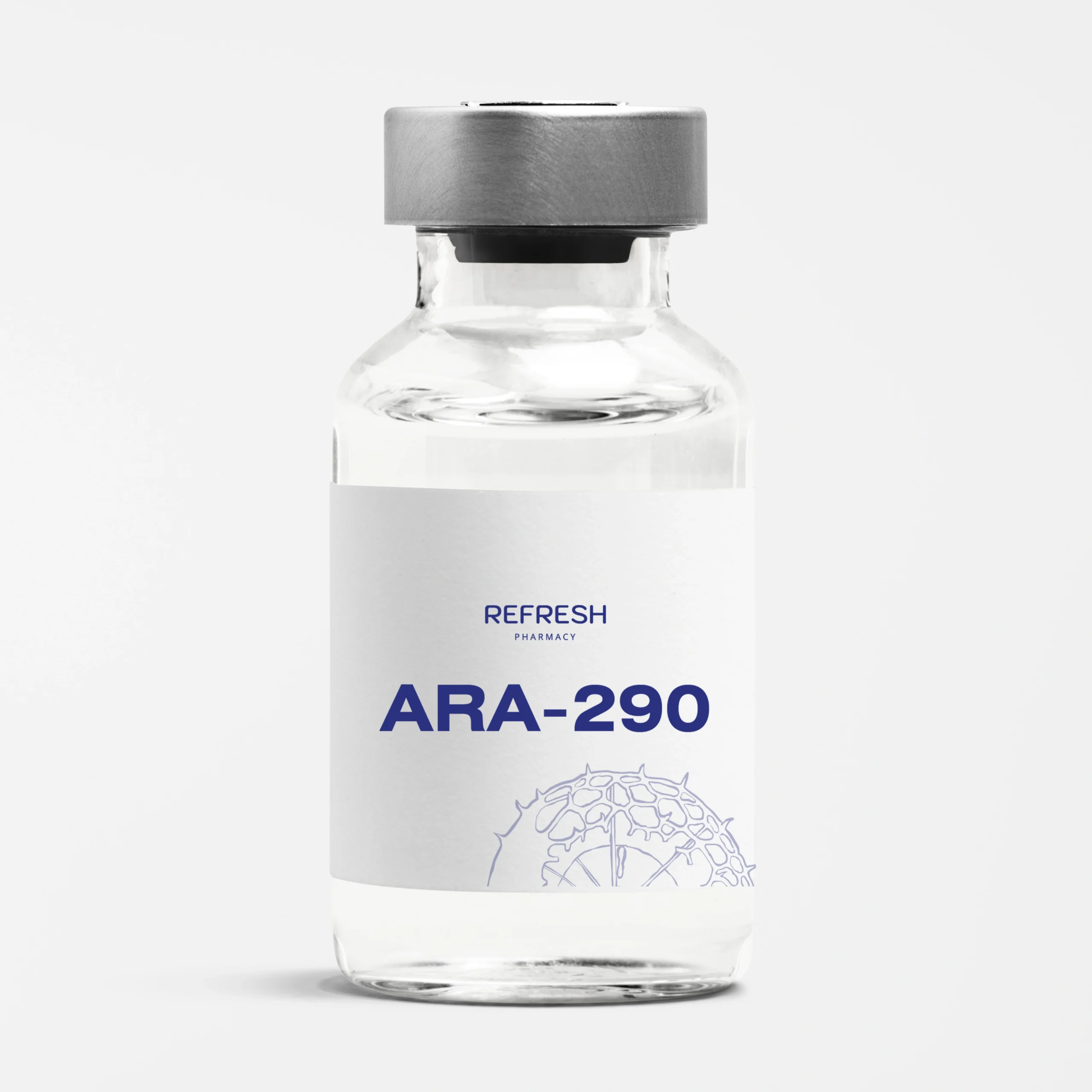
Research-grade Ara-290 is supplied as lyophilised (freeze-dried) white powder in sealed glass vials. Common formats available from research vendors in 2026 include 2mg, 5mg, and 10mg vials. Given that the clinical trial dose is 4mg daily, a 10mg vial represents approximately 2.5 days of research material at full clinical dosing — making larger vial formats or multi-vial orders standard for anyone running a 28-day cycle.
Reconstitution: Add bacteriostatic water slowly — typically 1–2mL per vial depending on target concentration — and allow the powder to dissolve without agitation. Reconstituted solution should be stored refrigerated at 2–8°C and used within 28 days. Unreconstituted lyophilised vials should be stored at -20°C for long-term stability and protected from light and moisture.
The Ara-290 injectable solution is administered subcutaneously — into the abdominal fat tissue, outer thigh, or upper arm — with site rotation between injections. The short plasma half-life (approximately 20 minutes) means that for systemic tissue-protective applications, daily administration is required to maintain adequate exposure to target tissues.
Community Research Protocols
The community research framework closely mirrors the published clinical trial design, with the Phase 2 protocols serving as the primary template:
Standard 28-day cycle (clinical trial-derived):
- 4mg subcutaneous injection once daily for 28 days
- Assessment at day 14 and day 28
- Minimum 4–6 week interval before repeat cycle
- Bloodwork monitoring: inflammatory markers (CRP, IL-6), fasting glucose, HbA1c, complete blood count
Conservative entry protocol (community adapted):
- 2mg subcutaneous once daily for 7 days
- Escalate to 4mg daily for weeks 2–4 if well tolerated
- This approach follows the cautious principle of starting below clinical trial doses to assess individual response before full dose commitment
Alternate-day protocol:
- 4mg subcutaneous every other day for 6–8 weeks
- Preferred by some researchers given the durable biological effects documented despite the short plasma half-life
- Consistent with the three-times-weekly intravenous dosing used in the initial sarcoidosis pilot trial
Stacking Considerations
Ara-290 is frequently researched alongside complementary compounds in community protocols:
- BPC-157: For enhanced tissue repair and anti-inflammatory effects through complementary mechanisms. BPC-157 operates through growth hormone receptor and NO signalling pathways distinct from the IRR, creating potential synergism in connective tissue and nerve repair research
- Thymalin: In immune modulation protocols where concurrent immune system recalibration alongside tissue repair is the research objective
- Semax or Selank: In neurological repair protocols where combined neuroprotective and cognitive support is the research focus
- Alpha-GPC or NAD+ precursors: In metabolic neuropathy research contexts where mitochondrial support alongside anti-inflammatory intervention is the theoretical framework
Ara-290 Peptide Price: Understanding the Cost Landscape in 2026
For researchers evaluating Ara-290 peptide price across the vendor landscape, several factors drive the cost structure of this particular compound.
Ara-290 is an 11-amino acid peptide — relatively compact by peptide standards — but its synthesis requires the pyroglutamate modification at the N-terminus (the “pGlu” residue) that is not a standard amino acid building block in conventional peptide synthesis. This modification adds complexity and cost to the manufacturing process, contributing to a price-per-milligram that is typically higher than comparably sized unmodified peptides.
As of mid-2026, typical Ara-290 peptide price ranges from reputable independent third-party tested vendors run approximately:
- 2mg vials: $25–$45
- 5mg vials: $55–$95
- 10mg vials: $90–$160
Given that a full 28-day clinical trial-equivalent protocol requires 112mg total (4mg × 28 days), the practical cost of a complete research cycle at clinical dosing is a meaningful consideration — typically $500–$900+ from quality-verified vendors, depending on vial size efficiency and vendor pricing. This is substantially higher than many shorter-peptide research compounds, which partially explains the interest in Ara-290 wholesale sourcing for researchers running extended or multi-cycle protocols.
When evaluating Ara-290 peptide price across vendors, the most important principle is familiar to any experienced grey market researcher: cost per milligram from a vendor whose documentation passes rigorous scrutiny. A lower-priced vial with inadequate purity verification or compromised synthesis quality is not a cost saving — it is a research failure with added sterility risk.
Grey Market Peptides and GLP-1: The Landscape Every Ara-290 Researcher Navigates
No honest discussion of Ara-290 USA supplier evaluation can bypass the broader grey market context — particularly as that context has been reshaped by the GLP-1 agonist phenomenon that has dominated peptide market dynamics through 2024–2026.
How the GLP-1 Surge Changed Everything
The explosion of interest in semaglutide, tirzepatide, and now retatrutide as research compounds transformed the peptide vendor landscape at a fundamental level. Supply shortages of branded GLP-1 medications, costs exceeding $1,200 monthly for approved versions, and widespread insurance denials pushed an unprecedented volume of consumers toward research-grade alternatives. This demand surge attracted a dramatically wider range of operators into the research peptide space — from legitimate manufacturers with genuine quality infrastructure to opportunistic vendors with minimal synthesis oversight.
The consequences have been documentable. Grey market GLP-1 samples tested by independent researchers and journalists revealed purity levels as low as 7–14% in some batches — meaning a consumer paying for 10mg of semaglutide received less than 1.5mg of actual active compound. Endotoxin contamination was found in samples that passed basic purity testing. The FDA issued more than 50 warning letters to GLP-1 vendors in September 2025, followed by a further enforcement wave in March 2026, specifically citing “Research Use Only” labelling as insufficient to exempt vendors from drug misbranding regulations when products are marketed for human use.
The critical insight for Ara-290 researchers: this enforcement and quality landscape applies to the entire grey market peptide space, not only to GLP-1 compounds. The same vendor infrastructure that sources and sells research-grade semaglutide often sells research-grade Ara-290. The same quality risks — synthesis purity variance, endotoxin contamination, inaccurate dosing — apply across the compound category. A vendor who cuts corners on GLP-1 synthesis quality controls is not suddenly rigorous about Ara-290 quality. Vendor reputation and documentation standards must be evaluated holistically, not compound-specifically.
Why Documentation Standards Matter More for Ara-290
Ara-290 presents a compound-specific quality consideration that makes rigorous documentation particularly important: the pyroglutamate (pGlu) N-terminal modification. This modification is essential to the peptide’s binding specificity for the IRR. A synthesis that produces standard glutamate at the N-terminus rather than pyroglutamate creates a structurally different compound with potentially different (and unpredictable) receptor binding characteristics. Standard mass spectrometry can distinguish between these forms — but only if the vendor provides batch-specific mass spec data. Vendors who provide only HPLC purity percentages without molecular weight confirmation leave the N-terminal modification status unverifiable.
This is not a theoretical concern. Pyroglutamate cyclisation from glutamine or glutamate N-termini can occur spontaneously under certain synthesis conditions, and the reverse — failure to achieve pyroglutamate formation when intended — is equally possible. Mass spectrometry confirmation of the correct molecular weight (approximately 1,257 Da) is the only way to verify that the compound in your vial actually has the correct structure for IRR activation.
What to Look for in a Reputable Ara-290 USA Supplier
Whether you are sourcing domestically from an Ara-290 USA supplier or internationally, the same quality standards apply. Here is the non-negotiable evaluation framework:
Independent third-party HPLC purity ≥98%: High-performance liquid chromatography purity testing from an independent laboratory — not vendor in-house testing — with a batch number that matches your specific order. The small size of Ara-290 (11 amino acids) means purity testing is technically simpler than for large peptides, but synthesis errors are still possible and substandard purity creates real uncertainty.
Mass spectrometry with molecular weight confirmation: Given the pyroglutamate N-terminal modification, mass spectrometry confirming the correct molecular weight of approximately 1,257 Da is essential — the distinguishing mark between structurally correct Ara-290 and a synthesis variant with different receptor binding properties.
LAL endotoxin testing: Standard for any injectable research compound. The IRR is expressed on immune cells including macrophages and monocytes — endotoxin contamination in an Ara-290 vial creates a compound that simultaneously activates the target receptor and stimulates a separate inflammatory response, confounding research outcomes and creating safety risks.
Batch-specific COA tied to your lot number: Generic COAs not referenced to a specific batch are inadequate documentation. Every certificate must carry a batch or lot number matching your specific vial.
Lyophilised powder in sealed glass vials: Ara-290’s short plasma half-life reflects a degree of hydrolytic sensitivity that makes pre-mixed liquid formats problematic for stability. Any vendor offering pre-reconstituted Ara-290 should be disqualified on stability grounds alone.
Domestic US sourcing advantages: For researchers in the United States, domestic Ara-290 USA supplier options offer meaningful advantages over international sourcing in the current regulatory environment: faster shipping (reducing time at ambient temperature), domestic cold-chain capability, and reduced regulatory risk at the point of import. Given the FDA enforcement wave that began in late 2025, international shipments of research peptides face heightened customs scrutiny. Domestic vendors who can demonstrate transparent operations present a lower total-risk sourcing option, provided their documentation standards are equivalent.
Wholesale sourcing for extended protocols: Given the high per-milligram cost relative to most research peptides and the clinical trial-equivalent doses required for meaningful research, Ara-290 wholesale procurement for multi-cycle protocols or research groups is often a practical necessity. Legitimate vendors offering volume pricing should provide the same documentation standards at wholesale as at single-vial retail — any reduction in documentation rigour at higher order volumes is a red flag, not a cost efficiency.
Frequently Asked Questions
Q: Is Ara-290 legal to purchase as a research compound? A: In the United States and most Western jurisdictions, Ara-290 is not a controlled substance and may be purchased legally under “Research Use Only” designations. It is not FDA-approved for human therapeutic use. It holds FDA Orphan Drug and Fast Track designations for sarcoidosis-related neuropathic pain — regulatory recognitions that acknowledge its clinical promise but do not authorise human therapeutic use outside approved trials.
Q: Does Ara-290 affect red blood cell production like EPO? A: No. This is the defining design characteristic of the compound. Ara-290 was specifically engineered to activate the IRR without engaging the classical homodimeric EPO receptor responsible for erythropoiesis. Multiple clinical trials across diabetic and sarcoidosis patient populations have confirmed no haematological effects — haemoglobin, haematocrit, and red blood cell counts remain unchanged across treatment periods. This eliminates the thrombosis, hypertension, and polycythaemia risks associated with native EPO.
Q: Why did Araim Pharmaceuticals close if the clinical data was positive? A: <cite index=”27-1″>What has held up further progression is primarily commercial and regulatory. The peptide patent landscape, the relatively small patient population for niche neuropathy indications, and the Phase 3 trial cost have all contributed to Araim Pharmaceuticals’ pacing.</cite> The Phase 2 trials were conducted in relatively small patient populations (sarcoidosis-associated SFN affects tens of thousands of patients in the US, not millions), and the investment required for a Phase 3 trial sufficient to support NDA submission was not commercially justified given the market size. This is a common fate for genuinely promising compounds targeting rare indications — scientific merit does not guarantee commercial viability.
Q: What does the short half-life (approximately 20 minutes) mean for research protocols? A: <cite index=”23-1″>Ara-290 is rapidly cleared with a half-life of approximately 20 minutes in human volunteers, yet daily or alternate-day subcutaneous doses reached effective tissue levels and delivered lasting biological effects.</cite> This means the compound does not maintain meaningful plasma concentrations between daily doses — but the downstream signalling cascades initiated by IRR activation appear to persist far beyond the compound’s presence in circulation. Daily dosing maintains the initiating signal; the biological effects (reduced inflammation, nerve fibre regeneration, macrophage reprogramming) are cumulative and durable.
Q: Is there an oral form available? A: No. Ara-290 is not orally bioavailable — as an 11-amino acid peptide, it is subject to rapid proteolytic degradation in the gastrointestinal tract before reaching systemic circulation. All clinical trial data uses subcutaneous (or intravenous in the initial sarcoidosis pilot) administration. <cite index=”19-1″>A 2025 study using an ARA 290 microneedle patch in a diabetic peripheral neuropathy rat model showed relief of mechanical pain and improved nerve structure, which supports transdermal or localised strategies in the future.</cite> Transdermal delivery via microneedle technology is an emerging research direction that may eventually provide an alternative to injection, but remains preclinical.
Q: What monitoring should accompany a research cycle? A: Minimum recommended monitoring framework includes baseline and follow-up assessment of: complete blood count (to confirm absence of haematopoietic effects), inflammatory markers (CRP, IL-6 — the primary pharmacodynamic targets), fasting glucose and HbA1c (particularly relevant in metabolic neuropathy research contexts), liver enzymes (standard precaution for any injectable compound), and for neuropathy research specifically, subjective symptom scoring using validated instruments (Brief Pain Inventory or equivalent) at baseline, day 14, and day 28.
Q: How does Ara-290 compare to BPC-157 for neuropathy research? A: The mechanisms are distinct and complementary. BPC-157 promotes tissue repair primarily through growth hormone receptor signalling, nitric oxide pathways, and angiogenesis promotion — mechanisms relevant to connective tissue, gut, and musculoskeletal repair. Ara-290 activates the IRR specifically at sites of inflammatory stress, driving macrophage reprogramming, neuroinflammation reduction, and direct small fibre nerve regeneration. For neuropathy research specifically, Ara-290 has the more directly relevant mechanism and the only actual human clinical trial data in neuropathy populations.
Q: Will Ara-290 ever receive FDA approval? A: <cite index=”20-1″>Status: Phase 2 completed, development stalled. Araim Pharmaceuticals ceased operations; no active trials or US IND as of 2026.</cite> Modified, longer-duration analogs of Ara-290 are reportedly in development by other parties, and the underlying IRR mechanism continues to attract academic and pharmaceutical research interest. But for the compound as currently synthesised and sold in the research market, no active regulatory approval pathway exists as of mid-2026.
Real Researcher Experiences: What the Community Reports
The following accounts are composite experiences drawn from neuropathy patient communities, peptide research forums, and independent researcher discussions as of 2025–2026. These are self-reported anecdotal observations, not clinical outcomes, and do not constitute medical advice.
Dr. Sandra M., 56, neurologist and researcher (United States) “My interest in Ara-290 began with the 2013 Dahan et al. paper in Molecular Medicine — the corneal nerve fibre density findings were striking enough that I began following the clinical programme closely. When Araim Pharmaceuticals ceased operations without completing Phase 3, I began exploring research-grade access for a patient population where standard neuropathy treatments were failing. The Phase 2 dosing protocol — 4mg subcutaneous daily for 28 days — is well-characterised enough that I feel confident working from it as a research framework. Patient-reported pain outcomes after two 28-day cycles have been more consistently positive than anything conventional pharmacology has offered these individuals. I do rigorous bloodwork monitoring every two weeks and corneal confocal microscopy at baseline and day 28 to track objective fibre density changes.”
James T., 62, type 2 diabetic and metabolic researcher (United Kingdom) “I’ve had peripheral neuropathy for eleven years — the burning foot pain was genuinely debilitating at its worst. After conventional treatments produced inadequate results, I began researching the diabetic neuropathy trial data and eventually found a reputable Ara-290 USA supplier willing to export with full independent documentation. Three 28-day cycles over 18 months: the most significant outcome has been a measurable reduction in neuropathic pain intensity that has sustained between cycles. The HbA1c improvement documented in the Brines 2014 trial also appeared in my own bloodwork — a finding I was not specifically expecting. I run inflammatory markers every cycle and they have moved consistently in the anti-inflammatory direction.”
Maria V., 49, sarcoidosis patient and health researcher (Netherlands) “As a sarcoidosis patient with documented small fibre neuropathy — confirmed by skin biopsy and corneal confocal microscopy — I was aware of the Leiden University trials and the Culver 2017 paper before I began researching the grey market Ara-290 injectable solution. My neurologist is aware of my research protocol and reviews my bloodwork with me. After two cycles, corneal confocal microscopy at the academic medical centre where I’m monitored showed a measurable increase in nerve fibre density compared to baseline. The change is modest but objective. For a condition where almost no effective treatment exists, any objective nerve regeneration signal is meaningful.”
Dr. Chen W., 47, pharmacologist and research scientist (Australia) “What draws me to Ara-290 from a pharmacological standpoint is the IRR mechanism’s tissue-selectivity. The receptor is upregulated at sites of injury and inflammation — which means the compound concentrates its effects precisely where biological activity is needed and has minimal impact on tissues that are not under inflammatory stress. The short plasma half-life initially puzzled me until I spent time with the downstream signalling literature. The IRR initiates transcriptional programmes — macrophage phenotype reprogramming, VEGF signalling, BDNF upregulation — that persist far beyond receptor occupancy. You’re not maintaining constant receptor activation with daily dosing; you’re repeatedly initiating a self-sustaining repair programme. The pharmacology is genuinely elegant.”
Rebecca N., 53, functional medicine clinician (Canada) “I evaluate research-grade Ara-290 peptide price across vendors carefully because the clinical dose requirement (4mg/day × 28 days = 112mg per cycle) makes this one of the more expensive research protocols I run. The mass spectrometry data is my non-negotiable — the pyroglutamate N-terminal modification is not verifiable from HPLC data alone, and I’ve had two vendors unable to provide proper mass spec documentation despite excellent claimed purity figures. The vendors who can provide both HPLC purity ≥98% and mass spec molecular weight confirmation consistently produce vials with reproducible biological activity. The ones who can’t, don’t. That pattern has been consistent enough across my research experience that I now consider mass spec documentation as a hard requirement, not a nice-to-have.”
Summary: Making the Research Decision
Ara-290 occupies a genuinely unique position in the research peptide landscape. It has more human clinical trial data than almost any other compound currently available through grey market research channels. Its mechanism — selective IRR activation without haematopoietic effects — is scientifically sophisticated, well-characterised, and elegantly selective. Its safety record across multiple Phase 2 trials is remarkably clean. And its applications — small fibre neuropathy, diabetic peripheral neuropathy, inflammatory conditions, and emerging neuropsychiatric research — address areas of profound unmet need that conventional medicine has struggled to serve.
The commercial stalling of Araim Pharmaceuticals before Phase 3 completion is a genuine loss for patients and the research community. But it is not a scientific verdict on the compound — it is an economic one. The Phase 2 data remains valid. The mechanism remains well-characterised. And the compound remains accessible to researchers through the grey market framework that governs all non-approved research peptides in 2026.
Understanding Ara-290 peptide price, evaluating each Ara-290 USA supplier against rigorous documentation standards including mass spectrometry verification, running research cycles that mirror the clinical trial protocols, and monitoring outcomes systematically — that is the framework that makes Ara-290 research both meaningful and responsible.
In a peptide research space crowded with preclinical promise and limited human evidence, Ara-290 offers something genuinely rare: a compound whose clinical data in human beings actually reflects what the preclinical science predicted. That distinction is worth the careful work of sourcing it correctly.
Disclaimer: This content is for informational and educational purposes only. Ara-290 (cibinetide) is not approved by the FDA or EMA for human therapeutic use. Araim Pharmaceuticals, which held the active IND for this compound, ceased operations in 2026 and no active clinical programme exists. This page does not constitute medical advice. All research use of this compound is at individual risk and responsibility. Consult a qualified healthcare professional before beginning any research peptide protocol.
Tags: Ara-290 peptide price | Ara-290 wholesale | Ara-290 USA supplier | Ara-290 injectable solution | Ara-290 cibinetide | Innate repair receptor agonist | Small fiber neuropathy research | Diabetic neuropathy peptide | Grey market peptides GLP-1 | EPO-derived peptide 2026
| Dose | 10mg*10vials |
|---|
Be the first to review “Ara-290”
Related products
HEALING/REPAIR
HEALING/REPAIR
Reviews
There are no reviews yet.