Cagrilintide
Price range: $132.00 through $253.00
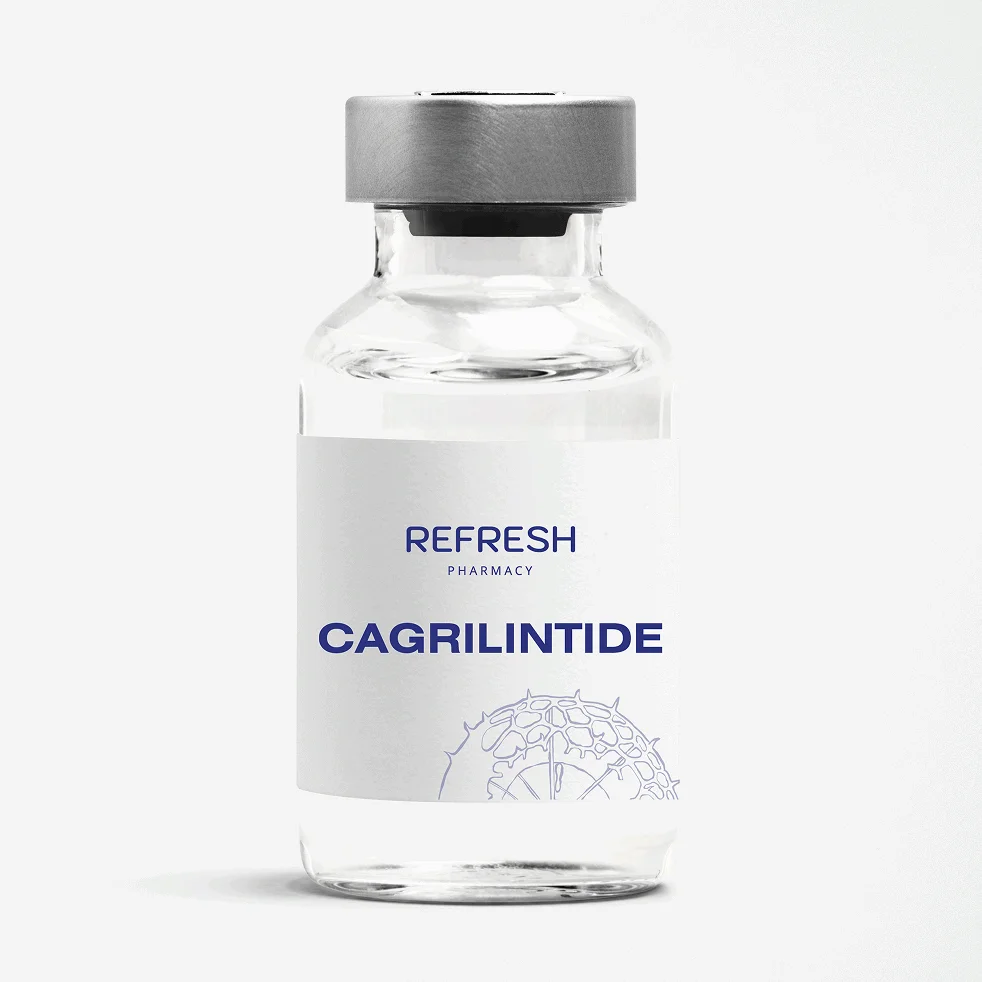
 Cagrilintide is a long-acting amylin analog peptide designed to support healthy appetite control and metabolic balance. It works by mimicking natural satiety signals in the body, helping to promote feelings of fullness and reduce overall food intake.
Often explored in metabolic research, Cagrilintide is valued for its potential role in weight management protocols and energy balance support. Its extended duration of action makes it a standout option in modern peptide science focused on satiety signaling pathways.
Key Highlights:
- Supports appetite regulation and satiety signaling
- Long-acting peptide structure for sustained activity
- Studied in metabolic and weight management research
- May complement structured nutrition and wellness programs
Cagrilintide — Research-Grade Peptide for Laboratory Use
Cagrilintide Buy Online: A Guide for Research Buyers
Cagrilintide buy online Cagrilintide is a long-acting amylin receptor agonist developed by Novo Nordisk, studied for its effects on appetite regulation and energy balance, most notably in combination with semaglutide under the investigational and now partially-approved combination known as CagriSema. Researchers and procurement teams searching for listings are typically looking for a well-documented, high-purity peptide suitable for controlled experimental protocols — not a consumer weight-loss product, and it’s important to be upfront that the two are very different things with very different risk profiles.
This page is written for that research-buyer audience. Nothing here is guidance for human self-administration or dosing. Cagrilintide’s regulatory status varies significantly by jurisdiction and by whether it’s used alone or combined with semaglutide, and even where a combination product has been approved, that approval applies to a specific manufactured pharmaceutical — not to peptide powder purchased from a research chemical vendor.
What Is Cagrilintide?
Cagrilintide is a synthetic analog of amylin, a hormone co-secreted with insulin by pancreatic beta cells that plays a role in satiety signaling and gastric emptying. Unlike native amylin, which has a short half-life, cagrilintide has been chemically modified with a fatty acid side chain (similar in concept to the modification used in semaglutide) to extend its half-life to roughly 7 days, supporting once-weekly dosing in the clinical formulations studied.
Key areas covered in the existing scientific and clinical literature include:
- Amylin receptor agonism — cagrilintide activates amylin receptors, which are thought to contribute to appetite suppression through a mechanism distinct from, but complementary to, GLP-1 receptor agonism.
- Monotherapy trials — Phase II data on cagrilintide alone showed measurable weight reduction compared to placebo, though generally less than combination therapy.
- CagriSema combination trials — cagrilintide combined with semaglutide has been studied extensively in Phase III trials for obesity and type 2 diabetes, showing additive weight-loss effects compared to semaglutide alone in several published trial results.
- Cardiometabolic and glycemic research — ongoing studies are examining effects on markers beyond weight, including glycemic control and cardiovascular risk factors.
This is clinical trial and pharmacological literature, not a description of an approved consumer product. Approval status differs by country and is generally limited to the combination formulation manufactured and distributed by Novo Nordisk under regulatory oversight — not to peptide sold independently by research suppliers.
Cagrilintide Peptide for Sale: What Actually Matters
Given how recently cagrilintide entered wider awareness through the CagriSema trials, the market for Cagrilintide peptide for sale listings has grown quickly — and quality control has not kept pace with demand. The signals that actually distinguish a legitimate research listing from a risky one:
1. Certificate of Analysis (CoA) A legitimate supplier provides batch-specific HPLC and mass spectrometry data confirming purity, typically ≥98% for research-grade peptide, matched to the specific lot being shipped.
2. Peptide identity verification Cagrilintide is a large, structurally complex peptide with a fatty acid conjugate. Mass spectrometry confirmation of the correct molecular weight is the only reliable way to verify you’re receiving the actual compound rather than a degraded, truncated, or entirely mislabeled product — an issue independent testing has repeatedly found in the unregulated peptide market for newer, high-demand compounds.
3. Sterility and endotoxin data For any cell-based or animal research application, sterile-filtered, endotoxin-tested lots are essential. This matters more, not less, for a compound this structurally complex, since synthesis errors are more likely to introduce contaminants.
4. Storage and stability documentation Lyophilized cagrilintide should be stored frozen and protected from light and moisture, with a defined stability window. A supplier who can’t specify storage conditions or shelf life on the CoA is providing incomplete — and for a compound this new to the market, largely unverified — information.
5. Reconstitution guidance for research protocols Legitimate suppliers describe solvent compatibility in terms of achieving a specific molarity for an experimental design. Consumer-style dosing charts, “starting dose” recommendations, or injection-frequency guidance are a strong signal a listing is marketing toward personal use rather than laboratory research, regardless of an RUO label elsewhere on the page.
Where to Buy Cagrilintide: Evaluating a Supplier
The honest answer to where to buy Cagrilintide for legitimate research purposes is: from a supplier who treats it with the documentation rigor its complexity demands, not one riding the wave of consumer interest in GLP-1/amylin combination therapies. Questions worth asking any Cagrilintide supplier:
- Will they provide a batch-specific CoA with mass spec data before purchase, not a generic purity claim?
- Can they explain their synthesis or sourcing process for a peptide this structurally complex, including the fatty acid conjugation step?
- Do they operate under any documented quality system, and can that be verified independently rather than taken on their word?
- Is the product explicitly and consistently labeled “for laboratory research use only, not for human consumption” — across the whole site, not just in a footer disclaimer contradicted by dosing content elsewhere on the page?
- Can they issue proper invoicing and SDS documentation for institutional or grant-funded purchases?
Because cagrilintide is newer to the grey market than more established research peptides, there’s less independent third-party testing data circulating publicly, which makes supplier documentation even more important as a substitute for the track record that older compounds have accumulated.
A Note on Grey-Market Peptides and GLP-1/Amylin Compounds
This deserves direct treatment rather than a brief mention, because cagrilintide sits squarely in the category of highest concern.
Cagrilintide is only approved — where it’s approved at all — as part of a specific, precisely manufactured combination product administered under medical supervision. Grey-market cagrilintide sold as a standalone research peptide, often marketed alongside semaglutide or tirzepatide “for research purposes,” carries good results that go to the use of general concerns with regulated peptides:
- No verified sterility, purity, or even confirmed identity in many cases. Because cagrilintide is newer and more complex to synthesize correctly than earlier-generation peptides, the risk of receiving a degraded or incorrect product from an unverified source is meaningfully higher.
- Dosing calibrated for research titration, not human pharmacokinetics. Combining this mismatch with a fatty-acid-conjugated, long-half-life peptide is particularly risky — errors don’t clear the system quickly, and effects can compound over a dosing cycle before a problem becomes apparent.
- No prescriber screening. Amylin and GLP-1 receptor agonists carry contraindications (personal or family history of certain thyroid cancers, pancreatitis risk, gastroparesis) that legitimate prescribing protocols specifically screen for. Grey-market purchasing bypasses that screening entirely.
- Active regulatory attention. The FDA and equivalent bodies internationally have issued warnings specifically about compounded and grey-market GLP-1 and amylin-class products, a category that has expanded rapidly alongside consumer demand for weight-loss peptides during branded-drug shortages.
If a research program has a genuine, IRB/IACUC-approved reason to work with cagrilintide, sourcing should go through channels that can support that level of documentation and oversight. If the actual interest is personal weight management, that conversation belongs with a licensed prescriber who can evaluate CagriSema or comparable approved options where available — not with a peptide vendor, given how much more serious the risk profile is here than with an older, better-characterized research compound.
Frequently Asked Questions
Is Cagrilintide legal to buy? This depends heavily on jurisdiction and on how the product is marketed. In some regions, unapproved peptides can be legally sold when explicitly labeled and marketed for laboratory research use rather than human consumption. Because CagriSema has begun receiving approval in specific markets as a combination pharmaceutical, standalone cagrilintide sold outside that regulatory pathway occupies a genuine grey area that varies by country — buyers should verify their local regulations rather than assume research-chemical status automatically applies.
How is Cagrilintide different from semaglutide? They work through different receptor systems — semaglutide is a GLP-1 receptor agonist, while cagrilintide is an amylin receptor agonist. Clinical trials combining the two (CagriSema) have shown additive effects on weight reduction compared to either compound alone, which is the primary reason for cagrilintide’s recent surge in research and consumer interest.
What purity level should research-grade Cagrilintide have? Most legitimate suppliers target ≥98% purity verified by HPLC, alongside mass spectrometry confirmation of molecular weight given the compound’s structural complexity. Given how new this peptide is to the research-chemical market, purity claims without supporting batch data should be treated with particular skepticism.
How should Cagrilintide powder be stored? Lyophilized peptide is generally stable frozen, protected from light and moisture. Because the compound includes a fatty acid conjugate, stability data is still less established in the wider market compared to older peptides, which is another reason batch-specific documentation from the supplier matters.
Is Cagrilintide the same thing as CagriSema? No. CagriSema is a specific, approved (in limited markets) combination pharmaceutical product containing both cagrilintide and semaglutide in a fixed formulation. Cagrilintide sold independently as a research peptide is a different product entirely, with none of the manufacturing oversight or clinical dosing data that applies to the approved combination.
Does a lower price indicate lower quality? Not automatically, but given how new and structurally complex cagrilintide is, unusually low prices with no batch-specific mass spec data are a stronger red flag here than with more established research peptides, where at least some independent testing history exists.
Can institutional buyers use Cagrilintide purchases for grant reporting? Yes, provided the supplier issues an itemized invoice with lot/batch information and appropriate SDS documentation. Given the regulatory attention this compound class is currently receiving, institutions should also confirm the purchase complies with their own research chemical procurement policies before ordering.
What red flags suggest a listing isn’t from a legitimate research supplier? Marketing language borrowed from weight-loss consumer products, dosing schedules framed around personal injection use, testimonial-driven sales copy, absence of mass spectrometry data, and bundling with semaglutide or tirzepatide as a “stack” aimed at consumers rather than labs are the clearest signals.
Summary
For labs and procurement teams sourcing this compound, the decision should rest on documentation, verified identity, and supplier transparency — not on riding consumer enthusiasm around GLP-1/amylin weight-loss therapies. When evaluating listings for Cagrilintide buy online, prioritize a batch-specific CoA with mass spectrometry confirmation, endotoxin testing, and a supplier willing to answer direct questions about synthesis and quality control. Apply the same scrutiny to any Cagrilintide supplier offering adjacent GLP-1 or amylin-class compounds — this is the category where grey-market sourcing carries the most serious real-world risk, and where the gap between “research use only” labeling and actual buyer intent is often widest.
| Dose | 5mg*10vials, 10mg*10vials |
|---|
Be the first to review “Cagrilintide”
Related products
WEIGHT LOSS
MUSCLE GROWTH/BODYBUILDING/RECOVERY
WEIGHT LOSS
WEIGHT LOSS
WEIGHT LOSS
WEIGHT LOSS
Reviews
There are no reviews yet.