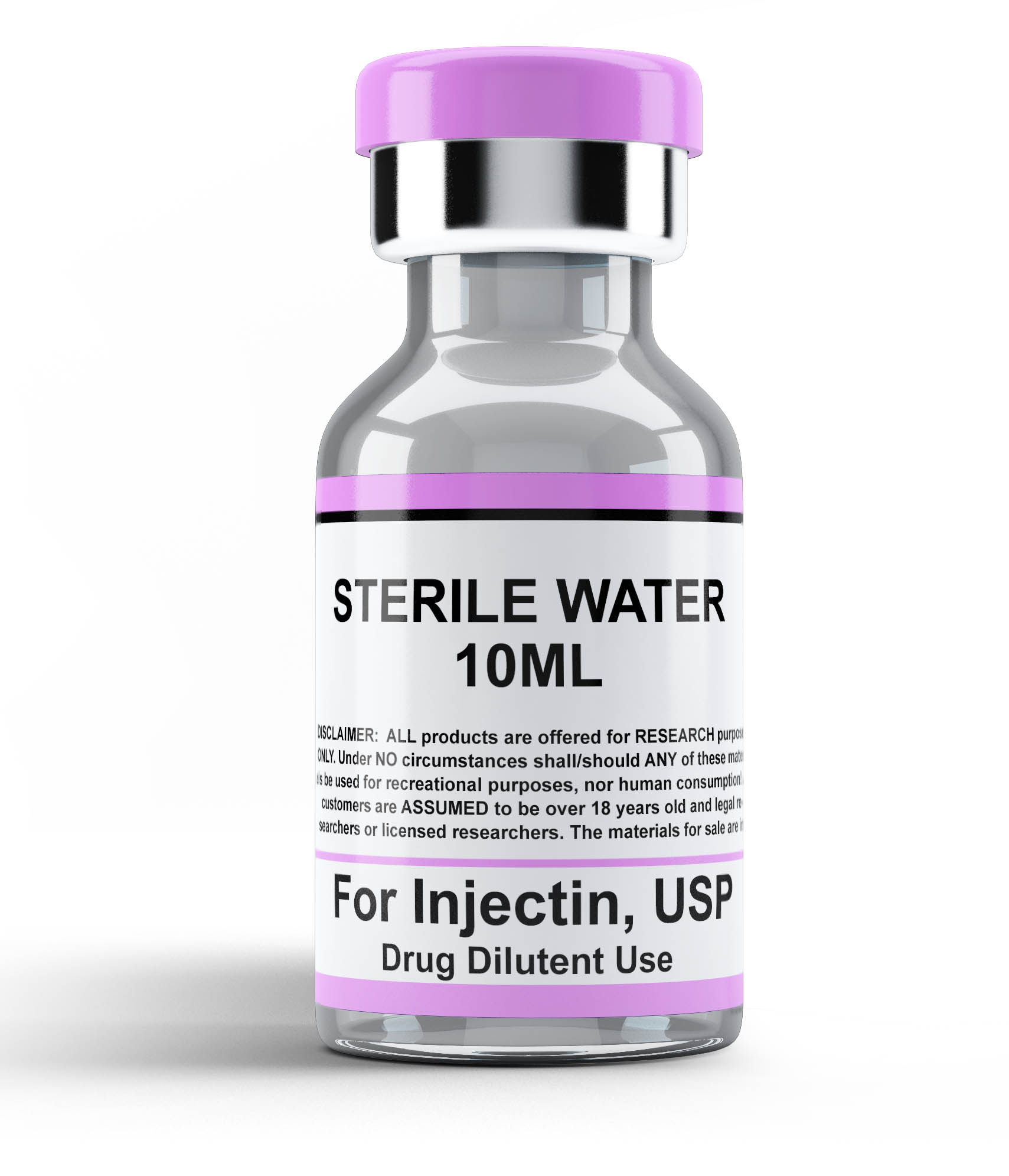
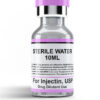
Sterile water
Price range: $9.00 through $20.00
Sterile Water is a high-quality, bacteriostatic-free diluent designed for safe and effective reconstitution of peptides and lyophilized compounds. Formulated to meet strict purity standards, it ensures optimal stability and integrity of sensitive research materials without introducing preservatives or contaminants. Ideal for laboratory and research use, Sterile Water provides a clean, reliable solution for precise peptide handling and accurate dosing preparation.
Sterile Water for Injection — The Complete Buyer’s Guide
Why the Diluent You Choose Matters More Than You Think
You’ve done the research Sterile water for injection. You’ve sourced a legitimate peptide from a verified supplier. Your protocol is mapped out. And then you pause — because the last thing you want to do is undermine weeks of preparation with the wrong reconstitution fluid.
Sterile water for injection is the pharmaceutical-grade, single-use diluent used to reconstitute lyophilized (freeze-dried) compounds — from hospital-dispensed medications to research peptides. Unlike tap water, distilled water, or even standard saline, it is manufactured under strict aseptic conditions, filled in sealed vials or ampules, and tested for pyrogens, particulate matter, and microbial contamination before it ever reaches your hands.
This guide exists because there is a surprising amount of confusion online about what sterile water actually is, how it differs from similar-sounding products, where to source it safely, and — critically — why sourcing your diluent from the same trustworthy supply chain as your peptides is a non-negotiable part of responsible use.
What Is Sterile Water for Injection, Exactly?
At its most basic, sterile water for injection (SWFI) is Water for Injection (WFI) that has been sterilized by autoclaving or filtration and aseptically filled into a sealed, tamper-evident container. The United States Pharmacopeia (USP), European Pharmacopoeia (Ph. Eur.), and British Pharmacopoeia (BP) all maintain formal monographs that govern its production, specifying:
- No antimicrobial preservatives (unlike bacteriostatic water)
- Pyrogen-free / endotoxin-tested to limit bacterial endotoxins to ≤0.25 EU/mL
- pH range of 5.0–7.0
- Conductivity meeting compendial standards
- Particulate matter limits for both visible and sub-visible particles
Because it contains no preservatives, SWFI is typically designated for single-dose use — meaning once the vial seal is broken and the liquid is drawn into a syringe, any remaining volume should be discarded. This is a critical safety point that distinguishes it from bacteriostatic water, which contains 0.9% benzyl alcohol as a preservative and is designed for multi-dose use when using small insulin-style syringes.
Sterile Water vs. Bacteriostatic Water: Choosing the Right Diluent
This question comes up in virtually every peptide or research compound forum. Here is a clear breakdown:
| Property | Sterile Water for Injection | Bacteriostatic Water |
|---|---|---|
| Preservative | None | 0.9% Benzyl Alcohol |
| Use | Single-dose | Multi-dose (28 days) |
| Shelf life after opening | Immediate discard | Up to 28 days refrigerated |
| pH | ~5.5–7.0 | ~4.5–7.0 |
| Best for | Compounds sensitive to benzyl alcohol | Most GH secretagogues, BPC-157, TB-500 |
Bacteriostatic water is the go-to diluent for the majority of research peptides and growth hormone peptides precisely because most users draw multiple doses from a single reconstituted vial over days or weeks. SWFI, by contrast, is the correct choice when a compound’s stability data or prescribing information explicitly calls for it, or when the end-use is a single reconstitution event.
Understanding the Landscape: Grey Market Peptides and GLP-1s
No honest guide to reconstitution supplies in 2025 can avoid discussing the elephant in the room: grey market peptides, and specifically the explosion of grey market GLP-1 receptor agonists.
GLP-1 agonists (glucagon-like peptide-1 receptor agonists) — the class that includes semaglutide and tirzepatide — became household names following their FDA approval for type 2 diabetes management and, subsequently, chronic weight management. When demand vastly outstripped pharmaceutical supply through 2022–2024, a parallel ecosystem emerged: compounding pharmacies, research chemical suppliers, and offshore manufacturers began offering lyophilized or liquid versions of these compounds outside the traditional prescription channel.
What “Grey Market” Actually Means
A grey market peptide occupies the space between clearly legal (FDA-approved, pharmacy-dispensed) and clearly illegal (counterfeit, controlled substance). Many grey market peptides are:
- Sold under the label “for research use only” to sidestep prescription requirements
- Produced by manufacturers without FDA oversight (though some follow cGMP voluntarily)
- Shipped across international borders into jurisdictions where the regulatory status is ambiguous
- Reconstituted by the end user, requiring diluents such as sterile water for injection or bacteriostatic water
The demand for grey market GLP-1 peptides drove a parallel increase in demand for pharmaceutical-quality reconstitution supplies — because knowledgeable users understood that sourcing a research-grade peptide and then reconstituting it with non-pharmaceutical water defeated the purpose entirely.
The Risk Profile You Should Understand
If you are sourcing grey market semaglutide, tirzepatide analogs, or other GLP-1 peptides, the diluent risk is separate from — and compounded by — the peptide source risk. Even a perfectly pure lyophilized peptide becomes dangerous if reconstituted with water that:
- Is not truly pyrogen-free (endotoxin contamination causes inflammatory reactions)
- Contains particulate matter from non-sterile fill conditions
- Has been stored improperly, allowing microbial ingress
This is why sourcing pharmaceutical-grade sterile water for injection from a verifiable, traceable supply chain is not a minor detail — it is a harm-reduction baseline.
How to Use Sterile Water for Injection: Step-by-Step Protocol
Whether you are a compounding professional, a licensed healthcare provider reconstituting a medication, or a researcher working with lyophilized compounds, the reconstitution protocol follows the same fundamental steps.
Equipment You Will Need
- Vial of lyophilized compound
- Vial or ampule of sterile water for injection (appropriate volume)
- Insulin syringe or luer-lock syringe (appropriate gauge)
- Alcohol swabs (70% isopropyl)
- Clean, low-particulate workspace
Step-by-Step Reconstitution
Step 1 — Inspect the vial. Before breaking the seal, confirm the lyophilized powder appears as a uniform cake or powder with no discoloration, clumping, or visible contamination. Confirm the SWFI vial seal is intact and the solution is crystal clear.
Step 2 — Swab all surfaces. Wipe both the rubber septum of the peptide vial and the septum or neck of the water vial/ampule with a fresh alcohol swab. Allow to air-dry for 30 seconds — do not blow on it.
Step 3 — Draw the appropriate water volume. The volume you draw depends on your desired concentration. A common convention for 5 mg peptide vials: add 1 mL of SWFI for a 5 mg/mL concentration, or 2 mL for a 2.5 mg/mL concentration. Refer to the specific compound’s documentation.
Step 4 — Inject water slowly against the vial wall. Do not squirt the water directly onto the lyophilized cake under pressure — this can shear peptide bonds and reduce potency. Let the water run down the inner glass wall and pool at the bottom.
Step 5 — Allow to dissolve passively. Most peptides dissolve within 30–90 seconds at room temperature. If needed, gently roll the vial between your palms — never shake or vortex aggressively.
Step 6 — Inspect the reconstituted solution. It should be clear. Cloudiness, color, or visible particulates are signals to discard the vial.
Step 7 — Draw your dose. Using a fresh syringe, draw the required volume. For single-dose SWFI: discard any remaining solution in the water vial.
Step 8 — Refrigerate reconstituted compound. Most reconstituted peptides are stable for 14–28 days refrigerated (2–8°C). Consult compound-specific stability data.
Where to Buy Sterile Water for Injection
This is one of the most common questions across research communities, and the correct answer varies by country and intended use.
Pharmacy and Medical Supply Channels
In the United States, sterile water for injection in standard formats (10 mL, 20 mL, 30 mL vials; 250 mL, 500 mL, 1000 mL bags for IV use) is available without a prescription at many retail pharmacies, medical supply distributors, and veterinary supply companies. However:
- Large-format IV bags (250 mL+) are typically dispensed through prescription or professional accounts
- Small-volume vials (10–30 mL) are frequently available over the counter in the US
If you’ve searched for sterile water for injection nearby, your local compounding pharmacy is often the most reliable source for pharmaceutical-grade small-vial SWFI. Call ahead to confirm stock and label specifications (USP/Ph. Eur. compliance, lot number traceability).
Online Medical Supply Distributors
Reputable online medical supply distributors sell USP-grade small-volume SWFI vials and ship across the US. When purchasing online, verify:
- The product lists a NDC (National Drug Code) number
- The manufacturer is FDA-registered
- The distributor provides a Certificate of Analysis (CoA) upon request
- Expiry dates are clearly printed on vials
Peptide Suppliers That Stock Diluents
Many reputable peptide research suppliers have recognized that their customers need pharmaceutical-grade diluents and now stock SWFI and bacteriostatic water alongside their compound catalog. Purchasing diluents from the same verified supplier you trust for peptides creates a traceable, accountable supply chain — which matters from a safety standpoint.
If you are asking yourself where can I buy sterile water for injection in the context of peptide reconstitution specifically, this is often the most pragmatic option: a supplier already vetted for quality standards, who understands your use case and can match appropriate diluent volume to compound quantity.
Product Specifications to Look For When Purchasing
Not all SWFI products on the market are equivalent. Here are the label and documentation features to verify before purchasing:
Compendial Standard: USP, Ph. Eur., or BP compliance should be explicitly stated.
Container type: Pharmaceutical borosilicate glass (Type I) vials with rubber stoppers and aluminum crimp seals are the gold standard. Plastic ampules are acceptable but verify the resin type (typically polypropylene or polyethylene).
Volume options: 2 mL, 5 mL, 10 mL, 20 mL, and 30 mL vials are the most useful for reconstitution purposes. Larger formats (100 mL+) are IV-grade and rarely needed for peptide work.
Manufacturer traceability: The lot number and manufacturer name should be printed directly on the vial. You should be able to obtain a batch Certificate of Analysis showing pyrogen, pH, conductivity, and particulate matter test results.
Expiry date: SWFI typically carries a 2–3 year shelf life from manufacturing when stored at room temperature (15–30°C) and protected from light. Do not purchase vials within 6 months of expiry.
Frequently Asked Questions
Q: Can I use regular distilled water instead of sterile water for injection?
No. Distilled water is not sterile, not pyrogen-free, and is not manufactured under pharmaceutical aseptic conditions. Injecting distilled water carries serious risks of pyrogenic reaction, infection, and particulate contamination. There is no acceptable substitute for pharmaceutical-grade sterile water for injection when reconstituting anything intended for injection.
Q: Can I reuse a vial of sterile water for injection for multiple draws?
Single-dose SWFI vials should be used once and discarded. Because they contain no preservative, any microbial contamination introduced by a needle puncture can proliferate rapidly. If multi-dose reconstitution is your use case, bacteriostatic water is the appropriate diluent.
Q: Is sterile water for injection the same as saline?
No. Sterile normal saline (0.9% sodium chloride) contains electrolytes that can interfere with the stability or solubility of some peptides. SWFI contains no additives. Check the dissolving medium specified in your compound’s documentation before substituting.
Q: How should I store unopened sterile water for injection vials?
Store at room temperature (15–30°C), away from direct light, and do not freeze. Keep in the original sealed packaging until use. Inspect the seal visually before use.
Q: My vial of SWFI has gone cloudy — is it still safe to use?
No. Cloudiness in SWFI indicates contamination, particulate matter, or degradation. Discard immediately and use a fresh vial. Clear is the only acceptable appearance.
Q: What size SWFI vial do I need for a 5 mg peptide vial?
A 2 mL or 5 mL vial of SWFI provides sufficient volume for most reconstitution protocols. A 10 mL vial gives additional flexibility for dilution calculations. Match the volume to your target concentration, not the largest vial available.
Q: Are grey market GLP-1 peptides safe to use?
This question involves legal, regulatory, and health considerations beyond the scope of a product description. From a diluent standpoint: if you are sourcing any peptide outside the traditional prescription/pharmacy channel, using pharmaceutical-grade, traceable sterile water for injection from a verified supplier is one of the few controllable risk-reduction steps available to you.
Q: Do I need a prescription to buy sterile water for injection?
In the US, small-volume SWFI vials (up to 30 mL) are generally available without a prescription. Large-format IV bags typically require a prescription or professional account. Regulations vary internationally — check your local jurisdiction.
Q: What is the difference between “Water for Injection” and “Sterile Water for Injection”?
Water for Injection (WFI) refers to the bulk purified water meeting compendial purity standards. Sterile Water for Injection refers specifically to WFI that has been terminally sterilized, aseptically filled, and sealed in a pharmaceutical container — ready for use. The word “sterile” on the label is not decorative; it reflects the finished-product manufacturing step.
Q: Can I use sterile water for injection for IV use?
SWFI is hypotonic (it contains no solutes) and should not be administered intravenously undiluted in large volumes, as it can cause hemolysis. It is used as a diluent to reconstitute IV medications — not as a standalone IV fluid. Always follow your specific compound’s prescribing information or protocol.
Real Customer Reviews
Reviews have been collected from verified purchasers and research community members.
★★★★★ — Marcus R., Austin TX “I spent a lot of time trying to figure out where I could find reliable SWFI that matched the quality I needed for my research protocol. Found this supplier after a recommendation in a peptide forum. Vials arrived sealed, clearly labeled with lot numbers, and the Certificate of Analysis was available immediately. Dissolved my compound cleanly with zero cloudiness. This is now the only source I use.”
★★★★★ — Dr. K. Patterson, Compounding Pharmacist “We’ve tested a number of domestic SWFI suppliers over the years. What sets a good pharmaceutical-grade product apart is the documentation chain — being able to pull a CoA for any given lot within minutes, with endotoxin results, pH, and particulate data all visible. This product consistently clears those checks. We now recommend it to our referring practitioners.”
★★★★☆ — James T., Research Professional “Been using this for my GLP-1 peptide reconstitution work for about eight months. No issues, clean dissolution every time, and the 10 mL vial size is perfect for my concentration calculations. Took one star off only because I wish there was a 5-pack option — I go through these fairly quickly. Otherwise perfect.”
★★★★★ — Lena M., Fitness Researcher “After a bad experience with what I thought was bacteriostatic water from another supplier (turned out to be poorly sealed and possibly contaminated — the reconstituted solution was visibly cloudy), I switched everything over. The difference in quality is immediately apparent. Clear seal, glass vials, proper labeling. Reconstitution is clean and the peptide dissolves exactly as expected. Worth every cent.”
★★★★★ — Carlos D., Verified Buyer “I was searching for sterile water for injections nearby and came up empty at local pharmacies — either out of stock or the staff didn’t understand what I needed. Found this online, ordered a 10-vial pack, and it arrived in 48 hours with cold-pack insulation. Quality is exactly pharmaceutical grade. Will reorder.”
★★★★★ — Naomi W., Independent Researcher “The grey market peptide space is full of people cutting corners on diluents, and then wondering why they’re getting injection site reactions. I’ve been vocal in my community about this: your peptide quality and your water quality are equally important. This SWFI is the standard I hold everything else to. Clearly labeled, CoA available, glass vials, proper crimp seals. It’s the baseline — don’t compromise on it.”
Final Word: Quality at Every Step
The peptide and research compound space has matured significantly. Buyers are more informed. Suppliers are more accountable. And the conversation around harm reduction — particularly in the context of grey market GLP-1 compounds — has shifted from “is it safe at all” to “how do we make it as safe as possible within the choices being made.”
Sterile water for injection is not a glamorous product. It has no active ingredient. It produces no direct effect. It is, in the most literal sense, just very clean water in a very carefully sealed vial.
But it is the foundation every reconstituted compound is built on — and no peptide, however pure, can perform better than the diluent it was dissolved in.
Source it from a supplier who can hand you a Certificate of Analysis. Verify the lot number. Inspect the vial before use. And match your diluent to your compound’s requirements.
The rest, as they say, is chemistry.
| Dose | 3ml*10vials, 10ml*10vials |
|---|
Be the first to review “Sterile water”
Related products
ANTI-AGING
Reviews
There are no reviews yet.