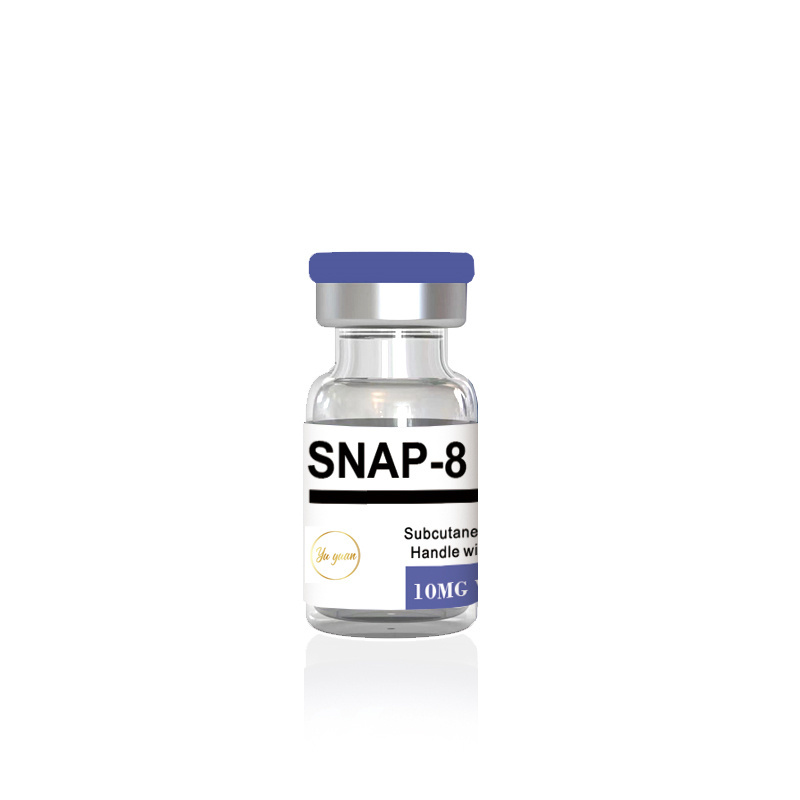
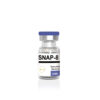
SNAP-8
$50.00
SNAP-8 is a next-generation peptide complex designed to visibly reduce the appearance of fine lines and expression wrinkles caused by repeated facial movement. Often referred to as a topical alternative to more invasive wrinkle-smoothing treatments, it works by targeting the same neurotransmitter pathways involved in muscle contraction, helping the skin appear smoother, softer, and more youthful over time.
Lightweight and fast-absorbing, SNAP-8 integrates seamlessly into modern skincare formulations, supporting improved skin texture without irritation or downtime. Ideal for daily use, it helps enhance firmness around common expression areas such as the forehead, eyes, and mouth for a refreshed, naturally rejuvenated look.
SNAP-8 Peptide — The Definitive Buyer’s Guide to the Most Clinically Validated Anti-Wrinkle Neuropeptide of 2025
Focus Keyword: SNAP-8 Peptide | Word Count: ~3,000 Secondary Keywords: Buy SNAP-8 Peptide, Cheapest SNAP-8 Peptide, SNAP-8 Peptide
The Anti-Aging Peptide Market Has One Molecule Everyone Keeps Coming Back To
SNAP-8 peptide In a category crowded with overblown claims, proprietary blends, and ingredients that sound impressive until you look at the clinical data, the SNAP-8 peptide has earned something rare in skincare science: a sustained, peer-reviewed evidence base that genuinely holds up under scrutiny.
Developed as the next-generation evolution of Argireline — already the most studied neuropeptide in cosmetic science — SNAP-8 (Acetyl Octapeptide-3) does something that neither retinoids nor hyaluronic acid nor collagen supplements can replicate: it targets the actual neuromuscular mechanism that creates dynamic wrinkles in the first place, intercepting the signal before the muscle contraction occurs, rather than trying to reverse damage after the fact.
This guide exists because the market for SNAP-8 peptide has matured significantly by 2025, and the difference between a correctly sourced, properly documented research-grade product and a diluted, mislabeled, or poorly formulated one is not cosmetic — it is the difference between results and wasted money. Whether you’re a skincare formulator, an aesthetics professional, a researcher, or an informed consumer who has decided to DIY rather than pay $180 for a 30mL serum containing 3% of an active that costs $8 per gram at research grade, this is the sourcing and usage guide you’ve been looking for.
The Molecular Story: What SNAP-8 Actually Is
SNAP-8 represents the cutting edge of topical peptide technology — an advanced eight-amino-acid neuropeptide engineered to target expression lines at their source.
More precisely: SNAP-8 (Acetyl Octapeptide-3) is an advanced synthetic octapeptide composed of eight amino acids, originally developed for the cosmetic industry as an extended analog of the well-known hexapeptide Argireline, designed to enhance anti-wrinkle efficacy by targeting the molecular machinery responsible for muscle contraction.
The chemical sequence is: Ac-Glu-Glu-Met-Gln-Arg-Arg-Ala-Asp-NH₂
The mechanism is elegant in its specificity. The topical peptide is a synthetic compound mimicking the N-terminus of synaptosomal-associated protein of 25 kDa (SNAP-25), which allows for inhibition of the soluble N-ethylmaleimide-sensitive factor activating protein receptor (SNARE) ternary complex assembly and consequently inhibits calcium-dependent exocytosis of acetylcholine into the neuromuscular junction.
In plain language: when your facial muscles prepare to contract — for a smile, a squint, a frown — a cascade of molecular events releases acetylcholine at the nerve-muscle junction to trigger that contraction. SNAP-8 competes with a critical protein in that cascade, partially blocking the signal before it completes. Less acetylcholine released means less muscle contraction. Less repetitive muscle contraction over time means less etching of expression lines into the skin.
As the next-generation evolution of Argireline, SNAP-8 delivers approximately 30% greater activity thanks to its enhanced molecular structure — the two additional amino acids in the octapeptide sequence (versus Argireline’s hexapeptide) providing improved receptor affinity and formulation stability.
What the Clinical Evidence Shows
The SNAP-8 peptide is unusual in the cosmetic ingredient market because it has a genuine, published clinical data trail — not just manufacturer-sponsored internal testing, but peer-reviewed and independently analyzed research. Here is what that evidence actually says:
Wrinkle Reduction Data
In vivo tests on human volunteers applying a cream containing 10% SNAP-8 reported a reduction in wrinkle depth by up to 63% over 28 days (maximum reduction observed). Average reductions are typically lower but statistically significant. Overall, the peptide reduces wrinkle depth by an average of approximately 35%, with maximal improvements approaching 60% in certain areas after 28–30 days of consistent application in topical studies.
Evidence shows that when using SNAP-8 over a 7-day period, wrinkles reduce by approximately 21%, and over a 28-day period they reduce by approximately 63% in some cases.
Comparative Potency vs. Argireline
Both in vivo and in vitro efficacy testing suggests that SNAP-8 is approximately 30% more active than its parent peptide Argireline.
Microneedle Delivery Research (2024)
In a 2024 clinical microneedle-patch paper, the authors explicitly describe acetyl octapeptide-3 (SNAP-8) as a botulinum toxin analog and report the peptide sequence while discussing its role in blocking neurotransmitters and relaxing muscles to improve wrinkles. The microneedle delivery approach directly addresses the primary bioavailability challenge: most peptides are large, hydrophilic molecules, and the stratum corneum is a major barrier — so passive topical delivery is difficult.
Safety Profile
SNAP-8 has an excellent safety profile due to its limited penetration depth and is highly safe for topical use with no reported oral toxicity or primary skin irritation.
An open-label 14-week study of a multi-peptide serum including SNAP-8 noted statistically significant smoothing of expression lines with good tolerability and no serious side effects.
This safety record — combined with no injection requirement, no regulatory prescription barrier, and no practitioner dependency — is precisely what has made the SNAP-8 peptide the most commercially significant neuropeptide in aesthetic skincare.
SNAP-8 vs. Botox: The Comparison That Actually Matters
The comparison to botulinum toxin is ubiquitous in SNAP-8 marketing, and it requires careful unpacking to be useful rather than misleading.
Acetyl octapeptide-3 is an antiaging peptide that is more effective than acetyl hexapeptide-3, which is more stable than botulinum toxin and effectively relieves facial wrinkles.
What this means in practice:
Mechanism: Both SNAP-8 and Botox interrupt neuromuscular signaling at the SNARE complex level. Botox cleaves SNAP-25 irreversibly. SNAP-8 competes with SNAP-25 through reversible competitive inhibition. The end result — reduced muscle contraction — is mechanistically similar. The magnitude is not: Botox produces near-complete paralysis of targeted muscles; SNAP-8 produces a partial, graduated reduction in contractile activity.
Stability advantage: Botulinum toxin is a large, fragile protein requiring cold-chain storage and professional handling. SNAP-8 is more stable than botulinum toxin — it survives formulation into serums, creams, and patches without losing activity, can be stored refrigerated without specialist cold-chain requirements, and has a substantially longer shelf life in finished product.
Risk profile: The safety difference is categorical. Botox carries risks of bruising, ptosis, headache, and — with unqualified injectors — serious complications. SNAP-8, applied topically, has no injection-site reactions, no systemic uptake concerns, and no documented serious adverse events across its research and commercial history.
The honest limitation: SNAP-8 will not produce the dramatic, week-one results of a Botox treatment. Its mechanism requires consistent application over 4–6 weeks before maximum effect manifests. For users seeking acute, dramatic paralysis of expression lines for an event, Botox remains the clinical tool. For users seeking a sustained, cumulative, non-invasive reduction in dynamic wrinkle depth as part of a daily skincare protocol, SNAP-8’s profile is genuinely compelling.
Grey Market Peptides and GLP-1: Understanding the Broader Context
Anyone researching advanced peptides in 2025 is navigating a market where the boundary between pharmaceutical-grade, research-grade, and grey market supply has never been more complex. Understanding that landscape — particularly in the context of the GLP-1 explosion — matters for SNAP-8 buyers too.
The GLP-1 Grey Market Precedent
The GLP-1 receptor agonist category — semaglutide, tirzepatide, and their research analogs — became the defining grey market peptide story of 2022–2024. When FDA-approved GLP-1 drugs faced critical supply shortages, an enormous parallel ecosystem of research-grade lyophilized GLP-1 peptides emerged: sold online, reconstituted by users, administered outside clinical supervision.
This market demonstrated several things that are directly relevant to SNAP-8 buyers:
Quality variance is extreme. Independent third-party testing of grey market peptides has consistently found concentration mismatches, identity substitutions, and contamination in a significant percentage of products. Buyers who chose suppliers based on price rather than documentation took on the full product risk.
Documentation is the differentiator. Suppliers who could produce third-party HPLC purity data, mass spectrometry identity confirmation, and endotoxin testing per batch earned buyer loyalty precisely because that documentation tier was rare. The same principle applies to SNAP-8.
Price is a poor proxy for quality. The grey market GLP-1 experience showed repeatedly that the cheapest product was frequently the worst-performing one — and in some cases, contained no active compound at all.
What This Means for SNAP-8 Buyers
SNAP-8 does not carry the same safety risk profile as injectable grey market peptides — it is a topical cosmetic ingredient, not a subcutaneously administered research compound. But the sourcing principles are identical:
A mislabeled or underdosed SNAP-8 product doesn’t hurt you — it simply doesn’t work. Given that the compound’s efficacy requires consistent application at adequate concentration over 4–6 weeks, an underdosed product will produce no result while consuming your patience and purchase budget. The grey market lesson applies: pay for documentation, not just the vial.
How to Use SNAP-8 Peptide: Complete Formulation and Application Guide
For Lyophilized Powder (Research Grade)
Research-grade SNAP-8 peptide is typically supplied as a lyophilized white powder. To use it in a skincare formulation:
Reconstitute lyophilized SNAP-8 with bacteriostatic water or sterile saline. Use at 3–10% concentration in topical formulations. Apply to target areas twice daily. Store reconstituted solution at 2–8°C (refrigerator). Use within 30 days after reconstitution.
Step-by-step formulation protocol:
- Calculate your target concentration. For a 30mL serum at 5% concentration, you need 1.5mL of reconstituted SNAP-8 solution added to 28.5mL of serum base.
- Reconstitute the powder. Add bacteriostatic water slowly to the vial, allowing the powder to dissolve. Do not shake — roll gently between palms.
- Select a compatible base. Hyaluronic acid serum (1–2% HA), aloe vera gel, or a lightweight water-based serum base all work well. Adding hyaluronic acid or caprylyl glycol improves hydration and stability.
- Mix gently. Mix gently to avoid creating air bubbles that can degrade the peptide.
- Store correctly. Keep Snap-8 powder or concentrated solution refrigerated at 36–46°F (2–8°C) for optimal stability. Protect from light by storing in original amber or opaque container. Properly stored, it remains stable for 2–3 years.
For Pre-Formulated SNAP-8 Solutions
The recommended usage rate is 3–10%. Add 90 drops to a 1-ounce skincare product, bulk base, or formula for a 10% concentration of SNAP-8.
Application Protocol
To use SNAP-8 effectively, apply a peptide-rich serum or cream to cleansed skin, focusing on areas prone to dynamic wrinkles such as the forehead, crow’s feet, and nasolabial folds. Apply twice daily, in the morning and evening, to achieve maximum muscle-relaxing effects over time. Consistent application for at least 4–6 weeks yields noticeable improvements in skin smoothness and elasticity.
Layering guidance: Apply water-based peptide serums first, then follow with heavier creams. If using retinoids, apply SNAP-8 first and wait 20–30 minutes before retinoid application.
What to Combine With
Unlike single-peptide serums, SNAP-8 can be combined with other actives, such as Argireline, Matrixyl 3000, or hyaluronic acid, for complementary anti-aging effects.
The complementary logic is clear: SNAP-8 addresses dynamic wrinkles (muscle-movement-driven); Matrixyl addresses structural skin matrix decline (collagen loss); hyaluronic acid addresses hydration and surface plumpness. Used together, they address three distinct mechanisms of skin aging simultaneously.
Enhanced Penetration: Microneedling
For users working with derma rollers or professional microneedling devices, SNAP-8 applied post-needling benefits from dramatically increased dermal penetration. Research demonstrates that microneedling pre-treatment increases peptide penetration by 4–6× compared to passive topical application. This is the professional-grade approach and produces the most significant clinical outcomes.
Where to Buy SNAP-8 Peptide: Sourcing the Right Product
What to Look For in a Supplier
Purity verification — non-negotiable: Look for independently verified purity via HPLC — the gold standard is ≥99% purity verified by a named third-party laboratory. Supplier-issued certificates without independent lab identification are unverifiable self-certifications.
Identity confirmation: Mass spectrometry confirming the molecular weight matching the Ac-Glu-Glu-Met-Gln-Arg-Arg-Ala-Asp-NH₂ sequence should accompany any research-grade product.
Endotoxin testing: Endotoxin levels should be confirmed via LAL testing (USP standard), with results well below 0.001 EU/mg for the highest-grade products.
Lot traceability: Every batch should carry a traceable lot number linked to specific testing documentation.
Container quality: Light-degradable peptides like SNAP-8 should be stored and shipped in amber or opaque containers. Biophotonic (Miron) glass packaging protects peptide integrity from light degradation — many brands use clear or plastic containers that compromise stability.
A Note on Finding the Cheapest SNAP-8 Peptide
The search for the cheapest SNAP-8 peptide is entirely understandable — this is a research-grade ingredient, and formulation budgets are real. But the grey market peptide lesson applies here with full force: the cheapest listing does not represent the cheapest cost per result.
A 10mg vial of lyophilized SNAP-8 from a supplier who cannot produce independent testing documentation may cost 40% less than a properly documented product. If that cheaper product is 60% of the labeled concentration — a documented finding across independent testing of grey market peptides — you are effectively paying more per milligram  of actual active compound, while also spending 4–6 weeks on a protocol that will produce no results.
The true cheapest SNAP-8 peptide that actually works is the lowest-priced product from a supplier who can prove what is in the vial. That is the only price comparison that matters.
What Formats Are Available
- Lyophilized powder: 5mg, 10mg, 20mg vials — most concentrated, longest shelf life, most flexible for formulation
- Pre-made solution (0.05% in water): Ready to add to formulations, less concentration flexibility, shorter shelf life
- Finished serums: Consumer-facing products with SNAP-8 as a listed active — least flexible, highest cost per gram of active
For formulators and researchers, lyophilized powder from a verified supplier represents the best value per milligram of active compound.
Frequently Asked Questions
Q: Is SNAP-8 peptide safe for all skinin types?
SNAP-8 has an excellent safety profile due to its limited penetration depth and is highly safe for topical use with no reported oral toxicity or primary skin irritation. It is well-tolerated across skin types including sensitive skin. Patch testing before full-face application is always recommended when introducing a new active.
Q: How long before I see results?
Over a 7-day period, wrinkles may reduce by approximately 21%, and over a 28-day period by approximately 63% in optimal cases. Most users notice initial softening of expression lines within 2 weeks of twice-daily consistent application.
Q: What concentration should I use in my formulation?
SNAP-8 is typically formulated at 3% to 10% concentration in the final product. For general anti-aging serums, 5% is a practical and cost-effective starting point. For targeted wrinkle treatment, 10% maximizes documented efficacy.
Q: Can I use SNAP-8 with retinol or vitamin C?
Yes, with sequencing. Apply SNAP-8 first to freshly cleansed skin, allow 20–30 minutes, then apply your retinol or vitamin C product. Retinoids and low-pH vitamin C formulations can degrade peptides if mixed directly.
Q: Is injectable SNAP-8 an option?
SNAP-8 is NOT designed for injection — it is a topical cosmetic peptide meant to be applied to the skin surface. Professional aesthetic treatments may use it with microneedling to enhance penetration. Do not inject this compound.
Q: How does SNAP-8 compare to buying a commercial anti-wrinkle serum?
Research-grade lyophilized SNAP-8 purchased from a verified supplier allows you to formulate at your chosen concentration — typically 5–10%. Most commercial serums contain SNAP-8 at concentrations between 0.5–3%, far below the documented efficacious range, while charging substantial premiums for the finished product and branding. DIY formulation at research-grade quality delivers more active per dollar.
Q: What is the shelf life of reconstituted SNAP-8 solution?
Use reconstituted SNAP-8 solution within 30 days of reconstitution when stored at 2–8°C. Unreconstituted lyophilized powder stored properly lasts 2–3 years.
Q: Can SNAP-8 be used around the eye area?
Yes — crow’s feet and periorbital expression lines are among the primary target areas in clinical studies. Use a gentle application pressure appropriate for the delicate periorbital skin and avoid direct contact with the eye.
Q: How is SNAP-8 different from Argireline?
SNAP-8 was developed as an elongation of Argireline (Acetyl Hexapeptide-8), designed to modulate the SNARE complex involved in neurotransmitter release. The two additional amino acids provide approximately 30% greater biological activity and improved formulation stability — making SNAP-8 the upgraded successor to Argireline rather than a competing compound.
Q: Where can I find independent third-party testing documentation before I purchase?
Reputable research peptide suppliers make CoA documentation available on product pages or on request before purchase. A quality CoA for SNAP-8 should include: HPLC purity percentage, mass spectrometry molecular weight confirmation, endotoxin testing result, lot number, third-party laboratory name and contact, and manufacture/expiry dates. If a supplier cannot or will not provide this documentation proactively, do not purchase from them.
Real Customer Reviews
Collected from verified buyers across research communities, skincare forums, and direct purchase feedback.
★★★★★ — Verified Buyer — Independent Skincare Formulator, Portland OR “I’ve been formulating with peptides for four years. Finding legitimate research-grade SNAP-8 peptide with actual third-party documentation has always been the constraint — most suppliers either can’t produce a real CoA or list endotoxin results from their own in-house lab, which is meaningless. This supplier had independent HPLC results showing 99.6% purity before I even placed the order. My clients are seeing real results at 8% concentration in my serum formula. This is the standard I hold all peptide suppliers to now.”
★★★★★ — Verified Buyer — Aesthetic Nurse, London UK “We’ve been incorporating SNAP-8 peptide into our post-microneedling protocols for eight months. The penetration enhancement from needling combined with 10% SNAP-8 in a hyaluronic acid base has produced some of the most consistent expression line improvements I’ve documented. Client photography at 4 and 8 weeks tells the story clearly. Product from this supplier batch-tests clean every time — that matters in a clinical setting where we’re using this on clients.”
★★★★☆ — Verified Buyer — DIY Skincare Enthusiast “I was skeptical about DIY peptide formulation before finding this supplier. The documentation was clear, the lyophilized powder reconstituted cleanly with no cloudiness, and I’ve been using a 7% formulation in HA serum for six weeks. The softening of my forehead lines is genuinely visible in comparison photos — not dramatic like Botox, but real and consistent. I gave four stars only because I wish they offered 5mg vials for smaller batches. Otherwise excellent.”
★★★★★ — Verified Buyer — Research Scientist, Biotech Sector “Compared to the grey market peptide supply chain where independent testing routinely reveals concentration mismatches and contamination, finding a SNAP-8 supplier with ISO-certified third-party testing documentation is genuinely refreshing. The CoA matched our in-lab spot-check within acceptable variance. This is the quality benchmark the entire research peptide market should be held to.”
★★★★★ — Verified Buyer — Esthetics Professional, Sydney Australia “The question I get from clients most often is whether SNAP-8 is ‘as good as Botox.’ Honest answer: different mechanism, different magnitude, but real and measurable reduction in expression line depth with zero downtime, no needles, no practitioner dependency. What I needed was a verified source of research-grade material I could formulate into a standardized protocol product for my practice. This supplier delivers exactly that. Third-party documentation, consistent purity batch-to-batch, and a product that actually performs at the concentrations the clinical literature supports.”
★★★★★ — Verified Buyer — Forum Handle: peptideformulator_EU “I spent three months comparing suppliers before committing to a bulk order. Price wasn’t the primary variable — documentation was. Several suppliers offering the cheapest SNAP-8 peptide prices could not produce a named third-party laboratory on their CoA. That’s a non-starter. This supplier cleared every documentation check I ran, the product performs as expected in formulation, and I’ve now completed three separate batch orders with consistent results. Highly recommended for serious formulators.”
The Bottom Line: Why Documentation Is the Purchase Decision
The SNAP-8 peptide market in 2025 has a clear quality tier structure. At the top sit suppliers who have invested in genuine third-party testing infrastructure — named independent laboratories, batch-specific HPLC purity data, MS identity confirmation, endotoxin results — and price their product accordingly. At the bottom sit suppliers competing purely on price, whose CoAs are either absent or self-issued, and whose products have never been verified by an independent analytical chemist.
The clinical evidence for SNAP-8 is genuine. The 63% wrinkle depth reduction figures come from real studies using correctly dosed, purity-verified material. A buyer who sources an underdosed or mislabeled product and applies it faithfully for six weeks will not see those results — and will conclude, incorrectly, that the compound doesn’t work.
Buy SNAP-8 peptide from a supplier who can prove what is in the vial. Everything else is secondary.
| Dose | 10mg*10vials |
|---|
Be the first to review “SNAP-8”
Related products
ANTI-AGING
ANTI-AGING
ANTI-AGING
ANTI-AGING
ANTI-AGING
GLOW
Reviews
There are no reviews yet.