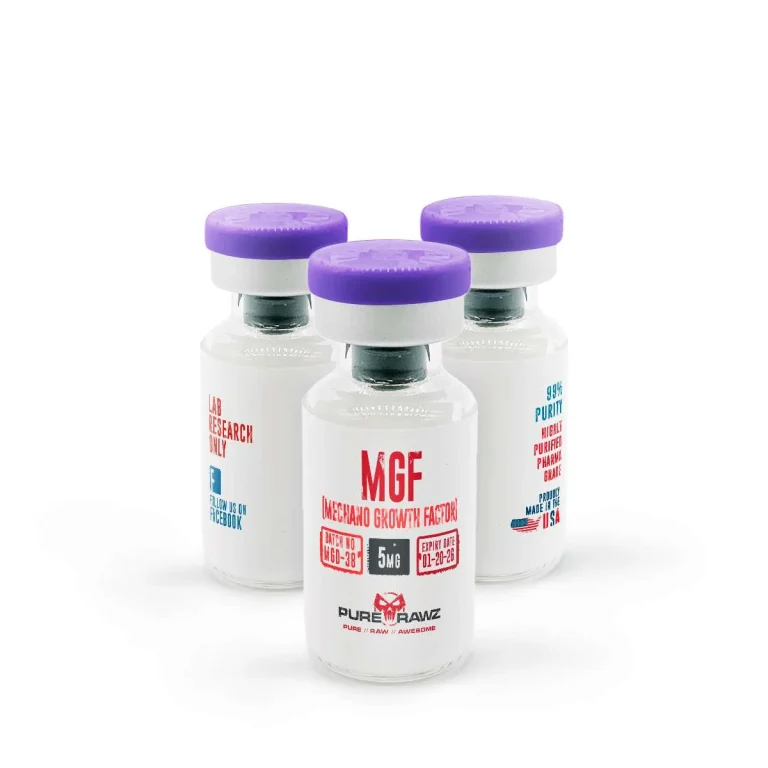
DSIP
Price range: $52.00 through $96.00
 DSIP is a naturally occurring neuropeptide known for its potential role in promoting deep, restorative sleep and overall relaxation. Widely researched for its influence on sleep regulation and stress modulation, DSIP may help support healthier sleep cycles, improved recovery, and reduced nighttime restlessness. Ideal for research applications focused on sleep quality, circadian rhythm balance, and recovery optimization, DSIP is valued for its calming properties and potential to enhance overall well-being.
DSIP — Research-Grade Peptide for Laboratory Use
DSIP Peptide for Sale: A Guide for Research Buyers
DSIP peptide for sale DSIP (Delta Sleep-Inducing Peptide) is a short, naturally occurring nonapeptide first isolated from rabbit cerebral venous blood in the early 1970s during studies on sleep-inducing factors in the brain. Researchers searching for DSIP peptide for sale are typically looking for a well-documented, high-purity synthetic peptide for use in neuroscience or sleep-physiology research protocols — not a consumer sleep aid, and it’s worth being direct that DSIP’s evidence base looks quite different from newer, more actively-studied peptides.
This page is written for that research-buyer audience. Nothing here is intended as guidance for human self-administration or dosing. DSIP is not approved by the FDA or any comparable regulatory body for any human use, and unlike some other research peptides, it currently has no active clinical trial pipeline working toward approval.
What Is DSIP?
DSIP is a nonapeptide (a peptide made of nine amino acids) that was originally identified as a putative sleep-regulating factor after being isolated from the blood of rabbits during a period of induced delta-wave (slow-wave) sleep. Its name reflects that original discovery context, though the compound’s actual physiological role has remained genuinely unsettled across more than fifty years of subsequent research.
Key points from the existing literature, which any legitimate research supplier should represent accurately:
- Early sleep studies (1970s-1980s) — initial animal and small human studies suggested DSIP administration could influence sleep architecture, particularly delta-wave (deep) sleep, giving the compound its name.
- Mixed and limited replication — later studies produced inconsistent results, with some failing to replicate the sleep-promoting effects seen in earlier work, and the mechanism of action was never conclusively established.
- Stress and neuroendocrine research — separate research threads have explored DSIP’s potential role in stress response and HPA-axis (hypothalamic-pituitary-adrenal) regulation, again without a settled mechanistic picture.
- No modern clinical development program. Unlike compounds such as cagrilintide, which are moving through active Phase III trials, DSIP has no ongoing pharmaceutical development pipeline. Most of the primary literature is decades old, published before modern trial design and reporting standards, and the compound has largely remained a research curiosity rather than a drug candidate.
Any product description that presents DSIP as a well-established, mechanistically understood sleep therapeutic is overstating the evidence. A responsible supplier should represent the compound as an older, incompletely characterized research peptide — which is precisely why it remains of interest to some neuroscience and sleep researchers, but not why it should be marketed toward personal use.
Buying DSIP Peptide: What Actually Matters
Because DSIP is inexpensive to synthesize and has circulated in the research-chemical market for years, listings vary enormously in quality. The elements that actually distinguish a legitimate supplier:
1. Certificate of Analysis (CoA) A legitimate supplier provides batch-specific HPLC and mass spectrometry data confirming purity, typically ≥98% for research-grade peptide, matched to the exact lot shipped — not a stock certificate reused across multiple batches.
2. Peptide identity verification DSIP is a small, simple peptide, which makes correct synthesis relatively straightforward — but also means there’s little cost justification for a supplier skipping mass spec confirmation of molecular weight. Its absence is a bigger red flag here than the compound’s simplicity might suggest.
3. Sterility and endotoxin data For in vitro or animal model applications, sterile-filtered, endotoxin-tested lots remain necessary regardless of how simple or well-established a peptide is.
4. Storage and stability documentation Lyophilized DSIP is generally stable when stored frozen and protected from moisture and light. A supplier who doesn’t specify storage conditions on the CoA or packing materials is providing incomplete information.
5. Reconstitution guidance framed around research protocols Legitimate listings describe solvent compatibility in terms of achieving a specific molarity for an experimental design. Nasal-spray dosing schedules, nightly-use recommendations, or “how many mcg before bed” guidance are signals a listing is marketing toward personal sleep-aid use rather than laboratory research, regardless of any RUO disclaimer elsewhere on the page.
Where to Buy DSIP: Evaluating a Supplier
The honest answer to where to buy DSIP for legitimate research purposes is: from a supplier who represents the compound’s actual evidence base accurately and provides real batch documentation, rather than one leaning on DSIP’s decades-old “sleep peptide” reputation to sell a consumer product. Questions worth asking before treating any vendor as a trusted DSIP vendor:
- Will they provide a batch-specific CoA with mass spec data before purchase?
- Does their product description accurately reflect the mixed, dated state of the DSIP literature, or does it present sleep-promoting effects as settled fact?
- Do they operate under any documented quality system, verifiable independently rather than taken on faith?
- Is the product explicitly and consistently labeled “for laboratory research use only, not for human consumption” across the entire listing, not contradicted by dosing or usage-schedule content elsewhere on the same page?
- Can they issue proper invoicing and SDS documentation for institutional or grant-funded purchases?
A vendor that overstates DSIP’s evidence base to justify consumer-style marketing is a meaningfully worse sign than a listing that’s simply expensive or has a plain design — the first is a misrepresentation of the science, the second is just a business choice.
A Note on Grey-Market Peptides and GLP-1 Compounds
DSIP itself is not part of the GLP-1/amylin category, but it’s frequently listed on the same peptide marketplaces that sell semaglutide, tirzepatide, and cagrilintide under “research use only” labeling, so it’s worth addressing that adjacent risk directly, since it affects how much trust to place in a given vendor’s overall catalog.
GLP-1 and amylin-class medications are safe and effective when manufactured, dosed, and prescribed through legitimate medical channels — but grey-market versions sold as research peptides carry documented risks that are more serious than anything associated with DSIP itself:
- No verified sterility or purity, despite RUO labeling that often exists to sidestep regulatory oversight rather than reflect genuine research-use intent.
- Dosing concentrations built for research titration, not human pharmacokinetics — a mismatch linked in adverse event reports to severe gastrointestinal illness and, in some cases, overdose from concentration errors.
- No prescriber screening for contraindications such as personal or family history of certain thyroid cancers or pancreatitis risk.
- Active regulatory warnings. The FDA and equivalent international bodies have issued specific alerts about compounded and grey-market GLP-1 products, a category that expanded rapidly during periods of branded-drug shortage.
If a vendor’s catalog mixes low-risk, well-characterized peptides like DSIP with GLP-1 or amylin compounds marketed toward personal weight loss, that’s worth noting as a signal about how the whole operation treats regulatory boundaries — not just about the GLP-1 listings specifically. A supplier’s overall marketing posture is a reasonable proxy for how seriously they take the “research use only” label across their entire catalog, DSIP included.
Frequently Asked Questions
Is DSIP legal to buy? In most jurisdictions, DSIP can be legally sold when explicitly labeled and marketed for laboratory research use rather than human consumption. As with other unapproved peptides, marketing practices matter — a supplier framing sales around personal sleep-aid use is operating outside the research-chemical exemption many jurisdictions rely on.
Does DSIP actually improve sleep? The honest answer, based on the available literature, is unclear. Early studies from the 1970s-80s suggested effects on delta-wave sleep, but later research produced inconsistent results, and no large, modern, well-controlled human trial has settled the question. Any listing presenting DSIP’s sleep effects as well-established is overstating the evidence.
Why is there so little recent research on DSIP? Interest in DSIP as a drug candidate largely faded after early results proved difficult to replicate consistently, and no pharmaceutical company has pursued modern clinical development. Most primary literature predates current trial design standards, which limits how much weight it should be given.
What purity level should research-grade DSIP have? Most legitimate suppliers target ≥98% purity, verified by HPLC, alongside mass spectrometry confirmation of molecular weight. Because DSIP is a small, relatively simple peptide, there’s little excuse for a supplier skipping this verification step.
How should DSIP powder be stored? Lyophilized peptide is generally stable frozen and protected from light and moisture. Once reconstituted, stability drops and refrigerated storage with a limited usable window is standard guidance for peptides of this type.
Is DSIP the same as other “sleep peptides” sold online? No. DSIP is chemically distinct from other compounds sometimes marketed alongside it for sleep or recovery purposes. Bundled “sleep stack” listings that treat multiple unrelated peptides as interchangeable are a sign of consumer-oriented marketing rather than a research-focused supplier.
Does a lower price indicate lower quality? Not automatically — DSIP is inexpensive to synthesize correctly given its small size, so low prices aren’t inherently suspicious the way they might be for a more complex peptide. Absence of batch documentation remains the more reliable red flag regardless of price.
Can institutional buyers use DSIP purchases for grant reporting? Yes, provided the supplier issues an itemized invoice with lot/batch information and appropriate SDS documentation.
What red flags suggest a listing isn’t from a legitimate research supplier? Sleep-aid marketing language, nightly dosing schedules, testimonial-driven sales copy, claims presenting DSIP’s mechanism or efficacy as settled science, and a catalog that bundles DSIP alongside consumer-marketed GLP-1 products are the clearest signals.
Summary
For labs and procurement teams sourcing this compound, the decision should rest on documentation quality and an honest representation of DSIP’s actual — and admittedly thin — evidence base, not on decades-old marketing language calling it a proven “sleep peptide.” When evaluating DSIP peptide for sale listings, prioritize a batch-specific CoA with mass spectrometry confirmation, clear storage guidance, and a supplier willing to describe the compound’s research history accurately. The same scrutiny should extend to a vendor’s full catalog before treating them as a trusted DSIP vendor — particularly if that catalog also includes GLP-1 or amylin-class peptides, where the gap between “research use only” labeling and actual buyer intent tends to be widest, and where the real-world risk of grey-market sourcing is considerably higher than with DSIP itself.
| Dose | 5mg*10vials, 10mg*10vials |
|---|
Reviews
There are no reviews yet.