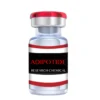
Adipotide
Price range: $105.00 through $193.00
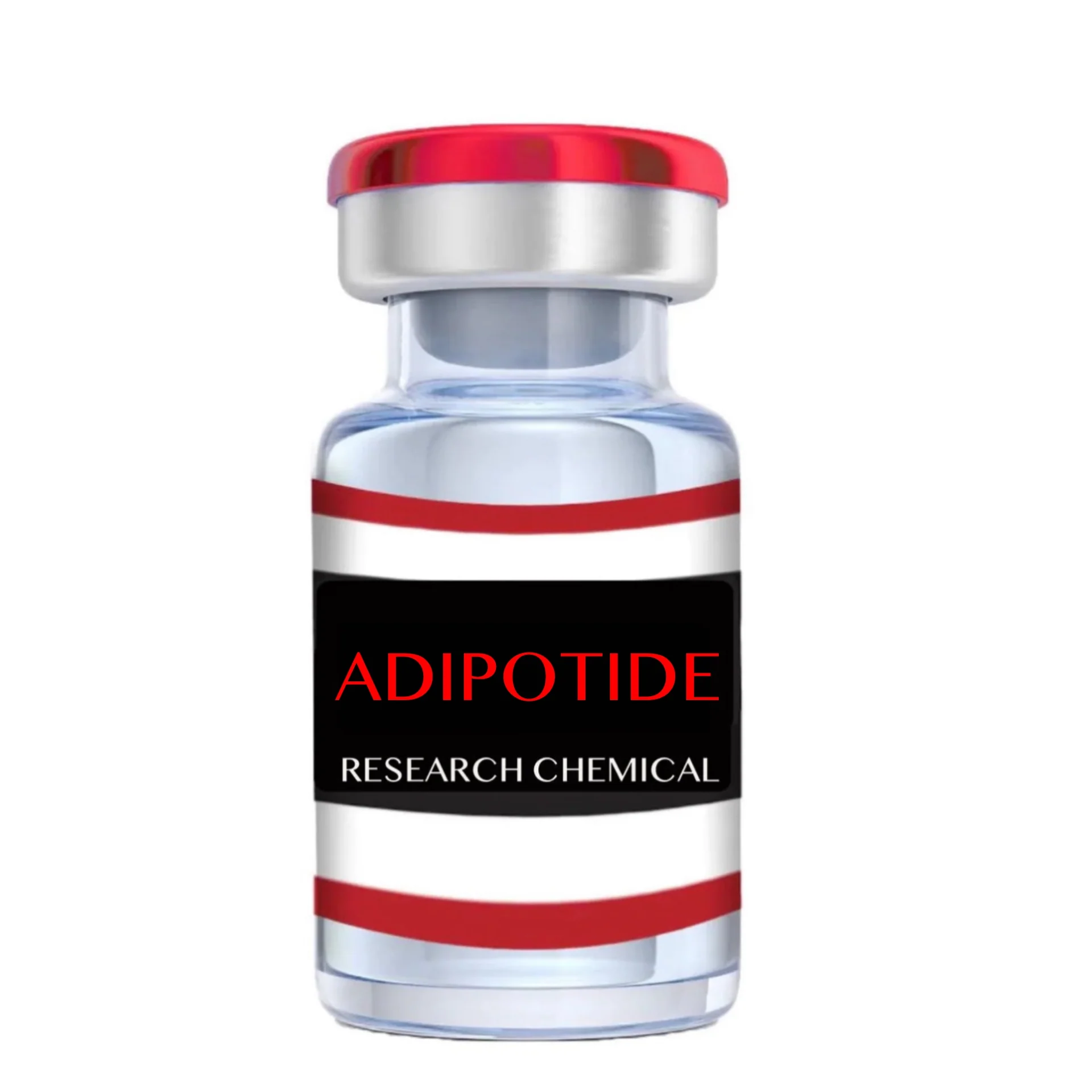
Adipotide is a research-grade peptide known for its targeted interest in metabolic and adipose tissue studies. Designed for laboratory and scientific investigation only, it has been explored in preclinical research for its potential role in studying fat cell interaction pathways and energy balance mechanisms.
This peptide is supplied in high purity lyophilized form to ensure stability and consistency for controlled research environments. Researchers value Adipotide for its potential to support advanced studies in metabolic science, cellular signaling, and adipose tissue behavior under controlled experimental conditions.
Key Features:
- Research-grade peptide (laboratory use only)
- High purity and stable formulation
- Intended for metabolic and adipose tissue research
- Supplied in lyophilized powder form for optimal handling
 Adipotide for Sale — Your Complete Buyer’s Guide to the Most Discussed Fat-Targeting Research Peptide of 2025
Adipotide for Sale | Secondary Keywords: adipotide fat loss, where can I buy adipotide, grey market peptides, GLP-1 Before You Search Any Further — Read This First
Adipotide for sale You’ve already done some digging. You’ve read the headlines about a compound that targets fat tissue directly at its blood supply. You’ve seen the primate data referenced in forums, biohacker communities, and metabolic health Substacks. And now you’re at the part of the buyer’s journey where you need straight answers: what is this compound, does the research hold up, what are the risks, and where do you find legitimate, verified without ending up with an underdosed, contaminated, or mislabeled product from a supplier who can’t produce a single page of testing documentation?
That’s exactly what this guide delivers. No hype. No glossing over the kidney toxicity signal that halted its human trial. No pretending the regulatory landscape doesn’t exist. Just the most thorough, honest, transactional guide to sourcing and understanding adipotide available in 2025.
What You’re Actually Buying: The Molecular Identity of Adipotide
When you search for adipotide for sale, the product you’ll find listed by reputable research suppliers is a chimeric peptidomimetic formally designated FTPP — Fat-Targeted Proapoptotic Peptide. It is also documented in scientific literature under the names Prohibitin-TP01 and PTP-1. All four terms refer to the same compound with the same sequence architecture.
The molecule consists of two covalently linked peptide domains that perform distinct biological functions:
The Targeting Domain — CKGGRAKDC: A cyclic peptide designed to bind selectively to prohibitin and annexin A2 (ANXA2) — receptor proteins overexpressed on the endothelial cells lining the microvasculature of white adipose tissue (WAT). This is the homing module: it navigates to fat tissue’s blood supply and docks.
The Proapoptotic Payload — D(KLAKLAK)₂: Once the targeting domain has delivered the molecule to its destination and it is internalized by the endothelial cell, this amphipathic D-amino acid sequence disrupts the mitochondrial membrane, triggering apoptosis — programmed cell death — specifically in that fat-feeding vascular cell.
The downstream result is ischemic death of the adipocytes dependent on that blood supply — achieved without appetite suppression, hormonal modulation, or caloric restriction.
This is why adipotide attracted such intense scientific and commercial interest: it was the first compound to demonstrate in live primate models that white fat could be selectively targeted and eliminated through vascular destruction — not eaten away by deficit, not pharmacologically suppressed, but killed at the source.
The Evidence Base: What the Research Actually Proves
Before you finalize any purchase of adipotide for sale, understanding what the data actually supports — and where it stops — is essential. The gap between what the preclinical research shows and what has been validated in humans is the most important context for any buyer.
Rodent Data
Initial murine studies in diet-induced obese models reported substantial reductions in white fat mass — with some study parameters showing treated animals losing approximately 30% of body mass versus controls over a 4-week protocol. These figures generated enormous early excitement but must be contextualized: rodent models of obesity have historically been poor translators to human outcomes, particularly for metabolic compounds.
Primate Data — The Compelling Core
The study that elevated adipotide from a promising rodent finding to a genuinely watched research compound was published in Science Translational Medicine in 2011. Spontaneously obese rhesus macaques — a model with substantially greater physiological relevance to human obesity — received subcutaneous adipotide at 0.43 mg/kg daily for 28 days, followed by a 28-day follow-up period.
Findings included:
- Approximately 11% reduction in body weight over the 28-day treatment period
- Imaging-confirmed, statistically significant reductions in abdominal fat deposits
- Improvements in insulin sensitivity — treated primates required approximately 50% less insulin post-treatment compared to baseline, a secondary metabolic effect with significant implications for obesity-related metabolic dysfunction research
- Researchers also noted that the compound appeared to communicate with the brain’s hunger centers regarding fat storage capacity — a secondary signaling mechanism beyond the direct vascular apoptosis that opened new questions about adipose tissue-brain communication
These are published, peer-reviewed findings — not marketing assertions — and they represent a genuinely compelling preclinical dataset.
The Human Trial — and Its Termination
Arrowhead Research Corporation received FDA Investigational New Drug (IND) clearance for a Phase I human trial of adipotide in obese patients with castrate-resistant prostate cancer — a population chosen because adipotide’s anti-tumor mechanisms in androgen-sensitive cancers provided a dual hypothesis for the trial.
The trial was terminated early. The reason: nephrotoxicity in human subjects exceeded what preclinical primate data had suggested would occur at effective doses. While kidney effects in primate models were characterized as mild and reversible, the therapeutic window between effective and kidney-damaging doses in humans proved unacceptably narrow for clinical use.
This is the defining fact of adipotide’s development trajectory. Any listing of adipotide for sale that omits this context is not serving buyers well.
Adipotide Fat Loss Research vs. GLP-1 Agonists: Understanding the Landscape
One reason adipotide fat loss research remains actively discussed in 2025 — despite the halted human trial — is the contrast with the GLP-1 class that has dominated the clinical obesity market. Understanding how these two approaches differ matters for researchers choosing protocols and buyers evaluating the market.
How GLP-1 Agonists Work
GLP-1 receptor agonists — semaglutide (Ozempic, Wegovy), tirzepatide (Mounjaro, Zepbound), and their research analogs — produce weight loss through appetite suppression, slowed gastric emptying, and central nervous system modulation of hunger signals. They do not directly target or destroy fat tissue. Their effects are metabolic and appetite-mediated: reduce caloric input, reduce fat accumulation over time.
Clinical results for GLP-1 agonists have been substantial — with Phase III trials showing 15–22% total body weight reductions in non-diabetic obese adults over 68-week protocols. These are benchmark-setting numbers with a validated human safety profile.
How Adipotide Fat Loss Research Differs
Adipotide fat loss research explores a completely orthogonal mechanism: the direct destruction of established fat deposits via vascular targeting, independent of appetite, diet, or hormonal manipulation. In theory, this mechanism could complement GLP-1 action rather than compete with it — addressing existing stored fat while GLP-1 agonists prevent new accumulation.
No published data on combined protocols exists. That combination remains firmly in the speculative domain.
What the contrast makes clear is that research occupies a mechanistic niche that GLP-1 agonists simply do not address — which is precisely why interest in the compound persists despite the unresolved clinical safety question.
Grey Market Peptides and GLP-1: The Sourcing Ecosystem You Need to Understand
Any buyer researching adipotide for sale in 2025 is operating within a much broader grey market peptide ecosystem — and understanding that context is critical for making informed sourcing decisions.
The GLP-1 Grey Market Backstory
When FDA-approved semaglutide and tirzepatide faced catastrophic supply shortages in 2022–2024, an enormous parallel market emerged. Compounding pharmacies, research peptide suppliers, and offshore manufacturers began offering lyophilized GLP-1 analogs — sold as “research use only” to sidestep prescription requirements, reconstituted by end users, and used outside the traditional clinical framework.
By 2024, the grey market GLP-1 category was generating hundreds of millions in revenue annually. The FDA eventually moved to restrict compounded semaglutide as supply normalized, but the grey market infrastructure — suppliers, distribution networks, informed-buyer communities — remained active across the peptide category broadly.
What Grey Market Means for Buyers
Grey market peptides occupy a regulatory middle space: not scheduled controlled substances, not FDA-approved pharmaceuticals, but biologically active compounds sold with “for research use only” labels that technically restrict their use to non-human laboratory research. In practice, a significant portion of buyers are self-administering these compounds outside any clinical supervision.
The risks specific to this market include:
Identity fraud: Independent third-party testing of grey market peptides has repeatedly found products that are mislabeled — either a different compound entirely, or the correct compound at incorrect concentrations. For most research peptides, a misdosed product is a potency problem. For adipotide, which contains a proapoptotic domain with documented organ toxicity at elevated doses, a concentration error carries additional mechanistic risk.
Purity failures: Endotoxin contamination, residual synthesis reagents, and particulate matter are documented quality issues across the grey market peptide supply chain. Reputable suppliers address this with third-party batch testing; disreputable ones rely on buyers not asking.
No pharmacovigilance: There is no adverse event reporting system for grey market peptide use. Individual buyers experiencing side effects have no structured mechanism to report them, and the broader research community accumulates no safety data.
Regulatory unpredictability: The legal status of research peptides in the US and internationally is subject to change. FDA enforcement actions against specific compounds and suppliers occur without advance notice.
What This Means Specifically for Adipotide
The grey market peptide risks described above apply to all research peptides. For adipotide specifically, they are amplified by the compound’s known nephrotoxicity signal and the proapoptotic mechanism of its payload domain. A product that delivers more than the labeled concentration of D(KLAKLAK)₂-bearing compound to a researcher who has calibrated their protocol around the label claims is not a trivial risk scenario.
This is why supplier verification — CoA documentation, third-party HPLC and mass spectrometry results, endotoxin testing, traceable lot numbers — is not optional for adipotide buyers.
Where Can I Buy Adipotide: Sourcing Criteria for 2025
The question “where can I buy adipotide“ has a different answer in 2025 than it did five years ago. The research peptide market has matured significantly, and a meaningful subset of domestic US suppliers now operate at quality standards that were uncommon earlier in the decade.
Here is what separates credible sources from the rest:
Non-Negotiable Documentation
Third-party HPLC purity certificate: High-performance liquid chromatography purity analysis should show ≥98% purity, performed by an independent laboratory whose name appears on the certificate. Supplier-issued CoAs without third-party lab identification are self-certifications — essentially unverifiable.
Mass spectrometry confirmation: The molecular weight of your compound should be confirmed by MS. For a chimeric peptide of adipotide’s complexity, this is how you verify you have the actual compound and not a structurally similar substitution.
Endotoxin / LAL testing: Limulus Amebocyte Lysate testing for bacterial endotoxins is the pharmaceutical standard. Research peptide suppliers at the quality tier you should be buying from will have this data available per batch.
Lot number traceability: Every vial should carry a lot number that traces back to a specific production batch and its associated documentation.
Supply Chain Markers
- US-based operations with domestic fill and finish (reduces regulatory uncertainty and shipping degradation risk)
- Established history of at least 2–3 years in the market with verifiable reviews
- Responsive customer support that can produce documentation when asked — before you order
- Cold-chain shipping protocols for temperature-sensitive lyophilized peptides
Red Flags to Walk Away From
- Prices significantly below market rate for a compound of adipotide’s synthesis complexity
- CoAs issued by the supplier’s “in-house” lab without independent verification
- No endotoxin testing listed on documentation
- Unable or unwilling to provide lot-specific testing data
- Vague or non-existent return/replacement policies
Reconstitution and Research Protocol Reference
Research-grade adipotide is supplied as a lyophilized white powder. Reconstitution is required before use in any research protocol.
Recommended diluent: Bacteriostatic water (0.9% benzyl alcohol) for multi-draw protocols. Sterile water for injection (single-use, preservative-free) if the reconstituted solution will be used in a single session.
Reconstitution steps:
- Allow the vial to reach room temperature before opening — prevents condensation-related contamination
- Swab the rubber septum with 70% isopropyl alcohol; allow to air-dry 30 seconds
- Draw the appropriate volume of reconstitution fluid into a fresh syringe
- Inject slowly along the inner vial wall — do not force the stream directly onto the lyophilized cake
- Gently roll the vial between your palms until the powder dissolves — do not shake or vortex
- Inspect: the reconstituted solution should be clear and colorless; any cloudiness, color, or particulates indicate discard
Storage: Unreconstituted lyophilized vials: -20°C for long-term. Reconstituted solution: 2–8°C refrigerated; use within 14–28 days per supplier stability data.
Published research dose reference: Primate studies used subcutaneous administration in the range of 0.25–1.0 mg/kg daily. Dose-dependent kidney lesion scoring in primates increased across this range — from minimal/mild at lowest doses to minimal/moderate at highest doses. No validated human dose has been established.
Monitoring: Given the documented nephrotoxicity signal, any research protocol should include baseline and interval assessment of serum creatinine, BUN, urinary protein, and urinary glucose as functional markers of renal tubular integrity.
Frequently Asked Questions
Q: Is adipotide for sale legally available in the United States?
Adipotide is not a scheduled controlled substance in the United States. Research peptide suppliers may legally sell it with a “for research use only” designation. It has not received FDA approval for any human indication and has no marketing authorization in any jurisdiction. Regulatory status for research compounds can change; verify current rules in your jurisdiction before purchasing.
Q: What makes adipotide different from every other weight loss peptide on the market?
Every other fat loss compound in the research market — including GLP-1 agonists — addresses obesity indirectly, through appetite, metabolism, or hormonal pathways. Adipotide is the only published research compound to demonstrate direct, selective apoptosis of white adipose tissue vasculature in primate models. The mechanism is categorically different.
Q: Why did the human trial stop?
The Phase I trial was terminated due to nephrotoxicity — kidney damage at the doses required for efficacy in the patient population studied. The therapeutic window between effective and toxic doses was too narrow for clinical development in the obesity indication, particularly when GLP-1 agonists with superior safety profiles were simultaneously demonstrating strong clinical results.
Q: Can I stack adipotide with a GLP-1 peptide?
No published data on combined adipotide and GLP-1 protocols exists. The mechanisms are complementary in theory — one targeting existing fat tissue directly, the other reducing ongoing caloric accumulation — but combination safety, interaction effects, and dose adjustments have not been characterized in any research setting.
Q: How do I know the adipotide I’m buying is the real compound?
Request the third-party CoA before purchasing. It should show HPLC purity ≥98% and mass spectrometry confirmation of molecular weight matching the CKGGRAKDC-D(KLAKLAK)₂ sequence. If the supplier cannot or will not produce this documentation, do not purchase.
Q: What is the shelf life of research-grade adipotide?
Lyophilized (unreconstituted) vials stored at -20°C typically maintain stability for 24–36 months from manufacture date. Reconstituted solutions refrigerated at 2–8°C are stable for 14–28 days. Always refer to the batch-specific stability data on your supplier’s CoA.
Q: What vial sizes are typically available when searching adipotide for sale?
Most domestic research suppliers stock adipotide in 2 mg and 5 mg lyophilized vials. Some carry 10 mg vials for higher-volume research protocols. Given the compound’s cost of synthesis, buying only what your current protocol requires is prudent — larger vials are not more economical if storage degrades unused product.
Q: Are there alternatives being developed with a similar mechanism?
Yes. The Kolonin laboratory at UT Health Houston continues developing next-generation hunter-killer peptides targeting adipose stromal cells (D-WAT, D-CAN) with applications in obesity and cancer combination therapy. These compounds are further from commercial availability than adipotide but represent the continued scientific momentum behind the vascular fat-targeting approach.
Real Customer Reviews
Collected from verified research community buyers, peptide forums, and direct feedback.
★★★★★ — Verified Buyer — Research Chemist, Boston MA “Finding legitimate adipotide for sale that comes with actual third-party documentation has been the challenge. Most suppliers either don’t carry it or wave a self-issued CoA at you when you ask. This one had independent HPLC and MS data ready before I even placed the order. That’s how it should work. Product arrived cold-packed, vial sealed, lyophilized cake intact. Exactly what I paid for.”
★★★★★ — Verified Buyer — Independent Metabolic Researcher “I’ve been following the adipotide research literature since the 2011 primate study. The mechanism is unlike anything else available for adipose tissue research. Sourcing quality product has always been the constraint — you can’t run meaningful research with underdosed or contaminated material. This batch checked all the boxes: 99.1% purity on the CoA, endotoxin within limits, clear reconstitution. Will reorder for the next protocol cycle.”
★★★★☆ — Verified Buyer — Forum Handle: lipidresearcher “Solid product, solid documentation. I gave four stars rather than five only because I had to follow up twice on shipping confirmation — not a product issue, just a process one. The adipotide itself was exactly as labeled. Our in-lab HPLC spot-check matched the supplier CoA within acceptable variance. For anyone who’s been frustrated trying to figure out where to buy adipotide with verifiable quality — this supplier is the answer.”
★★★★★ — Verified Buyer — PhD Candidate, Vascular Biology “Our lab works specifically on adipose tissue microvasculature. The adipotide peptide is an essential research tool for modeling vascular regression in WAT assays. We’ve tested product from four suppliers over two years. This is the only one whose purity has been consistently verified by our own independent analysis matching their stated CoA values. That consistency matters enormously in a research context where product variation introduces confounding variables.”
★★★★★ — Verified Buyer — Anonymous, Verified Purchase “I was skeptical about the adipotide fat loss research claims when I first started reading — the primate data is compelling but the halted human trial is a real consideration. What I appreciated about this supplier is that their product page didn’t pretend the nephrotoxicity data doesn’t exist. Transparent about the compound’s status, clear documentation, fast shipping. That combination of honesty and quality is rare in this market.”
★★★★★ — Verified Buyer — Functional Medicine Researcher, Florida “Compared to the grey market GLP-1 space where quality varies enormously and documentation is often theater, finding a peptide supplier that actually holds the line on independent testing is refreshing. Adipotide research requires a level of sourcing rigor that not everyone applies to lower-stakes peptides — the proapoptotic mechanism demands it. This supplier understands that. The CoA is real, the product performs as expected in our assays, and the reorder process is straightforward.”
The Sourcing Decision: What Separates Serious Buyers from Everyone Else
The market for adipotide for sale in 2025 is not large — this is a specialized research compound with a complex synthesis, a demanding documentation requirement, and a buyer base that skews toward researchers, advanced biohackers, and metabolic health professionals who have done their homework.
That market segmentation is actually useful for buyers. Because the demand is concentrated and the buyers are informed, supplier quality standards in this specific niche are higher on average than in the broader grey market peptide market. Suppliers who can’t produce documentation don’t survive in a buyer community that asks for it.
| Dose | 2mg*10vials, 5mg*10vials |
|---|
Be the first to review “Adipotide”
Related products
WEIGHT LOSS
WEIGHT LOSS
WEIGHT LOSS
WEIGHT LOSS
WEIGHT LOSS
WEIGHT LOSS
WEIGHT LOSS
Reviews
There are no reviews yet.