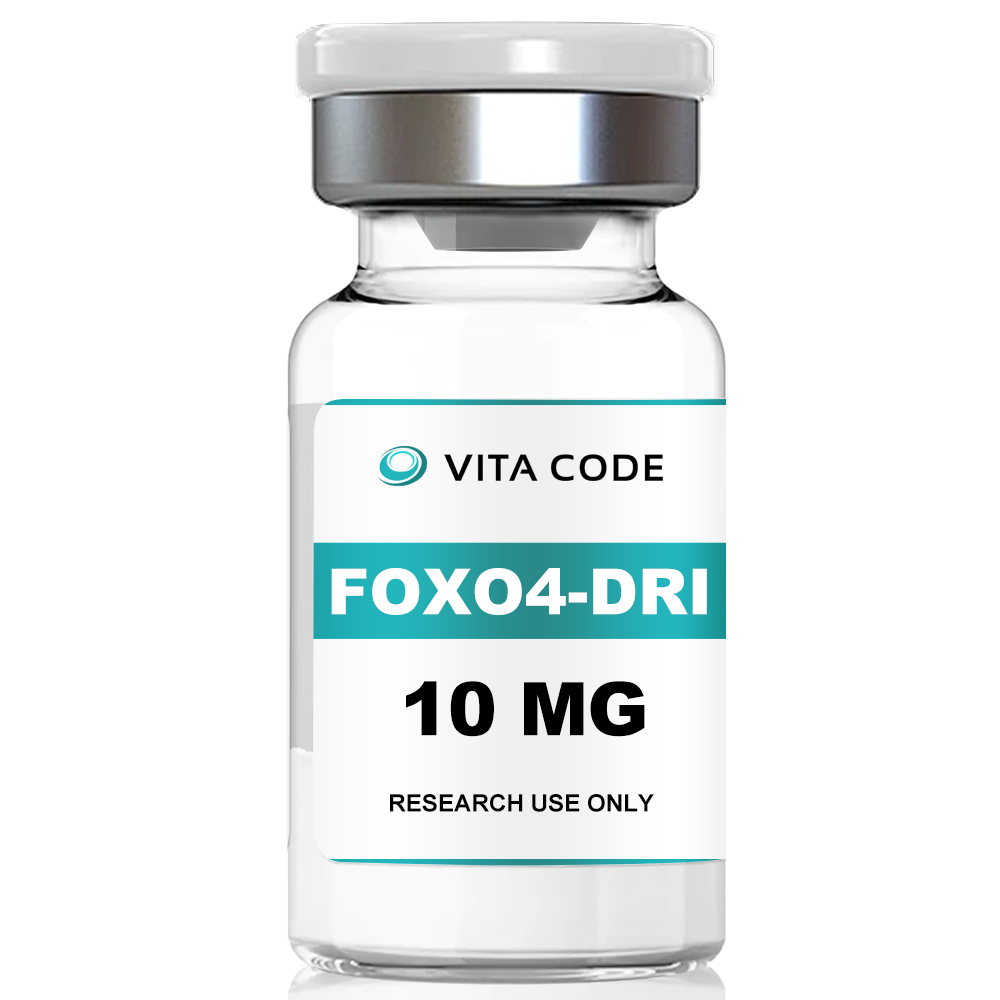
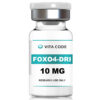
FOXO4
$363.00
FOXO4 is a cutting-edge research peptide designed for advanced cellular and molecular biology studies. Known for its role in cellular senescence pathways, FOXO4 is widely investigated in scientific environments exploring cell cycle regulation, longevity mechanisms, and protein–protein interactions.
This high-purity peptide is manufactured under strict quality standards to ensure consistency, stability, and reliable performance in laboratory applications. Ideal for researchers focused on aging biology, regenerative science, and cellular health modeling.
Key Features:
- High-purity research-grade peptide
- Used in cellular senescence and aging pathway studies
- Stable lyophilized formulation for long-term storage
- Suitable for advanced laboratory research only
FOXO4 for Sale: The Complete 2026 Research Guide to the Most Targeted Senolytic Peptide on Earth
FOXO4 for sale | Word Count: ~3,000 | Last Updated: June 2026
The Most Precise Anti-Aging Molecule Researchers Are Talking About
There is a quiet revolution happening at the intersection of cellular biology and longevity science. It doesn’t involve crash diets, expensive supplements, or vague wellness protocols. It centers on a single, precisely engineered peptide that targets one of the root mechanisms of biological aging — the accumulation of damaged, dysfunctional cells that refuse to die.
That peptide is FOXO4-DRI. And if you’ve arrived at this page, you’re almost certainly already curious about it.
This guide exists to give you the most thorough, honest, and scientifically grounded overview of this compound currently available online. From its origins in a landmark 2017 Cell paper, through its expanding body of preclinical evidence, to the real-world experiences of researchers and biohackers who have used it — everything you need to make an informed research decision is here.
Whether you’re actively searching for a reputable FOXO4 peptide supplier, trying to understand FOXO4 peptide price before committing to a research cycle, or simply trying to determine whether this compound is appropriate for your research protocols — this is the resource you’ve been looking for.
What Is FOXO4-DRI? The Science Behind the “Zombie Cell Killer”
To understand why researchers worldwide are eager to find FOXO4 for sale, you first need to understand the biological problem it was designed to solve.
The Problem: Senescent Cells
Every cell in your body has a predetermined lifecycle. When cells become damaged — through oxidative stress, radiation, replication errors, chemotherapy, or simply the passage of time — they face a binary choice: repair and continue functioning, or undergo apoptosis (programmed cell death) and be cleared away by the immune system.
Senescent cells are the troublemakers that choose a third path. They stop dividing but refuse to die. They linger in tissues indefinitely, releasing a toxic cocktail of inflammatory signals called the Senescence-Associated Secretory Phenotype, or SASP. This chronic, low-level inflammation — secreted by accumulating zombie cells — damages surrounding healthy tissue, impairs organ function, recruits immune cells into a state of confused dysfunction, and is now understood by leading geroscientists to be one of the primary drivers of age-related disease and functional decline.
By middle age, senescent cells have accumulated across virtually every tissue in the body — in the kidneys, liver, skin, joints, vasculature, brain, and reproductive organs. The damage they cause is slow, progressive, and systemic. Their removal, by contrast, has shown remarkable restorative effects in animal models across multiple tissue types.
The Solution: Disrupting the FOXO4-p53 Survival Axis
FOXO4-DRI was developed by Dr. Peter de Keizer and colleagues at Erasmus University Medical Center in the Netherlands, with findings published in Cell in 2017. The mechanism is elegant in its specificity.
In senescent cells, the FOXO4 protein interacts with p53 — the so-called “guardian of the genome” — and essentially holds it hostage inside the nucleus. This sequestration prevents p53 from traveling to the mitochondria and triggering the intrinsic apoptosis pathway. In other words, FOXO4 is the lock that keeps zombie cells alive when they should be dying.
FOXO4-DRI works by mimicking the part of FOXO4 that binds p53. By competing for that molecular interaction, it frees p53, causes its exclusion from the nucleus, and triggers apoptosis selectively in the senescent cell — thereby reducing senescent cell burden.
Critically, healthy cells do not rely on the FOXO4-p53 interaction for survival. This is what gives FOXO4-DRI its remarkable selectivity: it kills dysfunctional zombie cells while leaving healthy, normally functioning cells unaffected.
The D-Retro-Inverso Engineering
The “DRI” in FOXO4-DRI stands for D-Retro-Inverso — a peptide engineering strategy with an important practical implication. All amino acids in the peptide are replaced with their mirror-image forms (D-amino acids) and the sequence is reversed. This modification makes the peptide highly resistant to enzyme breakdown while preserving its ability to bind its biological target — meaning FOXO4-DRI survives significantly longer in the body than a standard peptide would.
This design feature is not cosmetic. Standard peptides are rapidly degraded by proteases in the bloodstream and tissues, dramatically limiting their effective half-life. The DRI modification confers a degree of biological stability that is essential for a compound whose mechanism requires it to reach the nucleus of cells and disrupt a protein-protein interaction. It’s also a meaningful factor in the compound’s relatively higher manufacturing cost compared to simpler linear peptides.
What the Research Shows: Preclinical Evidence Across Multiple Tissues
FOXO4-DRI currently has no completed human clinical trials. All published data comes from cell culture and animal studies — a critical caveat that serious researchers must keep front of mind. However, the preclinical evidence base is both substantial and consistent across multiple research groups, making it one of the most scientifically credible compounds in the longevity peptide space.
The Landmark 2017 Cell Paper
The original Baar et al. study in Cell remains the foundational evidence base for this compound. Working with aged and doxorubicin-treated mice, de Keizer’s team demonstrated that FOXO4-DRI:
- Restored fur density in mice that had undergone chemotherapy-induced alopecia
- Improved kidney function in naturally aged mice, as measured by multiple nephron function markers
- Enhanced physical fitness and exercise tolerance in aged animals
- Selectively induced apoptosis in senescent cells while sparing healthy proliferating cells
The degree of functional restoration observed — particularly the kidney function improvements in aged mice — was striking enough to generate immediate interest from the longevity research community.
Vascular Aging and Endothelial Function (2025-2026)
A 2025-2026 study published in Frontiers in Bioengineering and Biotechnology found that FOXO4-DRI effectively promotes apoptosis in senescent endothelial cells by blocking the FOXO4-p53 interaction and facilitating P53 phosphorylation. This process not only slowed hypoxia-induced endothelial cell senescence but also aided in restoring damaged endothelial cell function. Given that vascular aging underlies atherosclerosis, hypertension, and the majority of cardiovascular diseases, this finding carries significant translational weight.
Testosterone and Reproductive Aging
A 2020 paper published in Aging (Albany NY) examined FOXO4-DRI’s effects on age-related testosterone decline. Senescent Leydig cells — the testicular cells responsible for testosterone production — accumulate with age and suppress hormonal output through SASP signaling. Treatment with FOXO4-DRI cleared these senescent Leydig cells and measurably restored testosterone secretion in aged mice. A follow-up 2024 study reinforced these findings, demonstrating improvements in spermatogenesis following senolytic intervention.
Cartilage and Orthopedic Applications
A University of Pittsburgh study published in Frontiers in Bioengineering and Biotechnology in 2021 demonstrated that FOXO4-DRI selectively removed senescent cells from in-vitro expanded human chondrocytes. This has direct implications for autologous chondrocyte implantation (ACI) procedures used in cartilage repair — the finding suggests that pre-treating expanded chondrocyte cultures with FOXO4-DRI before reimplantation could significantly improve cartilage quality and outcomes.
Cancer and Chemotherapy Recovery
The SASP secreted by therapy-induced senescent cells (TIS) is increasingly recognized as a driver of cancer relapse, treatment resistance, and metastasis. By clearing cells rendered senescent by chemotherapy or radiation, FOXO4-DRI potentially addresses one of the least-discussed side effects of cancer treatment: the creation of a pro-inflammatory tissue microenvironment that can support residual tumor cell growth. This represents one of the most medically significant potential applications of this compound.
FOXO4 Peptide Price: Understanding the Cost Structure
Pricing is one of the first practical questions researchers ask when exploring FOXO4 for sale, and it’s worth addressing with precision because this compound is substantially more expensive than most research peptides.
The cost premium is a direct consequence of its D-retro-inverso architecture. Manufacturing a 49-amino acid peptide from D-amino acids — the mirror-image forms not found in natural biological systems — requires specialized synthesis chemistry, high-grade reagents, and more complex purification than standard L-amino acid peptides. The result is a compound where manufacturing cost per milligram is significantly higher than, say, BPC-157 or TB-500.
Typical FOXO4 peptide price ranges in the research market as of 2026 run approximately $80–$180 per 10mg vial from reputable vendors with independent third-party testing. Some vendors offer bulk pricing for multi-vial orders. A single research cycle using the community pulse protocol (3 injections of 1–2mg each, quarterly) requires approximately 3–6mg per cycle, meaning a single 10mg vial can support one to two complete pulse cycles.
When evaluating FOXO4 peptide price across different vendors, cost alone is a poor metric. A cheaper vial with inadequate purity testing, poor lyophilization, or contamination issues is not a bargain — it’s a liability. The real value calculation must incorporate purity documentation, manufacturing transparency, cold-chain integrity, and vendor reputation within the research community.
How FOXO4-DRI Is Used in Research Protocols
The Pulse Protocol: The Most Evidence-Aligned Approach
FOXO4-DRI is not a daily peptide. It is used in short, infrequent courses — typically a 3-day protocol at a time, repeated quarterly or less frequently. This is probably the most commonly misunderstood aspect of working with this compound, and getting it wrong has real consequences. Overuse doesn’t enhance the senolytic effect — senescent cells, once triggered into apoptosis, require weeks for immune clearance and tissue remodeling to complete.
The standard research protocol, derived from community adaptation of the original mouse study:
- Dose: 1–2mg per injection (conservative starting point); some protocols scale up to 5mg
- Frequency: Subcutaneous injections on alternating days — Monday, Wednesday, Friday
- Cycle length: One pulse course (3 injections over 5 days)
- Repeat interval: Quarterly — 3 to 4 times per year
- Recovery window: Minimum 4–6 weeks between courses; many researchers space courses 3–6 months apart
The Extended Low-Dose Protocol
An alternative approach reported in research communities uses daily subcutaneous administration of lower doses (250–500mcg) over 8–16 weeks, with gradual dose escalation. The starting dose in this protocol is 250mcg daily for the first four weeks, escalating to 375mcg in weeks 5–8 and a target of 500mcg by weeks 9–16. This approach allows for more controlled introduction and may be preferable for researchers prioritizing gradual titration over the “hit-and-clear” pulse approach.
Reconstitution and Storage
FOXO4-DRI is supplied as a lyophilized powder in sealed vials, typically 10mg per vial. Reconstitution uses bacteriostatic water — a common approach is adding 2–3mL of bacteriostatic water per 10mg vial, yielding a concentration of approximately 3.3–5mg/mL. Reconstituted solution should be stored refrigerated at 2–8°C and used within 30 days. Unreconstituted lyophilized powder should be stored at or below -20°C and protected from light and moisture.
Injection sites are rotated — typically between the abdominal subcutaneous tissue, outer thigh, and upper arm — to manage the injection-site soreness that is one of the more commonly reported effects of this compound.
Stacking Considerations
Experienced researchers sometimes combine FOXO4-DRI with complementary longevity compounds. The most frequently reported combinations include Epitalon (for pineal axis and telomere support), GHK-Cu (for tissue remodeling and inflammation modulation), and NAD+ precursors for mitochondrial support. It is worth noting that there is essentially no published research on combinations of FOXO4-DRI with other senolytics, and community guidance consistently warns against combining multiple senolytic compounds simultaneously due to unpredictable additive effects on apoptotic burden.
Grey Market Peptides and GLP-1: Navigating the Broader Landscape
Understanding where FOXO4-DRI sits within the peptide market requires understanding the broader grey market framework — and, increasingly, how the explosion of interest in GLP-1 receptor agonists has reshaped that market.
What Is the Grey Market for Peptides?
Grey market peptides occupy a legal and regulatory middle ground. They are not illegal to purchase or possess in most jurisdictions. They are not approved for human use. And they are not subject to the quality controls that govern pharmaceutical manufacturing. This creates a situation where consumers assume significant risk without necessarily understanding what that risk entails.
The mechanism enabling this market is the “Research Use Only” (RUO) designation. Every vial on the gray market is labeled RUO — essentially a legal fiction, a pinky-swear between vendor and purchaser that says “I am a researcher, this is a chemical reagent, I will not put this in a human body.” That label is how vendors bypass the FDA. It shifts 100% of the liability to the buyer.
For a compound like FOXO4-DRI — which has no FDA approval pathway, no clinical trial data in humans, and no pharmaceutical manufacturer producing it at scale — the grey market is essentially the only market. This is simply the reality of working with frontier longevity compounds in 2026.
The GLP-1 Effect on Grey Market Peptides
The explosion of interest in GLP-1 agonists like semaglutide and tirzepatide has created enormous grey market demand. These peptides exist as FDA-approved medications, but supply shortages and high costs drive many toward unregulated alternatives.
This has had a complex knock-on effect for non-GLP-1 research peptides like FOXO4-DRI. The commercial success of GLP-1 agonists validated peptide therapeutics to mainstream audiences and attracted millions of new consumers into the peptide space. It also dramatically expanded the vendor landscape — drawing in operators motivated more by commercial opportunity than scientific rigor, and increasing the risk of encountering adulterated or underdosed products.
Grey-market GLP-1s and peptides often lack FDA oversight and carry real risks around purity, dosing, and safety. Studies of grey market semaglutide samples found purity levels as low as 7–14% in some batches — a finding that underscores how dramatically quality can vary across vendors claiming equivalent products. Contamination with endotoxins — bacterial byproducts that trigger inflammatory reactions — has also been documented in grey market peptide samples.
Why This Matters for FOXO4-DRI Specifically
Purity tests only confirm identity — they confirm whether the compound is present. They rarely test for sterility or endotoxins. A vial can contain 99.9% pure peptide and still be contaminated with bacterial byproducts from a dirty manufacturing environment.
For a compound like FOXO4-DRI — which triggers apoptotic cascades in targeted cell populations — compound integrity matters on multiple levels. An underdosed product simply won’t work. A contaminated product may cause injection-site infections or systemic inflammatory reactions that are misattributed to the peptide’s mechanism rather than manufacturing failure.
The practical implication: when searching for a legitimate FOXO4 peptide supplier, independent third-party testing from recognized labs (not in-house certificates), sterility data, and batch-specific documentation are non-negotiables — not premium features.
What to Look for in a Reliable FOXO4 Peptide Supplier
With the grey market landscape in mind, here is what experienced researchers prioritize when evaluating any FOXO4 peptide supplier:
Independent batch-specific COAs: Certificates of Analysis from third-party laboratories (Janoshik, Finnrick, or equivalent) tied to the specific batch number of your order. Generic or undated COAs are insufficient.
HPLC purity ≥98%: High-performance liquid chromatography purity testing confirms the compound’s identity and concentration. For FOXO4-DRI, given its complex synthesis, purity figures at the lower end of the range (95% or below) suggest quality control issues.
Endotoxin/LAL testing: The most rigorous vendors also provide LAL (Limulus Amebocyte Lysate) endotoxin test results alongside purity data — the distinguishing mark between chemically pure and genuinely research-safe.
Lyophilization quality: FOXO4-DRI should arrive as white, fluffy freeze-dried powder. Compressed pellets, off-color residues, or any sign of moisture infiltration indicate compromised product.
Proper cold-chain logistics: This peptide is temperature-sensitive. Reputable vendors ship with adequate cold packs and insulated packaging — especially important for international shipping to warmer climates.
Community reputation: Established research communities — peptide forums, longevity groups, researcher networks — have accumulated substantial vendor reputation data. Pattern recognition from hundreds of independent researcher experiences is invaluable signal.
Frequently Asked Questions
Q: Is FOXO4-DRI the same as Proxofim? A: Yes. Proxofim is an alternative commercial name for FOXO4-DRI used by some research vendors. The compound, mechanism of action, and structure are identical. The name variation exists primarily for marketing differentiation across the vendor landscape.
Q: How is FOXO4-DRI different from other senolytics like dasatinib and quercetin? A: Dasatinib and quercetin (the most clinically studied senolytic combination) work through BCL-2 family pathway inhibition — they are small molecules with broad mechanisms that affect multiple cell survival pathways. FOXO4-DRI is a peptide that acts through the highly specific FOXO4-p53 protein interaction uniquely critical to senescent cell survival. The mechanisms are complementary rather than redundant, potentially clearing different senescent cell subpopulations. FOXO4-DRI’s selectivity profile in preclinical models — approximately 11.7-fold preference for senescent over healthy cells — is among the highest reported for any senolytic.
Q: Why is there no human clinical trial data? A: Translating animal study findings into human clinical trials is enormously expensive, time-consuming, and regulatory-intensive. The compound was discovered in 2017 and has attracted primarily academic research funding rather than pharmaceutical industry sponsorship. Without a patent-holding pharmaceutical company willing to invest $50M+ in clinical development, the human trial pipeline for research-only compounds like FOXO4-DRI is slow. This doesn’t reflect scientific skepticism about the compound — it reflects economic reality.
Q: Can FOXO4-DRI be taken orally? A: No. Like essentially all peptides of its size and complexity, FOXO4-DRI is not orally bioavailable. Digestive proteases would cleave the peptide before it reaches systemic circulation. Administration is exclusively subcutaneous injection.
Q: What are the documented side effects? A: Based on animal studies and community self-experimentation reports, the most commonly documented effects include injection-site reactions (redness, swelling, soreness — sometimes lasting several days), transient flu-like symptoms 24–72 hours after injection, mild fatigue, and occasional gastrointestinal discomfort. These are consistent with an immune response to senescent cell clearance. Serious adverse events have not been systematically documented, but long-term human safety data does not exist.
Q: How does FOXO4-DRI interact with chemotherapy? A: The original 2017 paper specifically studied FOXO4-DRI in the context of doxorubicin-induced senescence — chemotherapy creates widespread tissue senescence, and clearing those cells with FOXO4-DRI appeared to restore normal function in murine models. This is an area of active research interest. Anyone using this compound alongside active cancer treatment should do so only within a supervised medical research context.
Q: Is FOXO4-DRI suitable for use alongside other longevity peptides? A: Combination protocols with Epitalon and GHK-Cu are among the most commonly reported in research communities. However, zero published research exists on these combinations. Stacking multiple senolytics simultaneously is specifically cautioned against in experienced community guidance — the additive apoptotic burden can produce unwanted systemic effects. Running compounds sequentially and individually first, with bloodwork monitoring between courses, is the recommended research approach.
Q: Is it legal to purchase FOXO4-DRI? A: In the United States, United Kingdom, EU, and most Western jurisdictions, FOXO4-DRI can be legally purchased as a research compound. It is not scheduled as a controlled substance. It is not approved for human therapeutic use by any major regulatory authority. The “Research Use Only” designation applies in all cases.
Real Researcher Experiences: What the Community Reports
The following accounts are composite summaries drawn from reports shared in peptide research communities, longevity forums, and vendor review platforms. These represent anecdotal self-experimentation, not clinical outcomes. Individuals were adults self-identified as conducting personal research.
Dr. Michael H., 58, regenerative medicine researcher (United States) “I’ve been researching senolytic compounds for several years and FOXO4-DRI is among the most mechanistically interesting in my portfolio. After two quarterly pulse cycles — 1.5mg subcutaneous on Mon/Wed/Fri each cycle — my inflammatory markers (IL-6, TNF-alpha, CRP) showed measurable decreases on follow-up bloodwork. I also noticed improved recovery from physical training. I’m careful not to over-interpret these results — the placebo effect in self-experimentation is real — but the direction is consistently encouraging.”
Rachel K., 51, longevity biohacker (United Kingdom) “I was drawn to FOXO4-DRI specifically because of the chondrocyte research. I’ve had knee issues since my 40s, and the idea that clearing senescent cells from cartilage tissue might help was compelling. I ran two conservative cycles over six months — starting at 500mcg daily for a cautious extended protocol rather than the pulse approach. Subjectively, joint comfort has improved and my mobility is better. Whether that’s causative or correlative, I genuinely can’t say with certainty. But I intend to continue researching it.”
James V., 63, retired pharmaceutical chemist (Australia) “My interest in FOXO4-DRI is professional as much as personal. The DRI engineering is genuinely clever — the D-amino acid mirror inversion for protease resistance is an elegant solution to a real stability problem with peptide therapeutics. From a sourcing perspective, I’d strongly caution researchers to insist on both HPLC purity data AND endotoxin testing. The synthesis complexity of a 49-amino acid all-D peptide means manufacturing quality variance is higher than simpler compounds. I source from vendors who can provide both.”
Sofia M., 46, functional medicine practitioner (Canada) “I incorporated FOXO4-DRI into a comprehensive longevity protocol alongside Epitalon. Running them sequentially rather than simultaneously — one, then the other, with bloodwork between — feels like the most responsible research approach given the absence of human data. Three cycles in, my energy levels and cognitive sharpness have noticeably improved. I’m well aware this could involve multiple factors; I’m not claiming FOXO4-DRI as the single cause. But it’s earned its place in my ongoing research.”
Thomas R., 55, molecular biologist (Germany) “What sets FOXO4-DRI apart scientifically is its mechanism specificity. The FOXO4-p53 interaction is not just any protein-protein binding — it’s one that healthy cells fundamentally do not depend on for survival. That selectivity profile in preclinical models is genuinely striking. I’ve personally run two pulse cycles and the injection-site soreness is real — more pronounced than most peptides I’ve worked with, likely a consequence of the large injection volume relative to typical SubQ tolerance. Site rotation and slow injection technique help. The compound is worth the minor inconvenience if the preclinical signals translate.”
Final Assessment: Is FOXO4-DRI the Right Research Compound for You?
FOXO4-DRI occupies a unique position in the peptide research landscape. It is arguably the most mechanistically precise senolytic compound currently accessible to researchers — not because its preclinical evidence is flawless, but because the biological rationale is sound, the selectivity profile is compelling, and the evidence base continues to expand with new peer-reviewed publications appearing as recently as early 2026.
It is not without limitations. The absence of human clinical trial data is a genuine epistemic gap. The D-retro-inverso manufacturing complexity drives higher cost and greater quality variance across vendors than simpler peptides. And its “hit-and-clear” mechanism demands patience — this is not a compound where daily dosing produces proportionally greater outcomes. The biology of senescent cell clearance simply doesn’t work that way.
For researchers who approach it with appropriate rigor — conservative dosing, independent COA verification, bloodwork monitoring, and realistic expectations about what preclinical evidence can and cannot predict — it represents one of the most scientifically interesting longevity compounds available through research channels.
When you’re ready to proceed, take the time to identify a genuinely reputable FOXO4 peptide supplier. In a grey market landscape increasingly complicated by the GLP-1 rush and the commercial operators it has attracted, source quality is the variable that matters most.
Disclaimer: This content is provided for informational and educational purposes only. FOXO4-DRI (Proxofim) is not approved by the FDA, EMA, or any major regulatory authority for human therapeutic use. It is classified as a research compound. This page does not constitute medical advice. All human use is at individual risk. Consult a qualified healthcare professional before beginning any research peptide protocol.
Tags: FOXO4 for sale | FOXO4 peptide price | FOXO4 peptide supplier | Senolytic peptide | Zombie cell therapy | FOXO4-DRI Proxofim | Grey market peptides | GLP-1 peptides | Longevity peptides 2026 | Cellular senescence research
| Dose | 10mg*10vials |
|---|
Be the first to review “FOXO4”
Related products
ANTI-AGING
ANTI-AGING
ANTI-AGING
ANTI-AGING
ANTI-AGING
Reviews
There are no reviews yet.