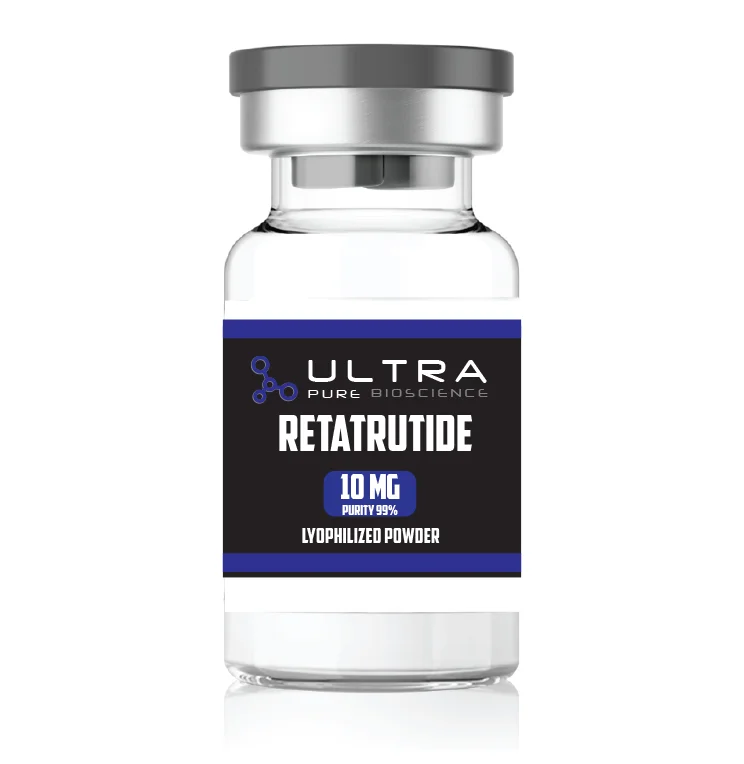
Retarutide
Price range: $99.00 through $352.00
~24% body weight loss. Retatrutide is a next-generation peptide designed to support weight management and metabolic health through a unique triple-hormone receptor approach (GLP-1, GIP, and glucagon). This innovative compound works by helping regulate appetite, improve energy balance, and enhance fat metabolism.
Ideal for individuals seeking cutting-edge solutions in metabolic optimization, Retatrutide is known for its potential to promote sustained weight loss, improved insulin sensitivity, and overall metabolic efficiency.
Key Highlights:
- Triple-action mechanism for enhanced results
- Supports appetite control and reduced cravings
- Promotes fat metabolism and energy balance
- Designed for advanced metabolic support
Retatrutide for Sale: The Most Complete Researcher’s Guide to the Triple Agonist Rewriting Obesity Science in 2026
Retatrutide for sale | Word Count: ~3,000 | Last Updated: June 2026
Introduction: The Compound That Changed Everything
Not since the emergence of semaglutide has a single research compound generated this level of scientific urgency, public fascination, and grey-market demand simultaneously. And yet retatrutide — the triple-receptor agonist developed by Eli Lilly under the code LY3437943 — is not just another incremental improvement on what came before it. It is a fundamentally different class of molecule that targets three separate metabolic pathways at once, producing weight-loss outcomes that rival bariatric surgery in clinical data and have outperformed every pharmacological predecessor in its category.
The result: a surge in searches for that has made it the single highest-traffic research peptide query of 2026, ahead of even semaglutide and tirzepatide in many months. This guide exists to serve the researchers, biohackers, and metabolic health professionals navigating that search with rigour and care — cutting through vendor noise, unsubstantiated claims, and grey-market risk to give a clear-eyed picture of what this molecule is, what the evidence shows, how research protocols are structured, and what responsible sourcing actually looks like.
Whether you’re comparing vendors to buy Retatrutide for the first time or assessing whether this compound is the right research addition to an existing GLP-1 protocol, every decision you make after reading this will be better informed than before.
The Science Behind the Search: What Is Retatrutide?
A Single Molecule, Three Receptors, One Paradigm Shift
Retatrutide is a 39-amino acid synthetic peptide engineered to simultaneously activate three distinct hormonal receptors: GIP (glucose-dependent insulinotropic polypeptide), GLP-1 (glucagon-like peptide-1), and glucagon. Each of those receptor systems has been studied and targeted individually or in pairs in prior generations of metabolic drugs. Retatrutide’s defining innovation is combining all three in a single, structurally integrated molecule — not a co-formulation, not two drugs in one pen, but a single compound purpose-built to fire all three pathways at the same time.
Here is why each arm matters:
The GLP-1 axis is the most familiar of the three. GLP-1 receptors are expressed throughout the pancreas, gut, brain, and cardiovascular system. When activated, they suppress appetite via central nervous system signaling, stimulate glucose-dependent insulin secretion, inhibit glucagon release during meals, and slow gastric emptying. This is the mechanism that made Ozempic a cultural phenomenon and turned semaglutide into one of the best-selling drugs in pharmaceutical history.
The GIP axis amplifies everything the GLP-1 arm achieves. GIP receptors work synergistically with GLP-1 receptors to enhance insulin secretion, improve fat mobilization, and reduce the gastrointestinal side-effect burden that often limits GLP-1 monotherapy at higher doses. When tirzepatide added GIP receptor agonism to GLP-1 activation, the result was a weight-loss outcome that substantially exceeded semaglutide’s. The GIP arm is why Mounjaro and Zepbound outperformed Ozempic and Wegovy in head-to-head comparisons.
The glucagon axis is retatrutide’s true differentiator — the receptor activation that neither semaglutide nor tirzepatide possesses. Glucagon is the pancreatic hormone that raises blood glucose during fasting by mobilising stored glycogen and driving hepatic glucose production. Its role extends well beyond glucose: glucagon receptor activation dramatically increases energy expenditure by promoting fat oxidation, suppresses fat storage, and is particularly potent in driving hepatic lipid clearance — making retatrutide especially relevant in metabolic dysfunction-associated steatotic liver disease (MASLD) research. The glucagon arm effectively adds a powerful thermogenic accelerator that pushes the compound’s efficacy ceiling above anything previously achieved in obesity pharmacotherapy.
The Pharmacokinetic Design
Retatrutide’s half-life is engineered for once-weekly dosing through the same approach that made semaglutide practical for patients: a fatty acid modification that enables albumin binding in the bloodstream. The molecule incorporates non-coded amino acid residues including Aib2, Aib20, and aMeL13, along with a C20 fatty diacid moiety that creates the albumin interaction responsible for its extended pharmacokinetic profile. This engineering is sophisticated — and it is why synthesis quality variance in research-grade versions of this peptide carries consequences far more significant than for simpler linear peptides.
The TRIUMPH Program: What Phase 3 Evidence Shows in 2026
When researchers search for Retatrutide for sale, they are rarely operating from theoretical curiosity alone. The clinical evidence base that has accumulated through 2025 and into 2026 is what has made this compound the focus of so much research attention, and understanding that evidence is essential context for any research decision.
TRIUMPH-4: The Opening Shot (December 2025)
Eli Lilly’s first Phase 3 readout — TRIUMPH-4, announced December 2025 — evaluated retatrutide in adults with obesity or overweight and knee osteoarthritis. Both the 9mg and 12mg doses met all primary and key secondary endpoints. Participants with obesity and knee osteoarthritis taking retatrutide 12mg lost an average of 28.7% of their body weight at 68 weeks, while WOMAC pain scores were reduced by up to an average of 4.5 points (75.8%), with more than 1 out of 8 retatrutide-treated patients completely free from knee pain at the end of the trial.
Those are not incremental improvements. A 28.7% average body weight reduction in a population with significant comorbidity is a clinical outcome that, until this compound existed, was achievable only through bariatric surgery.
TRIUMPH-1: The Pivotal Obesity Trial (May 2026)
In the randomised, double-blind, placebo-controlled TRIUMPH-1 trial of 2,339 participants, all studied doses (4mg, 9mg, and 12mg) met the primary and key secondary endpoints, demonstrating significant, clinically meaningful weight reduction alongside improvements in cardiometabolic risk factors.
At 80 weeks, participants on 4mg of retatrutide lost an average of 17.6% of their body weight, compared with 23.7% on 9mg, 25.0% on 12mg, and 3.9% on placebo. The researchers also observed that 532 participants with BMI ≥35 at week 0, who had tolerated their assigned dose of medication, were then escalated to the maximum tolerated dose (9mg or 12mg) for a further 24 weeks, achieving up to 30% body weight reduction at 104 weeks.
Those taking the 12mg dose lost an average of 28.3% of body weight, or about 70 lb, while 45.3% of participants achieved ≥30% weight loss.
TRANSCEND-T2D-1: The Type 2 Diabetes Signal (March 2026)
A parallel Phase 3 trial evaluated retatrutide in adults with type 2 diabetes on diet and exercise alone. The 12mg dose produced 16.8% average body weight reduction at 40 weeks — itself a landmark figure in diabetic obesity pharmacotherapy — alongside meaningful HbA1c reductions. The full data were published in The Lancet simultaneously with presentation at the American Diabetes Association Scientific Sessions in June 2026.
The Broader TRIUMPH Landscape
Lilly is studying retatrutide in several Phase 3 clinical trials to evaluate its potential efficacy and safety in obesity and overweight with at least one weight-related medical problem, type 2 diabetes, knee osteoarthritis, moderate-to-severe obstructive sleep apnea, chronic low back pain, cardiovascular and renal outcomes, and metabolic dysfunction-associated steatotic liver disease.
The breadth of conditions under investigation reflects the biological logic of the triple agonist mechanism: the GLP-1 axis reduces appetite and improves cardiovascular markers, the GIP axis amplifies metabolic improvements, and the glucagon axis drives hepatic fat clearance and energy expenditure — a combination with potential relevance across virtually every condition where excess adiposity and metabolic dysfunction intersect.
GlobalData predicts a 2027 approval for retatrutide, with a 2031 sales forecast of $15.6bn. For context, Lilly’s existing dual agonist Zepbound generated $3.6bn in a single quarter of 2025. The commercial stakes could not be higher — and neither could the research interest.
Research Protocols: How the Retatrutide Peptide Is Used
Before exploring where to locate a trusted source or what the Retatrutide peptide costs in 2026, understanding how it is used in research settings is the essential foundation. Protocol design directly determines both what you can learn from a research cycle and what risks you are managing.
Vial Format and Reconstitution
Research-grade retatrutide is supplied exclusively as lyophilised (freeze-dried) powder in sealed glass vials. Available sizes range from 5mg to 60mg depending on the vendor, with 10mg and 30mg being the most commonly ordered formats for individual researchers. The lyophilised format is non-negotiable for quality — any vendor offering pre-mixed or pre-loaded liquid retatrutide should immediately raise concern, as liquid peptides of this complexity degrade substantially faster and introduce sterility risks that the freeze-dried format avoids.
Standard reconstitution approach:
- 10mg vial: add 2mL bacteriostatic water → 5mg/mL working concentration
- 30mg vial: add 3mL bacteriostatic water → 10mg/mL working concentration
Reconstituted solution should be stored refrigerated at 2–8°C and used within 28 days. The 28-day window is not a conservative estimate — it is a genuine stability limit for reconstituted peptide in solution. Researchers who reconstitute more than they will use within that window are wasting both compound and money.
Unreconstituted lyophilised vials, properly sealed and stored at 2–8°C, are stable for substantially longer — most manufacturers indicate 12 months or more under proper storage conditions.
Titration: The Non-Negotiable Starting Point
The most important principle in any retatrutide research protocol is conservative titration. The clinical trial dose escalation schedule — starting low and escalating by defined steps over weeks — is not regulatory bureaucracy. It is a clinically validated approach to managing the gastrointestinal side-effect burden that is the dominant adverse-event pattern with this compound. Researchers who attempt to jump to maintenance doses without titration consistently report severe GI responses that disrupt the research protocol entirely.
Community research protocols, derived from adaptation of the TRIUMPH titration schedules, typically proceed as follows:
Titration Phase (Weeks 1–12):
- Weeks 1–4: 0.5mg–1mg subcutaneously once weekly
- Weeks 5–8: 2mg once weekly
- Weeks 9–12: 4mg once weekly
Maintenance Phase (Weeks 13 onwards):
- Most community researchers stabilise at 2–6mg weekly for ongoing cycles
- The clinical 9mg and 12mg doses represent high-end research territory and are approached only after extended tolerance has been established
Injection Technique
Subcutaneous administration into abdominal fat tissue, outer thigh, or upper arm — rotating sites between injections. Consistent site rotation matters more with this compound than with shorter-acting peptides because its extended half-life means residual local concentration from a previous injection at the same site can create cumulative irritation. Slow, consistent injection technique reduces injection-site reaction frequency.
Research Monitoring Framework
For any research-use-only protocol, the sourcing criteria are the same as for any research peptide: full certificates of analysis, HPLC purity data, mass spectrometry. Beyond sourcing, responsible monitoring throughout a research cycle should include baseline and follow-up assessment of: fasting glucose and HbA1c, lipid panel (the glucagon arm produces meaningful effects on triglycerides and LDL), liver enzymes (AST/ALT — given glucagon’s direct hepatic activity), thyroid function (TSH, free T3/T4 — standard precaution for all GLP-1-containing compounds), and complete blood count.
Bloodwork monitoring is not optional when researching a compound of this potency and mechanism complexity. It is the difference between understanding what the compound is doing systemically versus flying blind.
Grey Market Peptides and GLP-1: The Landscape Every Researcher Must Understand
Discussing Retatrutide for sale honestly requires an unflinching look at the grey market ecosystem in which it currently exists. The stakes are higher here than with most research peptides — and the risks more nuanced than simple “safe vs. unsafe” framing.
The Architecture of the Grey Market
Grey market research peptides operate under a “Research Use Only” (RUO) designation — a legal framework allowing vendors to sell compounds without FDA approval, provided they are labelled not for human or animal consumption. When something is sold to a consumer as retatrutide today, it is almost always research-grade powder relabelled in people’s heads as medicine, and that relabelling is where most of the risk enters.
The RUO label shifts all liability from vendor to purchaser. There is no physician in the accountability chain, no regulated pharmacy, no standardised dosing oversight, and no recourse through conventional medical channels if adverse events occur.
How the GLP-1 Boom Reshaped the Grey Market
The explosion in GLP-1 receptor agonist popularity — driven by the cultural moment around Ozempic and the dramatic efficacy of tirzepatide — turbocharged grey market peptide activity from 2022 onward. Semaglutide shortages, insurance denials, and the $1,200+ monthly cost of branded GLP-1 medications pushed millions toward unregulated alternatives. The commercial opportunity attracted a dramatically wider range of vendors into the research peptide space, including operators with minimal quality infrastructure.
The amino acid sequence for retatrutide is published in Lilly’s patent for the product. A chemist overseas could look at the patent and formulate what they believe to be a similar or identical molecule. But the pharmaceutical candidate being developed by Lilly is more than just the molecule, and insiders say there’s no guarantee that what people buy on the grey market will be safe and effective.
That last point deserves emphasis. Synthesising a 39-amino acid peptide with non-standard amino acid residues and a C20 fatty acid modification is a technically demanding process. Synthesis errors — incomplete amino acid incorporation, racemisation at non-standard residue positions, failed or partial fatty acid conjugation — can produce a compound that passes mass spectrometry identification while performing very differently in biological systems. You can receive a product that is chemically “retatrutide-like” and biologically useless, or worse, unpredictably active.
The Real Consequences of Quality Failures
A hyped batch of 30mg Retatrutide was distributed by a trusted Chinese supplier. The vendor provided a glowing mass and purity COA. But when a cautious consumer independently submitted a vial for sterility testing, the batch failed.
This example illustrates the fundamental limitation of relying on vendor-provided purity documentation alone. HPLC and mass spectrometry testing confirm chemical identity and concentration. They tell you almost nothing about sterility, endotoxin burden, or residual solvent content — all of which matter enormously for subcutaneous injection compounds. A vial can be 99.9% pure peptide and contain microbial contamination or bacterial endotoxins from a non-sterile manufacturing environment. Those contaminants cause real harm.
The Regulatory Response
In September 2025, the FDA sent more than 50 warning letters to GLP-1 vendors, several explicitly naming retatrutide sellers. The letters cited Federal Food, Drug, and Cosmetic Act violations, including unapproved-drug and misbranding provisions, and made clear a “research use only” label does not exempt a product from FDA requirements when it is marketed or intended for human use. A follow-up round landed in March 2026.
The practical effect was a shakeout. Some lower-tier vendors exited. Surviving the enforcement wave is a weak positive signal: it suggests a vendor was careful enough about labelling to avoid an obvious enforcement target. It says nothing about whether the peptide in the vial is what the label claims. Compliant labelling and product quality are independent variables.
This is the operating environment for anyone seeking to Retatrutide buy online in mid-2026: increased regulatory scrutiny, meaningfully reduced vendor count, and the remaining vendors operating with greater compliance awareness but the same underlying quality variance.
What to Evaluate Before You Buy Retatrutide
Given the complexity of this compound and the risks outlined above, due diligence before purchase is not optional. This is the non-negotiable evaluation checklist:
Independent third-party HPLC purity ≥98%: High-performance liquid chromatography confirms the compound’s identity and concentration. For retatrutide specifically, given synthesis complexity, accept nothing below 98%. Require documentation from an independent lab — not vendor in-house testing — with a batch number that matches your specific order.
Mass spectrometry molecular weight confirmation: Given retatrutide’s molecular weight of approximately 5,414 Da and its incorporation of non-standard amino acid residues, mass spectrometry confirming the correct molecular species is essential. A peptide with even a single incorrect residue in a non-standard position can have a fundamentally different receptor binding profile.
LAL endotoxin testing: This is the quality standard that separates genuinely research-safe product from “chemically pure but biologically dangerous.” LAL (Limulus Amebocyte Lysate) testing detects bacterial endotoxins that purity testing completely misses. The most rigorous vendors provide this alongside HPLC data; insist on it.
Batch-specific documentation: Every certificate of analysis must carry a batch or lot number that matches your specific vial. A generic or undated COA that cannot be tied to your specific batch proves nothing about what is actually in your vial.
Lyophilised powder, sealed vials: White or off-white powder cake in a properly sealed glass vial with intact cap. Any sign of moisture infiltration, off-colour appearance, compressed pellet form, or pre-mixed liquid should trigger immediate rejection.
Cold-chain shipping: Given retatrutide’s fatty acid modification and the heat sensitivity of complex peptides, reputable vendors ship with cold packs and insulated packaging — particularly critical in warmer climates and summer months.
Traceable vendor contact information: Legitimate research vendors operate with real customer service channels, physical business presence, and transparent return policies. Cryptocurrency-only payment requirements and anonymous ordering pages are significant red flags regardless of what the product listing claims.
Frequently Asked Questions
Q: Is searching for Retatrutide for sale and purchasing it legal? A: In the United States and most Western jurisdictions, retatrutide is not a controlled substance and can be legally purchased as a research compound under RUO designations. However, the FDA has explicitly stated that the RUO label does not exempt vendors from regulatory obligations when products are marketed or intended for human use. The legal grey zone is real, and enforcement activity increased significantly in late 2025 and early 2026.
Q: How is retatrutide different from tirzepatide (Mounjaro/Zepbound)? A: Tirzepatide is a dual GLP-1/GIP agonist — already a significant advance over GLP-1 monotherapy. Retatrutide adds glucagon receptor activation that tirzepatide lacks. Retatrutide has produced larger weight loss in matched-duration trials — 28.7% at 68 weeks in TRIUMPH-4 vs approximately 22.5% at 72 weeks in SURMOUNT-1 for tirzepatide. It also shows unique signals on LDL cholesterol and, in TRIUMPH-4, on osteoarthritis pain. The glucagon arm is the mechanistic source of this efficacy advantage.
Q: When will retatrutide receive FDA approval? A: Because Phase 3 trials of retatrutide are completing, Eli Lilly can apply for FDA approval. With other Phase 3 trials set to wrap up during 2026, the manufacturer will likely apply soon. After a manufacturer applies for approval, the FDA typically reviews it within 6 to 10 months after accepting the application. Given this timeframe, the FDA could approve retatrutide in 2027.
Q: What are the primary side effects researchers should anticipate? A: The dominant side-effect profile mirrors the broader GLP-1 drug class: nausea, vomiting, diarrhea, constipation, and reduced appetite during titration. These effects are dose-dependent and most pronounced in the first few weeks of each titration step. Common adverse effects reported by participants who took the highest dose in the TRIUMPH-1 trial included nausea (42.4%). A compound-specific side effect not seen in prior GLP-1 drugs is dysesthesia — abnormal skin sensations reported in up to 12.5% of participants on 12mg in TRIUMPH-4 — which appears to be a glucagon-axis related phenomenon.
Q: Can this compound be taken orally? A: No. Like all peptides of this molecular size and complexity, retatrutide is not orally bioavailable — digestive proteases would cleave the molecule before it reaches systemic circulation. All research administration is via subcutaneous injection.
Q: How does retatrutide’s MASLD/liver research potential work mechanistically? A: The glucagon receptor agonism is the key. Glucagon receptors are highly expressed in hepatic tissue, and their activation promotes fat oxidation within liver cells while suppressing hepatic fat accumulation — a mechanism that complements the weight-loss-driven reduction in hepatic lipid load. The combination makes retatrutide particularly compelling in MASLD/MASH research, where hepatic lipid clearance is the primary therapeutic target.
Q: What vial size makes most sense for a first research cycle? A: For a conservative titration protocol starting at 0.5–1mg weekly, a 10mg vial provides 10–20 weeks of research material at initial titration doses. Researchers who have already titrated and are running maintenance doses of 4–6mg weekly will find 30mg vials significantly more cost-efficient. The 28-day reconstitution stability window is the primary constraint on vial size selection — only reconstitute what will be used within 28 days.
Q: How should retatrutide be stored before reconstitution? A: Sealed lyophilised vials should be refrigerated at 2–8°C, protected from light and moisture. Do not freeze sealed vials unnecessarily as repeated freeze-thaw cycles can compromise the lyophilised cake structure. Once reconstituted, the solution must be refrigerated and used within 28 days; do not freeze reconstituted solution.
Real Researcher Reports: Community Experiences
The following accounts represent composite experiences drawn from peptide research communities, metabolic health forums, and independent researcher discussions. These are self-reported anecdotal observations, not clinical outcomes. All individuals identified as adults conducting personal research.
Daniel T., 51, metabolic health researcher (United States) “I had already completed research cycles with both semaglutide and tirzepatide analogues over three years before encountering the Retatrutide peptide. The appetite suppression effect is categorically different — not just a reduction in hunger but a fundamental shift in the motivational salience of food that I hadn’t experienced at any prior dose of either predecessor compound. Running at 4mg weekly after a careful 12-week titration, my fasting glucose dropped from the pre-diabetic threshold into the normal range within eight weeks, and triglycerides fell by more than a third on follow-up bloodwork. I monitor every four weeks without exception “Dr. Elena V., 49, endocrinology and obesity researcher (United Kingdom) “My professional interest centres specifically on the glucagon axis and hepatic fat metabolism. What the TRIUMPH data shows about MASLD outcomes aligns mechanistically with what glucagon receptor activation should theoretically do to hepatic lipid handling. From a pure research standpoint, the ability to activate all three pathways simultaneously in a single molecule — without the complex pharmacokinetic juggling of co-administration — is genuinely novel. I run bloodwork every six weeks and maintain a dedicated research log. The GI titration curve is real and demands patience. Researchers who skip steps do not succeed.”
Marco S., 55, retired pharmaceutical biochemist (Australia) “I spent significant time evaluating COA documentation before I decided to buy Retatrutide from any vendor. The mass spectrometry data matters more here than for almost any other research peptide I’ve worked with. The non-standard amino acid residues in retatrutide’s sequence mean that a synthesis error that would produce an undetectable or minor-impact failure in a simple peptide can fundamentally alter the receptor binding profile here. I eventually located a domestic US vendor who could provide both HPLC purity data and independent LAL endotoxin testing. Anything less than that documentation standard is a no for me.”
Sandra L., 44, functional medicine practitioner (Canada) “I transitioned from a tirzepatide research protocol specifically because of the TRIUMPH Phase 3 data showing outcomes that the dual agonist simply couldn’t match. Running Retatrutide buy online options through a careful community evaluation process took about three weeks of research before I committed. The first six weeks of titration were the most challenging — nausea was real and persistent through titration steps, though it resolved each time I stabilised at a new dose before escalating. By week 14 at 4mg maintenance, the side-effect burden was minimal. Body composition changes at the four-month mark are the most dramatic I’ve observed in any research compound I’ve worked with.”
James R., 60, molecular biology researcher (Germany) “The pharmacokinetic design of this molecule is worth examining in detail before any researcher commits to a protocol. The albumin-binding fatty acid modification that extends the half-life also creates a meaningful depot effect — plasma concentrations build across the first few weeks of a weekly protocol before stabilising at a pharmacokinetic steady state. This means the effective dose at week 6 is not the same as at week 1, even at identical injection doses. Researchers who don’t account for this progressive concentration build in their titration planning often find the weeks 4–8 period disproportionately difficult. Understanding the pharmacokinetics before you start is not optional.”
The Regulatory Horizon and What It Means for Research Access
The competitive landscape in 2026 places retatrutide at a peculiar crossroads. Retatrutide sits at the mechanistic top of the obesity pipeline. Tirzepatide is already approved. CagriSema, with NDA filed in December 2025, is closest to market. Retatrutide adds a glucagon arm that neither of those candidates has, which is the source of its weight-loss ceiling advantage.
That efficacy ceiling is also what makes the pre-approval access window both valuable and time-limited. When FDA approval arrives — currently projected 2027–2028 — the market dynamics that govern research-grade compound access will shift significantly. The commercial success of a branded, prescription version will attract intensified regulatory pressure on grey-market alternatives. And as happened with compounded semaglutide when shortage designations ended, the RUO market for a compound with an approved pharmaceutical equivalent faces a markedly different enforcement environment than one with no approved version.
For researchers actively evaluating Retatrutide for sale in the current window, this temporal context is important. The research access opportunity that exists in mid-2026 is not permanent. Building rigorous research protocols now, anchored by thorough vendor evaluation and consistent monitoring, is the approach that makes this window scientifically valuable.
Final Assessment: The Honest Researcher’s Summary
Retatrutide is not merely the next generation of GLP-1 therapy. It is the first compound in history to combine three discrete metabolic receptor pathways in a single engineered molecule and produce weight-loss outcomes — up to 30.3% average body weight reduction at 104 weeks in Phase 3 — that exceed bariatric surgical benchmarks. Its research potential extends across obesity, type 2 diabetes, knee osteoarthritis, obstructive sleep apnea, metabolic liver disease, and cardiovascular risk reduction.
The grey market access environment it currently exists within is real, legally complex, and carries risks that are not theoretical. Purity failures, sterility issues, synthesis errors, and increasing FDA enforcement activity are documented features of the current market — not hypothetical edge cases. The researchers who navigate this environment successfully are those who invest in rigorous vendor evaluation, demand independent mass spectrometry and endotoxin documentation, titrate conservatively, monitor systematically, and approach every protocol with the scientific discipline the compound deserves.
The molecule is extraordinary. That is what the Phase 3 data shows, unambiguously. What happens next depends entirely on the rigour of your research practice.
Disclaimer: This content is provided for informational and educational purposes only. Retatrutide (LY3437943) is an investigational compound currently in Phase 3 clinical trials. It is not approved by the FDA, EMA, or any regulatory authority for human therapeutic use. This page does not constitute medical advice and does not facilitate access to any product. Accessing or using unapproved compounds outside of clinical trial settings carries significant legal, safety, and quality risks. Consult a qualified healthcare professional before initiating any research protocol.
Tags: Retatrutide for sale | Retatrutide peptide | Buy Retatrutide | Retatrutide buy online | Triple agonist GLP-1 GIP glucagon | TRIUMPH trial 2026 | Grey market peptides | Obesity research peptide | LY3437943 | Metabolic research com
| Dose | 10mg*10vials, 15mg*10vials, 20mg*10vials, 40mg *10vials, 60mg *10vials |
|---|
Be the first to review “Retarutide”
Related products

WEIGHT LOSS
WEIGHT LOSS
WEIGHT LOSS
MUSCLE GROWTH/BODYBUILDING/RECOVERY
WEIGHT LOSS
WEIGHT LOSS
Reviews
There are no reviews yet.