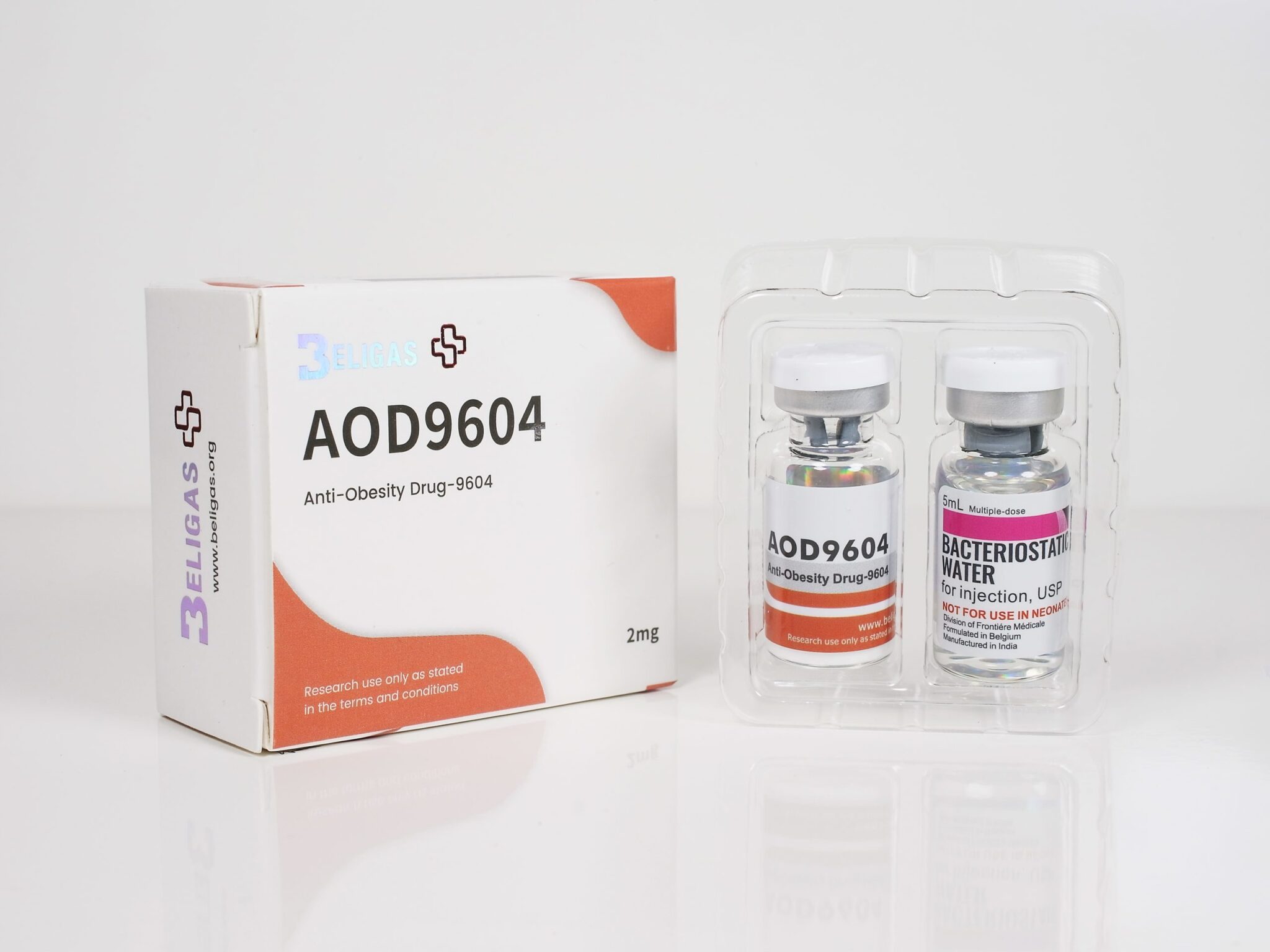
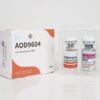
AOD 9064
Price range: $61.00 through $198.00
 AOD 9064 is a premium research-grade peptide designed for advanced laboratory and scientific applications. Known for its targeted structure derived from modified peptide chains, it is commonly studied for its potential role in metabolic and cellular research models.
This high-purity compound is manufactured under strict quality standards to ensure consistency, stability, and reliability in controlled research environments. AOD 9064 is supplied in lyophilized form for optimal preservation and ease of reconstitution in laboratory settings.
Key Features:
- High-purity research peptide
- Stable lyophilized formulation
- Designed for metabolic and cellular studies
- Consistent batch-to-batch quality
- For laboratory research use only
AOD-9604 — Research-Grade Peptide for Laboratory Use
AOD-9604 Powder for Sale: A Guide for Research Buyers
AOD-9604 is a modified fragment of human growth hormone (hGH), specifically derived from the C-terminal region of the HGH molecule (amino acids 176-191), that has been studied for decades for its role in lipid metabolism. Researchers and institutional buyers searching for AOD-9604 powder for sale are typically looking for a well-documented, high-purity lyophilized peptide suitable for controlled experimental protocols — not a consumer weight-loss product.
This page is written for that audience: lab technicians, principal investigators, and procurement teams evaluating peptide suppliers. Nothing here is intended as guidance for human self-administration or dosing. AOD-9604 is not approved by the FDA or any comparable regulatory body for human treatment, weight management, or performance use. It failed to gain approval for obesity treatment following Phase II clinical trials in the mid-2000s, and no regulatory body has since approved it for any human indication.
What Is AOD-9604?
AOD-9604 was developed by Australian biotech company Metabolic Pharmaceuticals in the late 1990s as an attempt to isolate the fat-metabolizing properties of growth hormone without its growth-promoting effects. The compound corresponds to a small fragment of the hGH sequence responsible for stimulating lipolysis (fat breakdown) and inhibiting lipogenesis (fat storage), while avoiding the insulin-resistance and tissue-growth effects associated with full-length hGH.
Key areas covered in the existing scientific literature include:
- Lipolytic activity studies — early in vitro and animal studies examined AOD-9604’s effect on fat cell metabolism, forming the basis for later clinical interest.
- Phase II obesity trials — Metabolic Pharmaceuticals conducted human trials investigating AOD-9604 for obesity treatment; the compound showed a favorable safety profile but did not demonstrate sufficient efficacy over placebo to support regulatory approval.
- Cartilage and joint repair research — a separate line of preclinical research has explored AOD-9604’s potential role in cartilage regeneration, an area that remains investigational.
- Bone and osteoarthritis models — some animal studies have looked at effects on bone density and joint tissue, though this research is still at an early stage.
None of this constitutes an approved medical use. It’s the context in which a legitimate research supplier should be presenting this compound — as a tool for further study, not a finished therapeutic.
Buying AOD-9604 Online: What Actually Matters
Anyone comparing listings for AOD-9604 buy online searches quickly discovers a wide range of prices and vague product descriptions. For a peptide with a documented clinical history but no approved use, the quality signals that actually matter are:
1. Certificate of Analysis (CoA) A legitimate supplier provides batch-specific HPLC and mass spectrometry data confirming purity, typically ≥98% for research-grade peptide. Generic or outdated CoAs not matching the shipped lot number are a red flag.
2. Peptide sequence verification Because AOD-9604 is a specific 16-amino-acid fragment, mass spec confirmation of the correct molecular weight (approximately 1815 Da) is the only reliable way to confirm you’re receiving the actual peptide rather than a mislabeled or degraded product — a known issue in the unregulated peptide market.
3. Sterility and endotoxin data For any cell culture or animal model application, endotoxin-tested, sterile-filtered lots are necessary. Powder that’s simply “pharmaceutical white” with no endotoxin data isn’t verified sterile.
4. Storage and stability documentation Lyophilized AOD-9604 is generally stable when stored frozen and protected from light and moisture. Reconstituted peptide has a much shorter usable window and should be stored refrigerated. A supplier who doesn’t specify storage conditions on the product page or CoA is giving you incomplete information.
5. Reconstitution guidance for research protocols Legitimate suppliers provide solvent compatibility information (typically bacteriostatic or sterile water) framed around achieving a specific molarity for an experimental protocol — not a “how many clicks on the syringe” consumer dosing chart, which is a strong signal the seller is marketing toward personal use rather than research use.
Where to Buy AOD-9604: Evaluating a Supplier
The honest answer to where to buy AOD-9604 is: from a supplier who treats it like the research chemical it legally is, not like a supplement. Questions worth asking any AOD-9604 supplier before ordering:
- Will they provide a batch-specific CoA before purchase, not just a stock image of a generic certificate?
- Is mass spectrometry data included, confirming the correct peptide sequence and molecular weight — not just an HPLC purity percentage, which alone can’t confirm identity?
- Do they operate under any documented quality system, or ship from an unlisted or frequently-changing address?
- Is the product explicitly labeled “for laboratory research use only, not for human consumption”? Suppliers who instead lean on before/after language, dosing protocols, or fat-loss claims are marketing an unapproved drug for human use, regardless of a small-print disclaimer elsewhere on the site.
- Can they issue proper invoicing for institutional or grant-funded purchases, including SDS/MSDS documentation?
Suppliers who answer these clearly and provide documentation up front are a meaningfully different category from listings built around urgency (“limited stock,” “today only”) and consumer testimonials — a pattern that correlates strongly with underdosed, adulterated, or mislabeled product in independent testing of the peptide market
A Note on Grey-Market Peptides and GLP-1 Compounds
AOD-9604 is frequently sold by the same vendors offering GLP-1 receptor agonists like semaglutide and tirzepatide under “research use only” labeling. It’s worth being direct about the difference in risk here, because it’s substantial.
GLP-1 medications are safe and effective when manufactured, dosed, and prescribed through legitimate medical channels — but grey-market versions sold as research peptides carry real, documented good results:
- No verified sterility or purity, despite RUO labeling that exists primarily to sidestep regulatory oversight rather than reflect genuine lab-use intent.
- Dosing concentrations designed for research titration, not calibrated for human pharmacokinetics — a mismatch that has been linked in FDA adverse event reports to severe gastrointestinal illness and, in some cases, overdose from concentration errors.
- No prescriber screening for contraindications such as a personal or family history of certain thyroid cancers or pancreatitis risk, which legitimate prescribing protocols are specifically built to catch.
- Active regulatory warnings. The FDA has issued specific alerts about compounded and grey-market GLP-1 products, particularly during periods when branded-drug shortages caused grey-market supply to expand rapidly.
If a research program has a genuine reason to work with GLP-1 compounds, the same supplier-vetting standard applies — CoA, endotoxin testing, batch traceability — and animal work should go through the appropriate institutional review process (IACUC). If the actual interest is personal weight management, that’s a conversation for a licensed prescriber, not a peptide vendor, given how different the risk profile is from a research tool compound like AOD-9604.
Frequently Asked Questions
Is AOD-9604 legal to buy? In most jurisdictions, AOD-9604 can be legally sold when explicitly marketed and labeled for laboratory research use rather than human consumption. Regulations differ by country, and marketing practices matter — a supplier framing sales around personal fat-loss use is operating outside the research-chemical exemption many jurisdictions rely on.
Why did AOD-9604 fail its clinical trials? Phase II trials showed a good safety profile but didn’t demonstrate weight-loss efficacy meaningfully better than placebo, which is why Metabolic Pharmaceuticals didn’t pursue further regulatory approval. This is well-documented in the clinical trial literature and is worth knowing before evaluating any marketing claims about the compound’s effects.
What purity level should research-grade AOD-9604 have? Most legitimate suppliers target ≥98% purity, verified by HPLC, alongside mass spectrometry confirmation of the correct molecular weight. Purity claims without supporting data should be treated skeptically.
How should AOD-9604 powder be stored? Lyophilized (freeze-dried) peptide is generally stable frozen and protected from moisture and light. Once reconstituted in solvent, peptide stability drops significantly and refrigerated storage with a limited usable window is standard guidance — specific timelines depend on the reconstitution protocol used.
What’s the difference between AOD-9604 and full-length HGH? AOD-9604 is a small fragment of the HGH molecule, isolated because it retains the fat-metabolizing signaling activity without triggering the growth-promoting or insulin-resistance effects associated with full-length growth hormone. They are structurally and functionally distinct, and should never be treated as interchangeable in a research protocol.
Does a lower price mean lower quality? Not necessarily, but unusually low prices with no batch documentation are a common marker of unverified or adulterated product in independent peptide-market testing. Price should be evaluated alongside documentation, not instead of it.
Can institutional buyers use AOD-9604 purchases for grant reporting? Yes, provided the supplier issues an itemized invoice with batch/lot information and, where required, an SDS. This is another reason documentation quality should be a primary supplier-selection criterion rather than an afterthought.
What red flags suggest a listing isn’t from a legitimate research supplier? Consumer-style dosing charts, before/after imagery, testimonial-driven sales copy, absence of mass spec data, and urgency-based sales tactics (“only 3 left in stock”) are the clearest signals that a listing is marketing toward personal use rather than laboratory research — regardless of any RUO disclaimer in the fine print.
Summary
For labs and procurement teams sourcing this compound, the decision should come down to documentation and supplier transparency, not marketing language. When evaluating AOD-9604 powder for sale, prioritize a verifiable CoA with mass spectrometry confirmation, endotoxin testing where relevant, proper cold-chain shipping, and a supplier willing to answer direct questions about manufacturing and quality control. The same standard should apply to any adjacent research compounds offered by the same AOD-9604 supplier, particularly grey-market GLP-1 products, where the consequences of poor sourcing are considerably more serious
| Dose | 2mg*10vials, 5mg*10vials, 10mg*10vials |
|---|
Be the first to review “AOD 9064”
Related products
WEIGHT LOSS
WEIGHT LOSS
WEIGHT LOSS
WEIGHT LOSS
Reviews
There are no reviews yet.